
When you read about enemies being destroyed in Scripture, some passages can feel confusing or even troubling. Bible Verses About Destroying Your Enemies include prayers, warfare accounts, and statements about divine judgment. Understanding their biblical context helps you see what these difficult passages truly mean.
This guide explains their historical setting, spiritual meaning, and place in Christian faith. You will learn how Scripture addresses prayer, personal revenge, and trusting God with justice. Whether you are beginning Bible study or seeking deeper biblical interpretation, this guide can help you read these verses with greater clarity.
Bible Verses About Destroying Your Enemies and Their Meaning
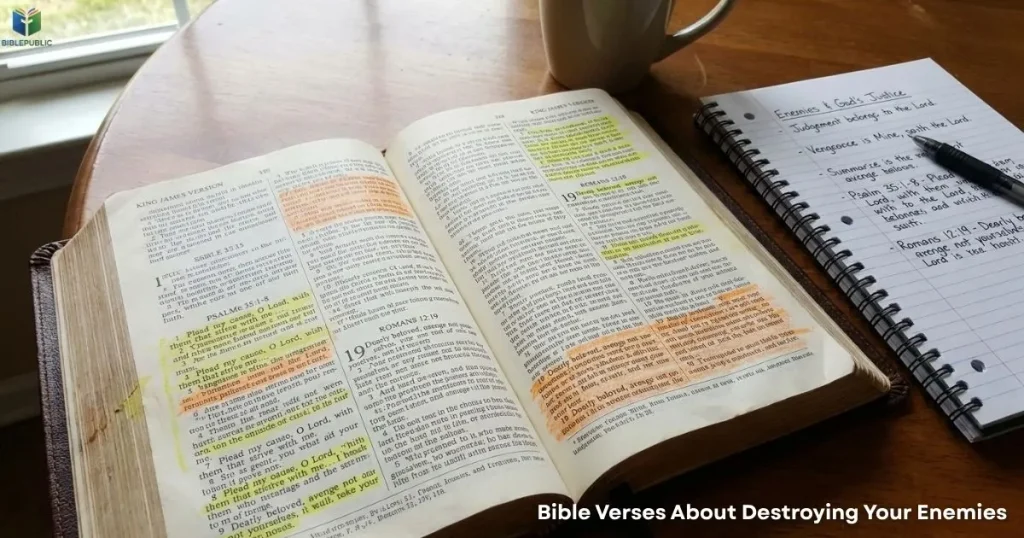
Bible Verses About Destroying Your Enemies can be difficult to understand without their historical and biblical context. Scripture includes prayers for deliverance, accounts of warfare, descriptions of divine judgment, and passages about the final defeat of evil.
The key is to distinguish personal revenge from God’s judgment and Israel’s unique role in biblical history. These passages reflect different settings, including covenant warfare, lament, prophecy, and Christian teaching, so each should be read according to its context. Pasted text
Psalm 18:37-42 — David Describes Victory Over His Enemies
David describes a dramatic victory over those who opposed him. This section belongs to a larger song of deliverance that presents God as the source of David’s strength, protection, and triumph. Its language helps readers understand how biblical descriptions of defeating adversaries can point to divine deliverance rather than personal revenge.
“I have pursued my enemies, and overtaken them: neither did I turn again till they were consumed.”
Psalm 35:1-8 — David Asks God to Defend Him
David asks God to defend him against people who unjustly accuse and attack him. Instead of taking matters into his own hands, he brings the conflict before the Lord. The prayer highlights a recurring biblical theme: God sees injustice, protects His servants, and remains the righteous judge over those who cause harm.
“Plead my cause, O LORD, with them that strive with me: fight against them that fight against me.”
Psalm 58:6-11 — A Prayer for God’s Judgment
Psalm 58 uses strong language while calling on God to confront persistent wickedness. It is commonly understood as an imprecatory psalm, meaning that the writer appeals to God for justice against evil. The passage gives language to righteous concern about wrongdoing while leaving ultimate judgment in God’s hands.
“Break their teeth, O God, in their mouth: break out the great teeth of the young lions, O LORD.”
Psalm 69:2-28 — A Difficult Prayer Against Enemies
Psalm 69 contains intense words from someone experiencing severe opposition and suffering. Its difficult requests belong to a larger prayer of lament, where pain and injustice are brought honestly before God. The passage shows that Scripture records deep human distress while directing the final question of justice toward God rather than personal retaliation.
“Let their table become a snare before them: and that which should have been for their welfare, let it become a trap.”
Psalm 83:13-18 — Asking God to Defeat His Enemies
Psalm 83 describes a prayer concerning hostile nations and organized opposition against God’s people. The writer asks God to intervene and make His name known among the nations. Its central theme is divine sovereignty: victory is ultimately sought from God, whose authority extends over every opposing power.
“That man may know that thou, whose name alone is JEHOVAH, art the most high over all the earth.”
Deuteronomy 7:1-4 — Israel and the Nations of Canaan
Deuteronomy 7 belongs to Israel’s conquest of Canaan and must be understood within the covenant, worship, and historical setting of ancient Israel. The surrounding instruction concerns Israel’s separation from idolatrous nations and covenant faithfulness. It is not a general command for Christians to destroy people they consider enemies.
“And when the LORD thy God shall deliver them before thee; thou shalt smite them, and utterly destroy them; thou shalt make no covenant with them, nor shew mercy unto them.”
Deuteronomy 20:16-18 — The Context of Israel’s Warfare
These instructions concern specific nations and Israel’s warfare during the conquest of the promised land. They belong to a unique covenant setting involving ancient Israel and cannot simply be transferred to modern Christian life. Understanding the original audience and historical situation prevents this difficult text from being used to justify personal violence.
“But of the cities of these people, which the LORD thy God doth give thee for an inheritance, thou shalt save alive nothing that breatheth.”
Joshua 6:20-21 — The Fall of Jericho
The fall of Jericho is part of Israel’s conquest narrative under Joshua. The account describes a specific event connected with Israel entering the promised land rather than a general rule for believers. Reading the surrounding narrative helps distinguish an Old Testament historical judgment from personal retaliation against someone who causes harm.
“And they utterly destroyed all that was in the city, both man and woman, young and old, and ox, and sheep, and ass, with the edge of the sword.”
1 Samuel 15:1-3 — Saul and the Judgment on Amalek
This passage describes a specific judgment against Amalek connected to Israel’s earlier history, Saul’s kingship, and Samuel’s prophetic instruction. Its difficult language requires attention to the unique role of Israel and the stated divine command. It should never be separated from that setting or used to justify hatred or violence today.
“Now go and smite Amalek, and utterly destroy all that they have, and spare them not; but slay both man and woman, infant and suckling, ox and sheep, camel and ass.”
Psalm 37:9-10 — The Wicked Will Not Endure Forever
Psalm 37 contrasts the temporary success of wicked people with the lasting hope of those who trust the Lord. Instead of encouraging immediate retaliation, the Psalm teaches patience and confidence in God’s timing. It reassures believers that injustice and evil do not have the final word.
“For evildoers shall be cut off: but those that wait upon the LORD, they shall inherit the earth.”
Psalm 37:20 — The Enemies of God Will Perish
This verse describes the ultimate end of those who persist in opposition to God. Its emphasis is on divine justice rather than human retaliation. Within Psalm 37, believers are encouraged to trust the Lord and resist becoming consumed by anger when wicked people appear to prosper.
“But the wicked shall perish, and the enemies of the LORD shall be as the fat of lambs: they shall consume: into smoke shall they consume away.”
Psalm 92:7-9 — The Ultimate End of the Wicked
Psalm 92 recognizes that wicked people may appear successful for a season, but their prosperity is not permanent. The passage points toward God’s righteous judgment and enduring reign. It helps explain why biblical language about the destruction of the wicked often emphasizes God’s authority rather than human attempts to settle scores.
“When the wicked spring as the grass, and when all the workers of iniquity do flourish; it is that they shall be destroyed for ever.”
Psalm 110:1-2 — God’s Victory Over His Enemies
Psalm 110 presents God’s appointed ruler receiving authority over opposing powers. Its royal language points beyond ordinary human conflict toward divine kingship and ultimate victory. The passage contributes to the broader biblical theme of God’s sovereign rule over His enemies and the establishment of His authority.
“The LORD said unto my Lord, Sit thou at my right hand, until I make thine enemies thy footstool.”
Ezekiel 25:17 — God’s Judgment Against Nations
Ezekiel 25 contains prophetic declarations against nations that acted against God’s people. The passage belongs to a wider message about accountability, justice, and divine judgment. Rather than giving individuals authority to seek revenge, it presents God as the One who judges nations according to His righteous authority.
“And I will execute great vengeance upon them with furious rebukes; and they shall know that I am the LORD, when I shall lay my vengeance upon them.”
Matthew 5:43-44 — Jesus Changes How His Followers Treat Enemies
Jesus directly addresses how His followers should respond to enemies and persecutors. In the Sermon on the Mount, He calls disciples to love, bless, do good, and pray instead of seeking retaliation. This teaching provides a central New Testament framework for Christian responses to hostility and opposition, as seen in Matthew 5:43–44
“But I say unto you, Love your enemies, bless them that curse you, do good to them that hate you, and pray for them which despitefully use you, and persecute you.”
Romans 12:19-21 — Leave Judgment to God and Overcome Evil
Paul teaches Christians not to take personal vengeance but to leave judgment to God. He then gives practical guidance for responding to hostility with kindness and generosity, ending with the call to overcome evil with good. This passage strongly connects Christian ethics with peace, self-control, and trust in God’s justice.
“Dearly beloved, avenge not yourselves, but rather give place unto wrath: for it is written, Vengeance is mine; I will repay, saith the Lord.”
Revelation 19:11-16 — Christ’s Final Victory and Judgment
Revelation 19 presents Christ as the righteous King who comes in judgment and victory. The scene belongs to the Bible’s larger teaching about Christ’s final triumph over evil and His ultimate authority. It describes divine judgment at the end of the biblical story, not permission for individual believers to execute judgment themselves.
“And out of his mouth goeth a sharp sword, that with it he should smite the nations: and he shall rule them with a rod of iron: and he treadeth the winepress of the fierceness and wrath of Almighty God.”
Psalm 2:8-9 — God’s Rule Over the Nations
Psalm 2 presents God’s appointed ruler receiving authority over the nations. Its royal language emphasizes God’s sovereign rule and the accountability of earthly powers. Read within the wider biblical story, the passage contributes to the theme of God’s appointed King exercising authority over opposition rather than encouraging personal revenge.
“Thou shalt break them with a rod of iron; thou shalt dash them in pieces like a potter’s vessel.”
Isaiah 63:1-6 — Divine Judgment Against the Nations
Isaiah 63 uses vivid prophetic imagery to portray divine judgment against those who oppose God. The passage belongs to a larger prophetic vision and emphasizes God’s righteous action. Its strong language reinforces an important distinction throughout Scripture: God’s vengeance and judgment belong to Him, not to individuals seeking personal revenge.
“For the day of vengeance is in my heart, and the year of my redemption has come.”
Nahum 1:2-8 — God’s Judgment and Protection
Nahum presents God as righteous in judgment while also describing Him as a refuge for those who trust Him. The prophecy addresses God’s dealings with evil and oppression, including the setting of Nineveh and Assyria. This balance of judgment and protection is important when reading biblical passages about enemies and deliverance.
“The LORD is good, a strong hold in the day of trouble; and he knoweth them that trust in him.”
What Does the Bible Mean by Destroying Your Enemies?
The Bible uses language about destroying enemies in several different settings. Sometimes it describes God’s judgment, sometimes Israel’s specific warfare, and sometimes the ultimate defeat of evil. In other passages, the emphasis is deliverance from hostile people rather than personal destruction. Therefore, the meaning depends on the text, audience, and historical setting.
For Christians, the broader biblical message requires a clear distinction between divine justice and personal revenge. Reading Bible Verses About Wanting to Kill Your Enemies alongside these passages helps clarify the difference between difficult biblical language about enemies and personal violence. Scripture calls believers to trust God, pursue peace, reject retaliation, and overcome evil with good.
Why Does Scripture Describe Enemies Being Destroyed?

Scripture describes enemies being destroyed because the Bible takes evil, oppression, injustice, and rebellion against God seriously. In many passages, destruction refers to divine judgment or the eventual defeat of persistent wickedness. These descriptions communicate God’s holiness, justice, and authority rather than giving individuals permission to pursue revenge.
Other passages describe specific events in Israel’s history and belong to God’s covenant dealings with ancient Israel. They should not automatically be transferred into modern Christian life. Reading these accounts alongside the wider biblical narrative helps distinguish historical judgment, prophetic warning, and personal conflict. Pasted text
How Should We Understand Old Testament Warfare and Imprecatory Psalms?
Old Testament warfare should be understood within Israel’s covenant history, the conquest of Canaan, and the specific commands given to God’s people at particular times. These accounts involved ancient Israel as a covenant nation and cannot simply be treated as general instructions for Christians to fight people they regard as enemies.
Imprecatory Psalms require similar care. They express grief, anger, persecution, and appeals for divine justice. These prayers show that Scripture gives honest language to people facing serious wrongdoing, while still directing judgment toward God. Their presence does not turn personal vengeance into a Christian duty. Pasted text
How Is Old Testament Enemy Destruction Different from Christian Conduct Today?
Old Testament accounts of national warfare belong to Israel’s unique place in biblical history. Ancient Israel was a covenant nation involved in the conquest of Canaan, while Christians are not called to reproduce that national role. These historical accounts therefore cannot be treated as permission to use violence against personal, political, or religious opponents.
The New Testament presents a different pattern for personal conflict. Jesus teaches His followers to love their enemies and pray for those who persecute them, as emphasized in Bible Verses About Loving Your Enemies. Paul rejects personal vengeance and calls believers to overcome evil with good, placing justice in God’s hands.
How Did Jesus Teach His Followers to Respond to Enemies?

Jesus taught His followers to love their enemies, bless those who curse them, do good to those who hate them, and pray for those who persecute them. His teaching moves disciples away from retaliation and toward mercy, prayer, kindness, and active goodness toward difficult people.
This does not mean Christians must approve wrongdoing or ignore serious danger. Biblical love can exist alongside wisdom, appropriate boundaries, justice, and protection. The key distinction is that believers should not make revenge their goal or assume God’s authority as the final judge. Pasted text
How Should Christians Interpret Difficult Bible Verses About Destroying Enemies?
Christians should begin by reading difficult passages in their full biblical and historical context. Consider who is speaking, who is being addressed, what situation is involved, and whether the text is describing an event, prayer, prophecy, or command. Literary genre and the original audience can also clarify difficult language.
It is also important to read challenging Old Testament passages alongside the teaching of Jesus and the apostles. The New Testament repeatedly directs believers away from personal vengeance and toward peace, prayer, mercy, and overcoming evil with good. A whole-Bible approach helps prevent isolated verses from being misapplied.
Conclusion
The Bible Verses About Destroying Your Enemies show that Scripture takes evil, injustice, and judgment seriously, while teaching believers to trust God with vengeance. These passages become clearer when read in their historical setting and alongside Jesus’ teachings about mercy, prayer, peace, faith, and overcoming evil with good.
When facing conflict, bring your anger and pain to God instead of seeking revenge. Pray for wisdom, protect healthy boundaries, and let Scripture guide your response. Choose what is right, seek peace, and remain devoted to God. Trust Him with justice, and respond to difficult people with courage, grace, and blessing.
Frequently Asked Question
What does the Bible say about destroying your enemies today?
The Bible does not give Christians permission to destroy personal enemies. Instead, Scripture calls believers to trust God, pursue peace, reject personal revenge, and avoid violence.
Are Bible verses about destroying enemies commands for Christians?
No. Many passages describe Israel’s unique history, divine judgment, or prophetic events. Christians should read them through Jesus’ teaching about love, prayer, and mercy today.
What does Romans 12 teach about dealing with enemies?
Romans 12:19 teaches believers not to seek personal vengeance but to leave judgment to God and overcome evil with good, kindness, and faithful obedience always.
Why does Scripture sometimes describe enemies being destroyed?
These Bible Verses About Destroying Your Enemies sometimes describe destruction as divine judgment against persistent evil, wickedness, or opposition to God, emphasizing His justice rather than personal retaliation.
Can Christians pray for God to defeat their enemies?
Yes, Christians can bring injustice and fear to God in prayer, asking for protection and justice while keeping a heart that rejects hatred, revenge, and harm.
How should difficult Bible verses about enemies be understood?
Bible Verses About Destroying Your Enemies should be read in historical, literary, and covenant context, then considered alongside Jesus’ teaching on mercy, prayer, and peace.

Chris Saadil is the founder of BiblePublic.com, where he shares biblical insights to help readers understand God’s Word and grow in faith. His mission is to make Scripture clear, practical, and encouraging through Bible verses, biblical teachings, prayer, and Christian living, helping believers build a deeper relationship with God every day.