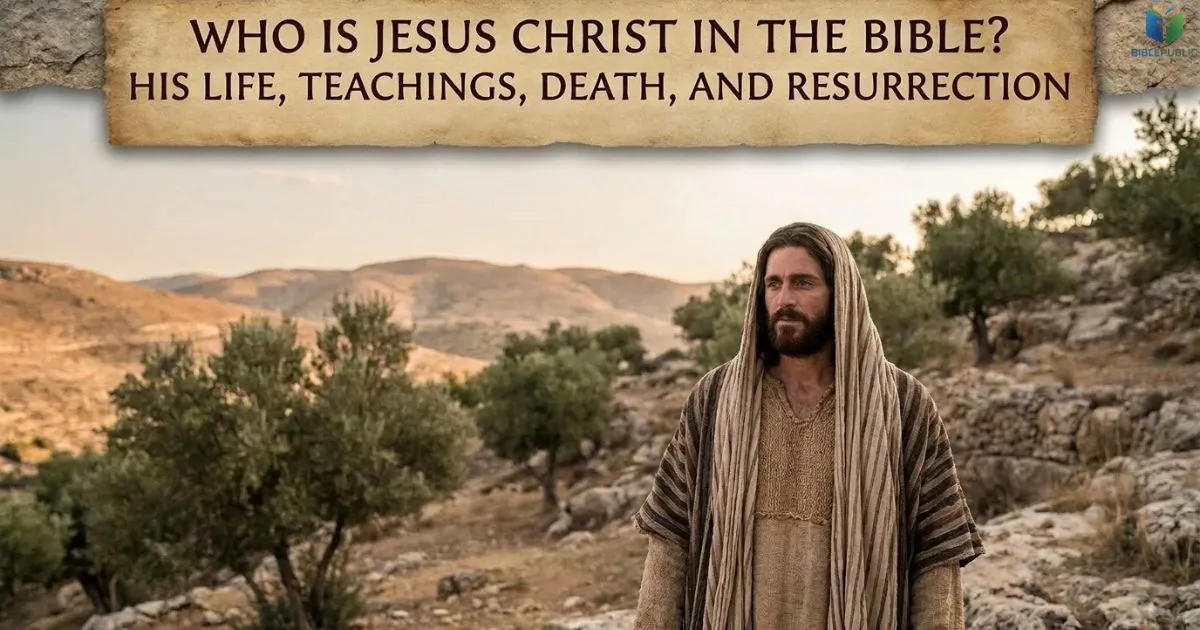
Who Is Jesus Christ in the Bible? He is the central figure of the New Testament, known for His teachings, miracles, death, and resurrection. Christians believe He is the Son of God and the promised Messiah. His life teaches important lessons about God’s love, forgiveness, salvation, and hope.
This article explores Jesus’ birth, early life, public ministry, and teachings. You’ll also learn why He was crucified, what the Bible says about His resurrection, and why these events remain central to Christian faith. Each section draws on Scripture to help you understand Jesus’ life and significance.
Who Is Jesus Christ in the Bible?
Jesus Christ is the central figure of the New Testament and the foundation of the Christian faith. The Bible presents Him as the Son of God and the promised Messiah. His life, teachings, death, and resurrection are recorded in the four Gospels: Matthew, Mark, Luke, and John.
John 20:31 explains that the Gospel of John was written so readers may believe that Jesus is the Messiah, the Son of God, and have life through Him. You can read John 20:31 for the verse’s exact wording. Understanding who Jesus Christ is in the Bible begins with His birth and ministry and continues through His crucifixion and resurrection.
The Birth and Early Life of Jesus Christ
Matthew and Luke provide the main biblical accounts of Jesus’ birth and early years. They describe His birth in Bethlehem, His family background, and events surrounding His childhood. These accounts connect Jesus’ arrival with the biblical story of God’s relationship with His people.
The Gospels identify Mary as Jesus’ mother and Joseph as the man who raised Him. Although the Bible provides limited information about Jesus’ childhood, the accounts in Matthew 1–2 and Luke 1–2 establish the setting of His early life and describe important events before His public ministry began.
The Birth of Jesus in Bethlehem
Matthew 2:1 and Luke 2:1–7 identify Bethlehem as the place where Jesus was born. Luke explains that Mary and Joseph traveled there in connection with a census. After Jesus was born, Mary wrapped Him in cloths and laid Him in a manger because there was no place for them in the guest room, according to translations that render the term this way. Readers can explore when Jesus was born in the Bible to learn more about the biblical accounts and what Scripture says about the timing of His birth.
Matthew records that wise men came to worship Jesus after seeing His star, while Luke describes angels announcing His birth to shepherds. The shepherds then visited the child (Matthew 2:1–12; Luke 2:8–20). These accounts emphasize different events surrounding Jesus’ birth.
Mary, Joseph, and Jesus’ Childhood
Mary was Jesus’ mother, and Joseph cared for Him as He grew up. Matthew describes how Joseph took Mary and Jesus to Egypt after receiving a warning in a dream about King Herod’s plan to kill the child. After Herod’s death, the family returned and settled in Nazareth (Matthew 2:13–23).
Luke records Jesus’ presentation at the temple and an occasion when He visited Jerusalem with His family at twelve years old. His parents later found Him among the teachers, listening and asking questions (Luke 2:21–52). Luke summarizes His growth by saying that Jesus increased in wisdom and stature and in favor with God and people.
The Ministry of Jesus Christ
Jesus’ public ministry focused on proclaiming the kingdom of God, calling people to repentance, teaching Scripture, and caring for those in need. The Gospels describe Him traveling through towns and villages, teaching in synagogues, and speaking to crowds about God’s purposes.
Jesus also called disciples to follow Him and performed miracles, including healings and other signs. His ministry drew people who wanted to hear His teaching and receive help, while His words and actions also brought Him into conflict with some religious leaders (Matthew 4:17–25; Mark 1:14–15).
The Disciples and Their Calling
Jesus called people from different backgrounds to become His disciples. Among the first were fishermen Simon Peter, Andrew, James, and John. He invited them to follow Him and become “fishers of men,” giving their work a new purpose (Matthew 4:18–22). He also called Matthew, a tax collector, to follow Him (Matthew 9:9).
Jesus later appointed twelve apostles to accompany Him and participate in His mission (Mark 3:13–19). They listened to His teaching, witnessed His works, and received responsibilities to preach. Their experiences became an important part of the Gospel accounts and the early Christian movement.
The Miracles of Jesus
The Gospels describe Jesus healing the sick, restoring sight to blind people, calming a storm, feeding crowds, and raising the dead. These accounts show His compassion for people who suffered and present His miracles as signs of His authority and role in the biblical story.
In Matthew 14:13–21, Jesus feeds five thousand men with five loaves and two fish. Mark 4:35–41 records Him calming a storm while He is with His disciples. The Gospel writers include these events to show how Jesus’ actions affected those who witnessed them and why many people responded to His ministry.
What Did Jesus Teach in the Bible?
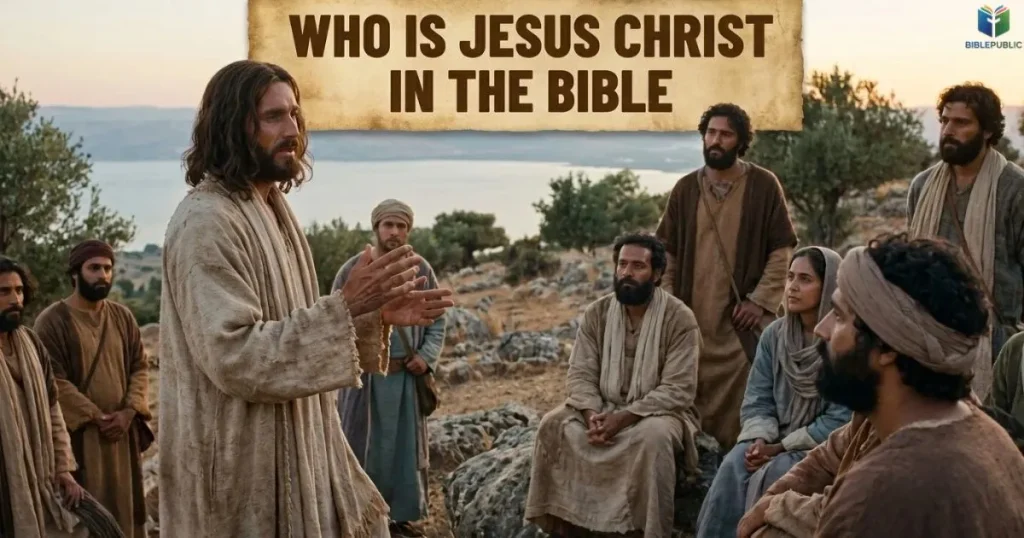
Jesus taught people to love God, care for their neighbors, forgive others, and seek God’s kingdom. He also used parables—short stories that communicate spiritual lessons—to explain important truths about faith, mercy, and human behavior.
His teachings addressed both outward actions and inward attitudes. Jesus warned against hypocrisy, encouraged compassion, and taught His followers to trust God. His instructions appear throughout the Gospels and form a central part of Christian teaching and practice.
The Sermon on the Mount
The Sermon on the Mount, recorded in Matthew 5–7, contains many of Jesus’ best-known teachings. He spoke about humility, mercy, peacemaking, prayer, forgiveness, and the importance of living faithfully before God rather than seeking public praise.
Jesus taught His followers to love their enemies and pray for those who mistreat them (Matthew 5:44). He also provided a model for prayer, commonly known as the Lord’s Prayer (Matthew 6:9–13). These teachings encourage sincere faith and concern for others.
Love, Forgiveness, and the Kingdom of God
Love and forgiveness are central themes in Jesus’ teaching. When asked about the greatest commandment, He taught that people should love God with all their heart, soul, and mind and love their neighbors as themselves (Matthew 22:37–40). He also instructed His followers to forgive others and show mercy.
Jesus frequently taught about the kingdom of God, describing God’s reign and the response it calls for. Through parables, He illustrated themes such as compassion and spiritual growth. The parable of the good Samaritan teaches neighborly love (Luke 10:25–37), while the parable of the mustard seed illustrates the kingdom’s growth (Mark 4:30–32).
Why Is Jesus Called the Son of God and Messiah?
The New Testament uses titles such as Son of God and Messiah to describe Jesus’ identity and role. The word Messiah comes from a Hebrew term meaning “anointed one,” while Christ is the corresponding Greek title. The Gospels connect Jesus with Israel’s messianic hopes and record His followers’ belief that He fulfills God’s promises.
In Matthew 16:15–16, Peter identifies Jesus as the Messiah and the Son of the living God. Christians understand these titles as central to Jesus’ identity and saving mission. Christian traditions may explain aspects of these titles differently, but both are important to understanding how the New Testament presents Jesus.
Why Was Jesus Christ Crucified?

The Gospels describe Jesus’ arrest in Jerusalem, His appearance before authorities, and His crucifixion under the Roman governor Pontius Pilate. They record accusations against Him, opposition to His ministry, and the events that led to His execution.
Christians understand Jesus’ death as central to God’s work of salvation. The New Testament connects His crucifixion with forgiveness and reconciliation with God, while the Gospel accounts describe the events surrounding His suffering and death (Matthew 26–27; Mark 14–15; Luke 22–23; John 18–19).
The Last Supper and Jesus’ Arrest
Before His arrest, Jesus shared a final meal with His disciples, commonly called the Last Supper. During the meal, He took bread and a cup and connected them with His body and blood. Christians remember this event through practices known as Communion or the Lord’s Supper (Luke 22:14–20).
Later, Jesus prayed in Gethsemane. Judas Iscariot arrived with a group that arrested Him, and Jesus was brought before religious authorities. He was subsequently taken to Pontius Pilate, the Roman governor who authorized His crucifixion (Matthew 26:36–57; 27:1–2).
The Crucifixion of Jesus
Jesus was crucified at a place called Golgotha, which the Gospel of John identifies as the Place of a Skull. The Gospel accounts describe Roman soldiers placing Him on a cross and a sign identifying Him as “the King of the Jews.” Jesus died while some of His followers and other witnesses were present (John 19:16–30).
After His death, Joseph of Arimathea asked Pilate for Jesus’ body and placed it in a tomb (Matthew 27:57–60). All four Gospels record Jesus’ death and burial, although they differ in some details and emphasis. These events lead directly into the New Testament accounts of His resurrection.
What Jesus’ Death Means for Christians
Christians understand Jesus’ death as central to salvation and reconciliation with God. The New Testament teaches that Jesus gave Himself for others and connects His death with God’s love and the forgiveness of sins. Romans 5:8, for example, explains that God demonstrates His love through Christ’s death for humanity.
First Corinthians 15:3–4 summarizes the message that Christ died for sins, was buried, and was raised on the third day. Christian traditions differ in how they explain some aspects of atonement, but Jesus’ death and its saving significance are central to Christian faith.
The Resurrection of Jesus Christ

The Gospels report that after Jesus was crucified and buried, His tomb was found empty on the first day of the week. They also describe appearances of the risen Jesus to His followers. These events form the basis of the New Testament’s resurrection accounts. For further insight, explore what the Bible says about Jesus’ resurrection and how this event is understood in Christian faith.
For Christians, the resurrection represents Jesus’ victory over death and is foundational to their hope of eternal life. In 1 Corinthians 15, Paul emphasizes that the resurrection is essential to Christian faith. The Gospel accounts describe the empty tomb and the encounters with the risen Jesus.
The Empty Tomb
The Gospels report that women went to Jesus’ tomb early on the first day of the week and discovered that the stone had been moved and His body was no longer there. Matthew, Mark, Luke, and John all record the discovery, although they differ in the people mentioned and other details (Matthew 28:1–8; Mark 16:1–8; Luke 24:1–12; John 20:1–10).
The accounts describe messengers announcing that Jesus had risen. The empty tomb is an important part of the Gospel writers’ testimony about the resurrection. Their accounts then describe encounters with the risen Jesus and the responses of His followers.
Jesus Appears to His Followers
The New Testament records several appearances of the risen Jesus. In John 20, Mary Magdalene encounters Him near the tomb. Luke 24 describes Jesus walking with two disciples on the road to Emmaus, and John 20 records His appearance to the disciples, including Thomas.
In 1 Corinthians 15:3–8, Paul summarizes appearances to Peter, the twelve, and other followers. These accounts form an important part of the early Christian testimony that Jesus had risen from the dead and help explain why the resurrection became central to Christian preaching.
Why the Resurrection Matters to Christians
The resurrection matters to Christians because they understand it as God’s victory over death and a confirmation of Jesus’ mission. In 1 Corinthians 15:17–22, Paul explains that the resurrection is essential to Christian faith and connects Christ’s resurrection with the hope that believers will also be raised.
The resurrection also gives meaning to the disciples’ mission to share the message of Jesus. Matthew 28:16–20 records Jesus commissioning His followers to make disciples. For Christians, the resurrection is therefore central to their faith, worship, and hope for eternal life.
What Can Christians Learn from the Life of Jesus?
The life of Jesus offers Christians an example of compassion, humility, faithfulness, and service. Throughout the Gospels, He cares for people in need, teaches His followers to love others, and demonstrates a commitment to prayer and doing God’s will.
Christians apply these teachings by showing mercy, forgiving others, serving their communities, and seeking to follow Jesus’ example. These lessons arise from His words and actions recorded in Scripture, although people may apply them in different ways according to their circumstances and traditions.
Compassion and Service to Others
Jesus showed compassion toward people who were sick, hungry, grieving, or overlooked. He healed the sick, welcomed children, and taught about caring for people in need (Matthew 14:14; Mark 10:13–16; Matthew 25:35–40). These passages emphasize the importance of mercy and concern for others.
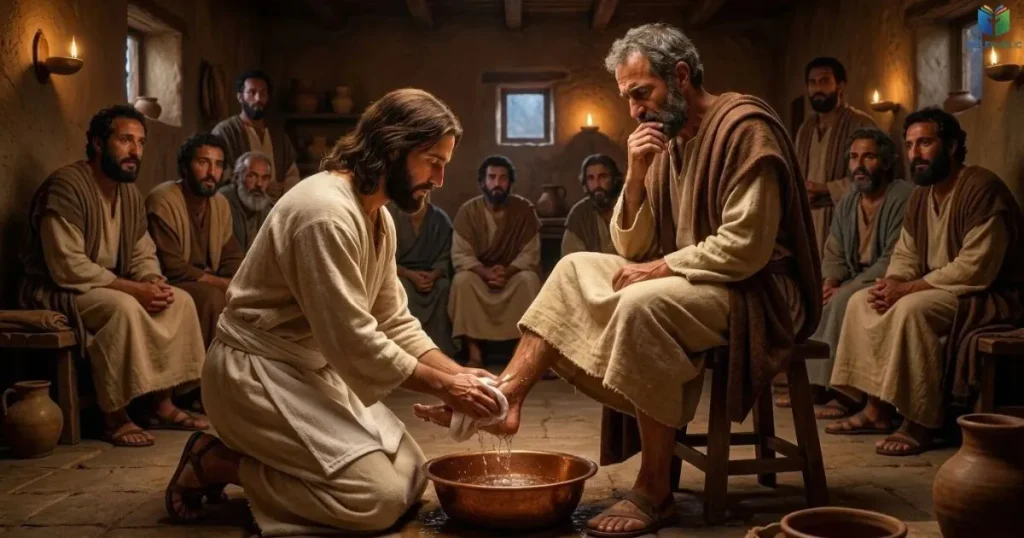
In John 13:1–17, Jesus washed His disciples’ feet and told them to follow His example. This act illustrates humble service and challenges the idea that leadership is mainly about status. Christians often draw from this passage the lesson that serving others is an important expression of love.
Prayer, Humility, and Forgiveness
Jesus regularly prayed and taught His followers to pray sincerely rather than seeking public attention. In Matthew 6:5–13, He warned against praying to impress others and provided the Lord’s Prayer as a model. His teaching emphasizes sincerity and a focus on God rather than public recognition.
Jesus also taught forgiveness and warned against hypocritical judgment (Matthew 6:14–15; 7:1–5). These instructions encourage Christians to examine their own actions, show mercy, and approach others with humility. His example and teachings present prayer, forgiveness, and humility as important parts of faithful living.
Conclusion
Who Is Jesus Christ in the Bible? He is the central figure of the Christian faith, whose life, teachings, death, and resurrection reveal God’s love and the hope of salvation. His example teaches believers the value of faith, compassion, humility, and forgiveness. Understanding His story helps readers explore the message of the Bible more deeply.
As you reflect on the life of Jesus, take time to read His words in the Gospels of Matthew, Mark, Luke, and John. Consider how His teachings can guide your choices, strengthen your faith, and shape the way you treat others. Start with one teaching today and put it into practice through a simple act of kindness or forgiveness.
Explore More About Jesus and His Biblical Story
Understanding Jesus Christ involves exploring the people, events, and teachings connected to His life and mission. The Bible provides deeper insight into His relationships, the meaning of His sacrifice, and the traditions surrounding His final days. These additional resources can help you build a clearer understanding of the biblical accounts and their significance in Christian faith.
Last Supper Meaning in the Bible: 5 Powerful Truths
Good Friday Meaning in the Bible: 5 Powerful Truths for Hope
Mary, Mother of Jesus: 12 Powerful Insights and Lessons
Frequently Asked Questions
Who Is Jesus Christ in the Bible, and Why Is He Important?
Jesus Christ is the central figure of the New Testament. Christians believe He is the Son of God and Messiah, whose life and resurrection are central to their faith.
Why Does the New Testament Call Jesus the Son of God and Messiah?
The New Testament identifies Jesus as the Son of God and Messiah. In Matthew 16:16, Peter declares Him the Messiah and Son of the living God.
What Are the Most Important Teachings Jesus Shared With His Followers?
Jesus taught His followers to love God, love their neighbors, forgive others, and serve humbly. Matthew 22:37–40 highlights love for God and neighbor as central commandments.
Why Did Roman Authorities Crucify Jesus According to the Gospels?
The Gospels describe Jesus being handed over to Roman authorities and crucified under Pontius Pilate. Christians understand His death as central to forgiveness and salvation.
What Does the Bible Say Happened After Jesus Died on the Cross?
The Gospels report that Jesus rose from the dead on the third day. Matthew 28:1–10 describes the empty tomb and His appearances to women who visited it.
Why Is Jesus’ Resurrection Essential to Christian Faith and Hope?
Christians believe Jesus’ resurrection offers hope beyond death. In 1 Corinthians 15:17–22, Paul explains that the resurrection is essential to Christian faith and the hope of eternal life.

Chris Saadil is the founder of BiblePublic.com, where he shares biblical insights to help readers understand God’s Word and grow in faith. His mission is to make Scripture clear, practical, and encouraging through Bible verses, biblical teachings, prayer, and Christian living, helping believers build a deeper relationship with God every day.