
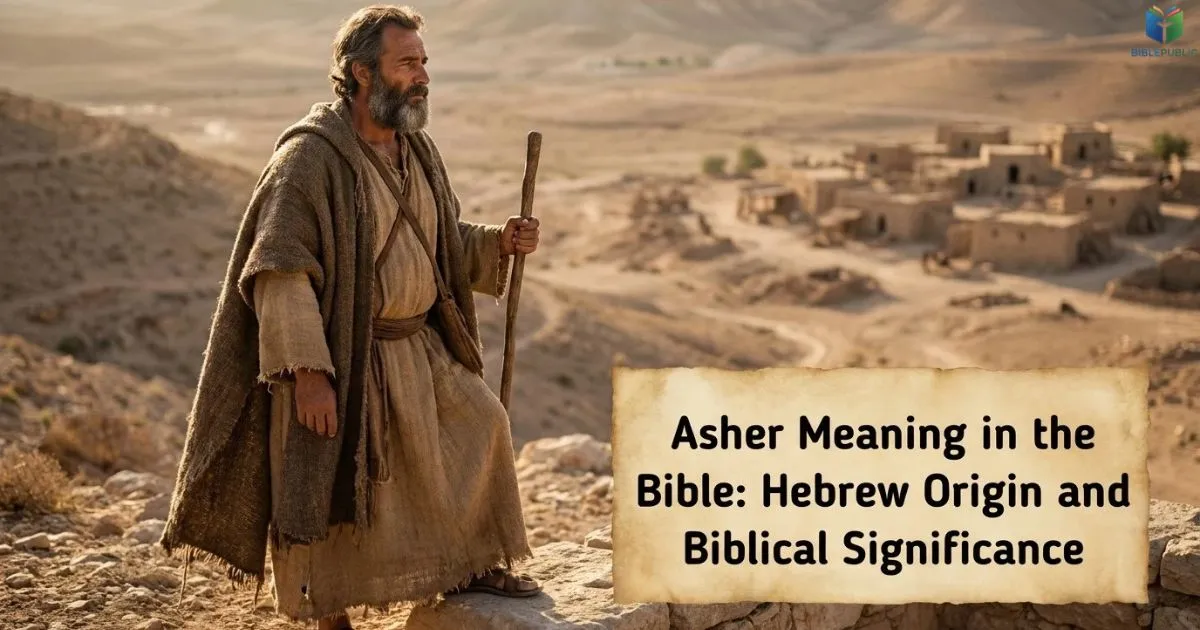
The Asher Meaning in the Bible is closely connected to happiness, blessing, and good fortune. Asher was one of Jacob’s twelve sons and the ancestor of one of the twelve tribes of Israel. His name carries special meaning in the biblical story and reflects the joy expressed at his birth.
Understanding Asher’s Hebrew origin and biblical significance helps readers explore the name’s meaning, its connection to Leah and Jacob’s family, and the blessings associated with the tribe of Asher. This guide examines the relevant Bible passages and explains how the name’s meaning fits into its biblical context.
What Does Asher Mean in the Bible?
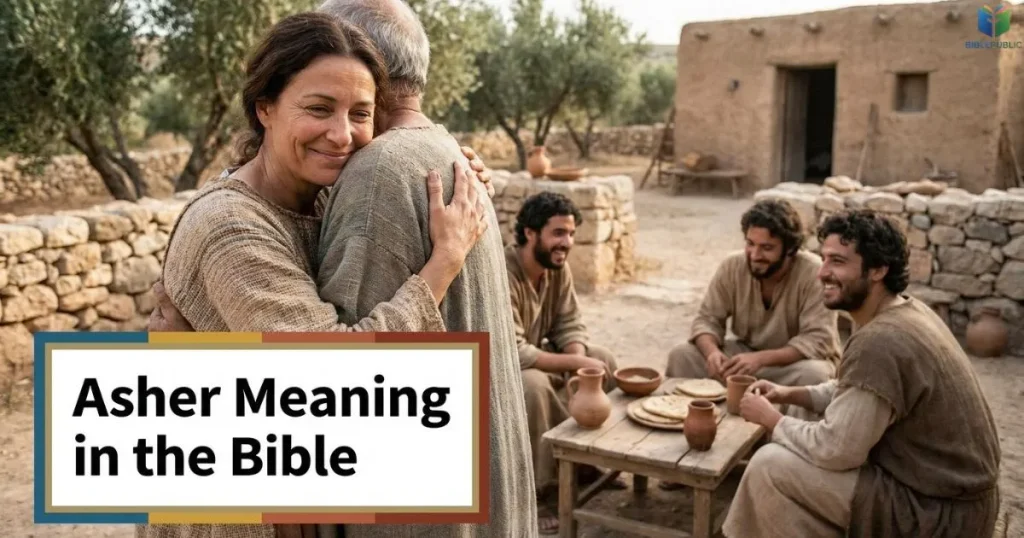
Asher is commonly understood to mean “happy” or “happy one.” It is also frequently associated with “blessed” or “fortunate.” These explanations are connected with the naming account in Genesis 30:13, when Leah’s servant Zilpah gives birth to Jacob’s son.
In Genesis 30:13, Leah expresses happiness and says that other women will call her blessed before naming the child Asher. The passage connects the name with joy and blessing in the context of Jacob’s family.
Although these English explanations are related, they should not automatically be treated as identical linguistic definitions. The biblical naming account provides important context, while a Hebrew lexicon can help clarify the name’s linguistic meaning and its relationship to related Hebrew words.
Asher’s later biblical associations include provision and abundance. Jacob’s blessing in Genesis 49:20 refers to rich food, and Moses’ blessing in Deuteronomy 33:24–25 speaks favorably of Asher and his descendants. These passages enrich the name’s biblical context without changing its traditional meaning.
What Is the Hebrew Origin of the Name Asher?
Asher is a Hebrew name found in the Old Testament. Its traditional Hebrew spelling is אָשֵׁר, and its commonly accepted meaning is associated with happiness. Genesis 30:13 is particularly relevant because Leah’s response to her son’s birth connects the name with being happy and blessed.
The name appears in the biblical narrative as part of Jacob’s family history. Asher later becomes the namesake of one of Israel’s tribes, linking the personal name with the history of the Israelite people.
Understanding the Hebrew origin of Asher requires distinguishing the name’s linguistic meaning from interpretations drawn from the wider biblical narrative. The blessings associated with Asher contribute to its religious and cultural significance, but they should not be treated as additional literal definitions of the name.
Asher in Hebrew: אָשֵׁר
The Hebrew spelling of Asher is אָשֵׁר. In the Old Testament, it identifies both Jacob’s son and the tribe descended from him.
Genesis 30:13 in the King James Version reads:
“Happy am I, for the daughters will call me blessed: and she called his name Asher.”
This verse explains the naming event through Leah’s words. It connects the name with happiness and blessing and provides the immediate biblical context for understanding its significance.
The Hebrew spelling helps readers identify the name in its original scriptural setting. For a more detailed linguistic explanation, the biblical passage should be considered alongside a reliable Hebrew lexicon rather than relying solely on an English name-meaning list.
What Does the Hebrew Root of Asher Mean?
Asher is traditionally associated with Hebrew language expressions connected with happiness and being considered blessed. Genesis 30:13 is central to the name’s biblical explanation because Leah’s words create a connection between her happiness and the name she gives her son.
A careful linguistic explanation should distinguish a name’s established meaning from the wordplay or interpretation presented in a biblical narrative. These can support one another, but they are not always the same thing. A reliable Hebrew lexicon, such as Brown–Driver–Briggs, can help readers examine the relevant Hebrew vocabulary and its usage.
For general readers, “happy” or “happy one” is a useful concise explanation of Asher. “Blessed” and “fortunate” are also common interpretations associated with the name. Their precise relationship depends on the linguistic and biblical context, so they should be presented as related explanations rather than interchangeable definitions in every setting.
Who Was Asher in the Bible?
Asher was the eighth son of Jacob and the son of Zilpah, Leah’s servant. His birth appears in Genesis 30:9–13, within the account of Jacob’s growing family. He later became the ancestor of the tribe of Asher, one of the twelve tribes of Israel.
Asher is mentioned in several important biblical passages, including Jacob’s blessing over his sons in Genesis 49 and Moses’ blessing over Israel’s tribes in Deuteronomy 33. These passages help establish his place in the wider biblical narrative.
Scripture provides limited information about Asher’s individual life. His principal significance comes from his identity as Jacob’s son and the ancestor of a tribe of Israel, rather than from a detailed personal biography.
Asher, the Son of Jacob and Zilpah
Asher’s birth is recorded in Genesis 30:9–13. After Leah stopped bearing children for a time, she gave her servant Zilpah to Jacob as a wife. Zilpah gave birth to a son, and Leah named him Asher.
Leah’s response in Genesis 30:13 connects the name with happiness and being called blessed. This naming account is the main biblical passage for explaining why Asher is traditionally associated with these ideas.
Asher belonged to Jacob’s large family, which included Reuben, Simeon, Levi, Judah, Joseph, Benjamin, and the other sons who became associated with Israel’s tribes. Their family history forms an important part of the Old Testament narrative.
The Bible does not record an extensive account of Asher’s personal actions or character. It is therefore more accurate to focus on his family identity, his descendants, and the passages in which he is specifically mentioned than to assign him characteristics the text does not establish.
The Tribe of Asher in the Bible
The tribe of Asher descended from Jacob’s son and became one of the twelve tribes of Israel. Joshua 19:24–31 describes the towns and territory assigned to the tribe as part of Israel’s settlement in Canaan.
Asher’s territory was associated with the northwestern region of Canaan, near the Mediterranean coast. The tribe’s inheritance provides historical and geographical context for understanding Asher beyond the account of his birth.
The tribe also appears in biblical lists and passages concerning Israel’s history. Jacob’s blessing in Genesis 49:20 refers to food and abundance, while Moses’ blessing in Deuteronomy 33:24–25 speaks of favor and strength. These passages form part of the biblical portrayal of Asher and his descendants.
The tribe’s history helps explain why Asher remains significant in studies of biblical names. The name is connected not only with a traditional Hebrew meaning but also with the family of Jacob and the development of Israel’s tribal identity.
Why Is Asher Important in the Bible?

Asher is important because he was one of Jacob’s sons and the ancestor of one of Israel’s tribes. His birth connects the name with the family narrative in Genesis, while later passages give insight into how Asher and his descendants were described in the blessings spoken over Israel.
Jacob’s blessing in Genesis 49:20 emphasizes rich food, while Moses’ blessing in Deuteronomy 33:24–25 includes favorable imagery associated with Asher. These passages help readers understand the tribe’s place in the biblical narrative.
The significance of Asher’s name therefore comes from two related but distinct aspects: its traditional linguistic meaning and its place in Scripture. Keeping those aspects separate makes it easier to understand the name without turning the biblical blessings into promises about every person who bears it.
Jacob’s Blessing Over Asher (Genesis 49:20)
In Genesis 49, Jacob gathers his sons and speaks about their future. His statement concerning Asher appears in verse 20:
“Out of Asher his bread shall be fat, and he shall yield royal dainties.” — Genesis 49:20, KJV
Jacob’s words use the imagery of rich food and desirable provisions. The verse is commonly understood as describing abundance associated with Asher and his descendants.
This blessing contributes to the name’s later associations with prosperity and provision. However, the passage belongs to Jacob’s words concerning his sons and their descendants. It should not be interpreted as a guarantee that every person named Asher will experience wealth or material success.
Read alongside Genesis 30:13, the blessing provides additional context for the name. Genesis explains the naming event, while Genesis 49 describes Jacob’s words concerning Asher and his descendants.
Moses’ Blessing Over the Tribe of Asher (Deuteronomy 33:24–25)
Before his death, Moses pronounced blessings over the tribes of Israel. His words concerning Asher appear in Deuteronomy 33:24–25. In the King James Version, verse 24 begins:
“And of Asher he said, Let Asher be blessed with children; let him be acceptable to his brethren, and let him dip his foot in oil.” — Deuteronomy 33:24, KJV
Verse 25 continues with imagery involving iron, brass, and strength corresponding to Asher’s days. Together, the verses portray the tribe favorably within Moses’ blessing over Israel.
The reference to oil is sometimes interpreted in connection with agricultural resources, but the precise imagery should be explained cautiously rather than presented as an undisputed historical conclusion. The passage itself clearly places Asher within Moses’ wider series of tribal blessings.
This blessing adds to Asher’s biblical significance and helps explain why readers associate the name with favor, provision, and strength. These are themes drawn from the scriptural passages, not guarantees of a particular outcome for someone given the name today.
What Can Christians Learn from Asher’s Biblical Story?
Asher’s story offers an opportunity to reflect on gratitude and the way biblical names are connected with specific events. In Genesis 30:13, Leah responds to her son’s birth with words of happiness and blessing. Her response gives the name a meaningful place within the family narrative.
Christians may find a reminder here to recognize reasons for gratitude. At the same time, Jacob’s family experienced rivalry and complicated relationships, so the story should not be reduced to a claim that difficult circumstances always lead immediately to happiness or prosperity.
Jacob’s blessing in Genesis 49:20 and Moses’ blessing in Deuteronomy 33:24–25 also provide context for reflecting on provision and strength. These passages concern Asher and the tribes of Israel in their original biblical setting. Applying them today requires care rather than treating them as promises of financial success or personal comfort.
Asher’s story also illustrates the value of reading a biblical name in context. A short definition can introduce its meaning, but the passages in which the name appears help readers understand its place in Scripture. For Christians considering this name, its traditional association with happiness and its biblical history may offer meaningful points for personal reflection.
Is Asher a Good Biblical Name for a Baby?
Asher can be a meaningful choice for parents seeking a biblical name with Hebrew origins. Its traditional meaning is commonly associated with happiness, and its biblical background connects it with Jacob’s son and one of the tribes of Israel.
Parents may appreciate Asher for its short form, recognizable pronunciation, and Old Testament roots. Its association with happiness may also appeal to families who want a name with a positive traditional meaning.
Choosing a baby name is a personal decision. Parents may consider the name’s meaning, pronunciation, family preferences, and connection to their faith. Although Asher has a rich biblical background, a name does not determine a child’s personality, character, or future.
Reading Genesis 30:9–13, Genesis 49:20, and Deuteronomy 33:24–25 provides a useful starting point for understanding the name’s scriptural context before making a naming decision.
What Does the Name Asher Symbolize?
Asher is traditionally associated with happiness and is often connected with blessing and good fortune. Genesis 30:13 provides the main biblical basis for these associations through Leah’s response to the birth of her son.
Jacob’s blessing in Genesis 49:20 adds imagery of rich food, while Moses’ blessing in Deuteronomy 33:24–25 refers to favor and strength. These passages contribute to the broader biblical associations readers may connect with the name.
For Christian families, Asher may symbolize joy, gratitude, or a desire to remember God’s blessings. These are personal and faith-based interpretations inspired by Scripture, not additional literal definitions of the Hebrew name or promises about a child’s future.
How Is Asher Pronounced?
In American English, Asher is commonly pronounced ASH-er, with the stress on the first syllable. The name is generally straightforward for English speakers to recognize and pronounce.
Pronunciation may vary somewhat across languages and accents. Parents considering Asher may want to say it aloud with their family surname to decide whether the name sounds natural to them.
What Are Names Similar to Asher in the Bible?

Parents exploring Asher may also consider other biblical names, especially those connected with Jacob’s family. These names have their own meanings and histories; they are alternatives because of their biblical background, not because they mean the same thing as Asher.
- Judah: One of Jacob’s sons. Genesis 29:35 connects his name with Leah’s expression of praise.
- [Levi Meaning in the Bible]: Another son of Jacob and Leah, whose descendants became associated with Israel’s priestly service. His birth is recorded in Genesis 29:34.
- Benjamin: Jacob’s youngest son, whose birth is described in Genesis 35:16–18.
- Joseph: A son of Jacob whose story appears throughout Genesis 37–50, including his experiences in Egypt and his role during the famine.
Each name has a distinct biblical background and meaning. Exploring these differences can help parents compare biblical names while keeping their individual scriptural contexts clear.
Ultimately, Asher is a Hebrew biblical name traditionally associated with happiness. Its place in the story of Jacob’s family and the blessings spoken over his descendants gives it additional scriptural significance. For readers exploring biblical names, Asher offers a meaningful connection to the Old Testament and the history of Israel.
Conclusion
Asher is a Hebrew biblical name commonly understood to mean “happy” or “happy one.” The Asher Meaning in the Bible connects the name with Leah’s joy at his birth and the blessings spoken over his descendants. His story offers a helpful way to explore Hebrew names, Old Testament history, and the biblical themes of joy and blessing.
If you are considering Asher for your baby, read Genesis 30:9–13 to understand the story behind the name. You can also explore Genesis 49:20 and Deuteronomy 33:24–25 to learn about Jacob’s and Moses’ blessings concerning Asher. These passages can help you reflect on the name’s biblical background and decide whether it fits your family’s faith and values.
Explore More Biblical Names and Their Meanings
Exploring other biblical names can help you better understand the Hebrew origins, family histories, and spiritual themes found throughout Scripture. Each name has its own background and meaning, offering a broader view of the people and stories of the Old Testament. These additional resources can help you compare biblical names and discover their distinct connections to Scripture.
Noah Meaning in the Bible: Hebrew Origin and Biblical Significance
Frequently Asked Questions About Asher
What does the name Asher mean in the Bible?
Asher is commonly understood to mean “happy” or “happy one.” The Hebrew name is associated with happiness and blessing through Leah’s words in Genesis 30:13.
What is the Hebrew origin of the name Asher?
Asher is a Hebrew name written אָשֵׁר. It appears in the Old Testament as the name of Jacob’s son and the tribe descended from him.
Who was Asher, the son of Jacob, in the Bible?
Asher was Jacob’s eighth son, born to Zilpah, Leah’s servant. His birth is recorded in Genesis 30:9–13, and his descendants formed one of Israel’s tribes.
What blessings are associated with Asher in the Bible?
Jacob’s blessing in Genesis 49:20 describes rich food, while Moses’ blessing in Deuteronomy 33:24–25 speaks favorably of Asher. These passages portray the tribe positively.
Does the name Asher mean that someone will be happy or blessed?
No. Although Asher is associated with happiness and blessing, a name does not guarantee someone’s future, personality, or life experiences. Its meaning provides biblical context.
Is Asher a good Christian name for a baby?
Asher can be a meaningful choice for Christian parents who appreciate Hebrew names and Old Testament history. Its traditional meaning and biblical background may reflect their family’s values.

Chris Saadil is the founder of BiblePublic.com, where he shares biblical insights to help readers understand God’s Word and grow in faith. His mission is to make Scripture clear, practical, and encouraging through Bible verses, biblical teachings, prayer, and Christian living, helping believers build a deeper relationship with God every day.






2 thoughts on “Asher Meaning in the Bible: Hebrew Origin and Biblical Significance”