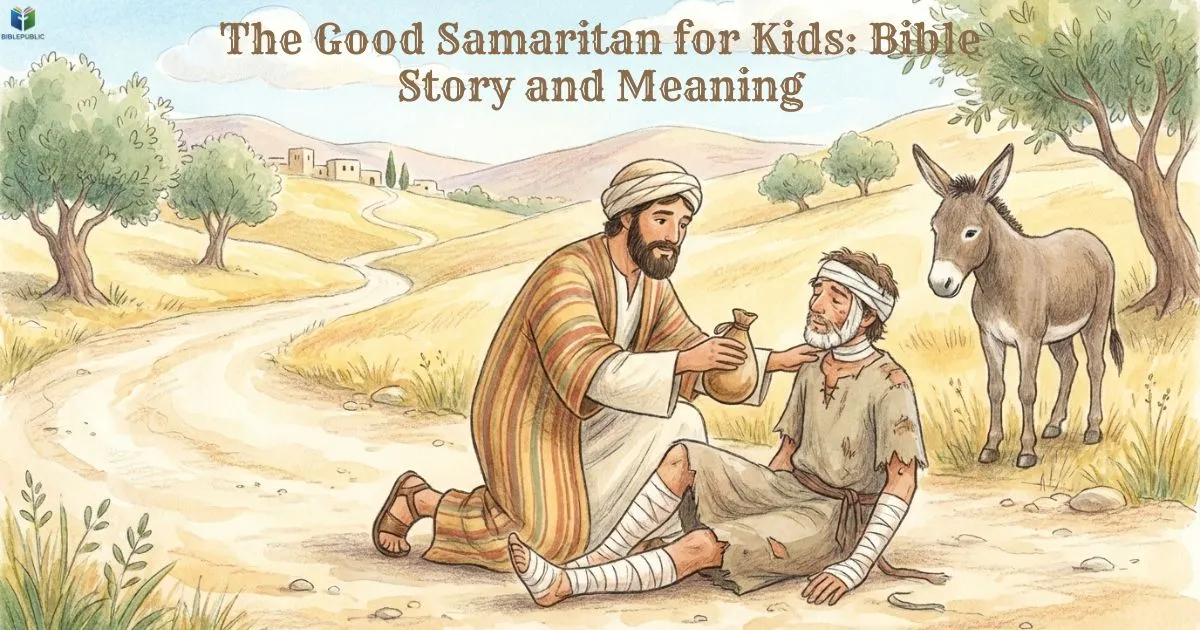
The Good Samaritan for Kids is a Bible story that teaches children how to show kindness, love, and mercy to others. In Luke 10:25-37, Jesus tells the story of a man who helps an injured traveler when others pass by. It shows why caring for people in need matters.
In this guide, children and parents will discover the story’s meaning, its key lessons, and simple ways to practice kindness at home and school. You will also find a Bible verse, discussion questions, and fun activities to help children understand and remember Jesus’ teaching.
The Good Samaritan for Kids: Bible Story Summary
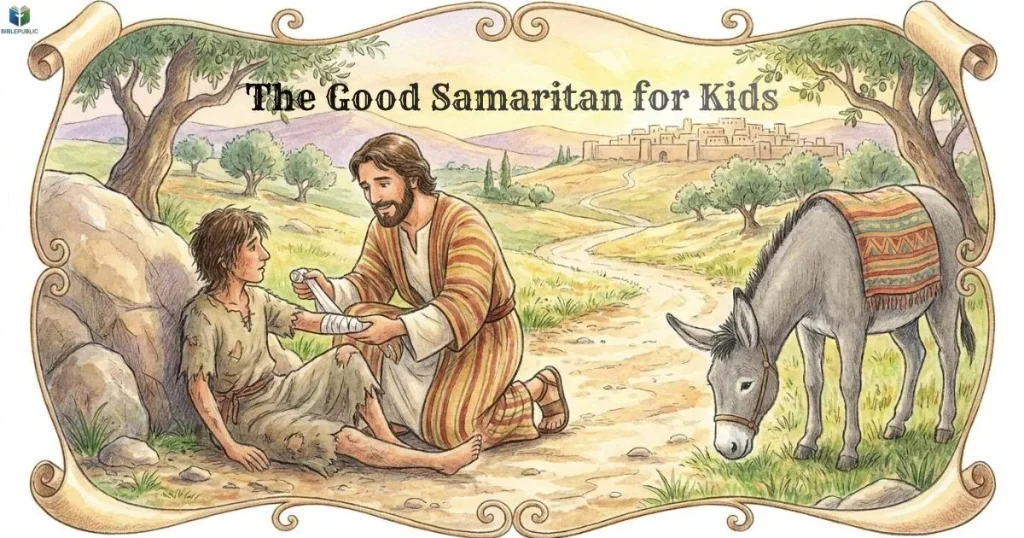
The Good Samaritan is a parable Jesus told to teach people what it means to love their neighbors. The story appears in Luke 10:25-37, where a lawyer asks Jesus about inheriting eternal life and then asks, “And who is my neighbor?” Jesus responds with a story about an injured traveler and a Samaritan who chooses to help him. For children interested in learning more about Jesus’ teachings, Parables of Jesus for Kids and Their Lessons explores other parables and the important lessons they teach about faith, love, and how we treat others.
The Good Samaritan Story in the Bible
Jesus told this parable during a conversation about God’s commandments and the meaning of loving one’s neighbor. The story takes place on the road from Jerusalem to Jericho. A traveler is attacked and left badly hurt, and three people respond to his situation in different ways. Their responses help explain the lesson Jesus wanted his listeners to understand.
The Man Who Was Hurt on the Road
Jesus said that a man was traveling from Jerusalem to Jericho when robbers attacked him. They took his clothing, wounded him, and left him “half dead” (Luke 10:30, KJV). The man was in serious trouble and needed help. Jesus does not give the traveler a name or identify his background, keeping the focus on his suffering and need.
This part of the Good Samaritan story helps children understand that people can experience unexpected difficulties and need care from others. Someone who is injured or distressed may not be able to help themselves. Kids can learn to notice when someone is struggling and recognize that asking a trusted adult for assistance can be an important act of compassion.
The Priest and Levite Who Passed By
Jesus continued the story by describing a priest who saw the injured man and passed by on the other side. A Levite also came to the place, looked at the man, and passed by Luke 10:25-37. Both men saw the traveler, but neither stopped to help him. The passage does not explain why they passed by, so we should not assume their motives.
Their actions contrast with what the Samaritan does next. Children can consider an important question: Is noticing someone’s need enough if we do nothing to help? The story encourages compassion that leads to action. At the same time, children should understand that helping does not mean putting themselves in danger. If someone is injured or a situation seems unsafe, they can seek help from a trusted adult.
How the Samaritan Showed Kindness
When a Samaritan came to the injured man, he saw him and “had compassion on him” (Luke 10:33, KJV). He went to the man, treated his wounds with oil and wine, bandaged him, and placed him on his own animal. He took him to an inn and cared for him. The next day, he gave the innkeeper money and promised to cover any additional expenses (Luke 10:34-35, KJV).
The Samaritan did more than feel sorry for the injured traveler. He took practical steps to help and arranged continued care. His actions demonstrate the mercy at the heart of the parable. Children can follow this example by comforting someone who feels left out, helping a family member with an appropriate task, or telling a teacher when a classmate needs assistance. Kindness becomes meaningful when compassion leads to thoughtful action.
What Is the Meaning of the Good Samaritan?
The meaning of the Good Samaritan centers on showing mercy to someone in need. Jesus told this story after a lawyer asked who his neighbor was. Rather than encouraging people to limit their concern to a particular group, the parable emphasizes acting compassionately toward someone who needs help.
The Samaritan’s response shows that love involves more than knowing what is right or talking about kindness. It includes recognizing suffering and responding with practical care. For children, this means treating people with dignity, including those who are unfamiliar or different from them.
Who Is Our Neighbor According to Jesus?
In Luke 10:29, the lawyer asks Jesus, “And who is my neighbour?” (KJV). Jesus responds with the parable and then asks which of the three men was a neighbor to the injured traveler. The lawyer answers, “He that shewed mercy on him,” and Jesus says, “Go, and do thou likewise” (Luke 10:36-37, KJV).
Jesus shifts the focus from deciding who qualifies as a neighbor to showing what it means to be one through acts of mercy. The injured man did not have to prove that he deserved help. The Samaritan responded to his need.
Children can apply this teaching by treating classmates, new students, neighbors, and people outside their usual social groups with kindness. Being a good neighbor means looking for appropriate ways to help instead of excluding someone simply because that person is unfamiliar or different.
What Made the Samaritan’s Kindness Important?
The Samaritan’s kindness mattered because the injured man needed real help, and the Samaritan took action to provide it. He treated the man’s wounds, arranged transportation, cared for him at an inn, and offered to pay additional costs (Luke 10:33-35, KJV). His compassion involved time, effort, and resources rather than a brief expression of sympathy.
The contrast with the priest and Levite makes the Samaritan’s response especially important. Jesus highlights the merciful actions of the individual in the story. The passage does not teach that every person belonging to a particular group is kind or unkind; it draws attention to the choice to show mercy.
Children can learn that even small acts of kindness can make a difference. They might invite someone who is alone to join a game, help a sibling with a task, or tell a trusted adult when another child needs assistance. The goal is to respond thoughtfully to others’ needs.
What Does the Bible Teach About Loving Your Neighbor?
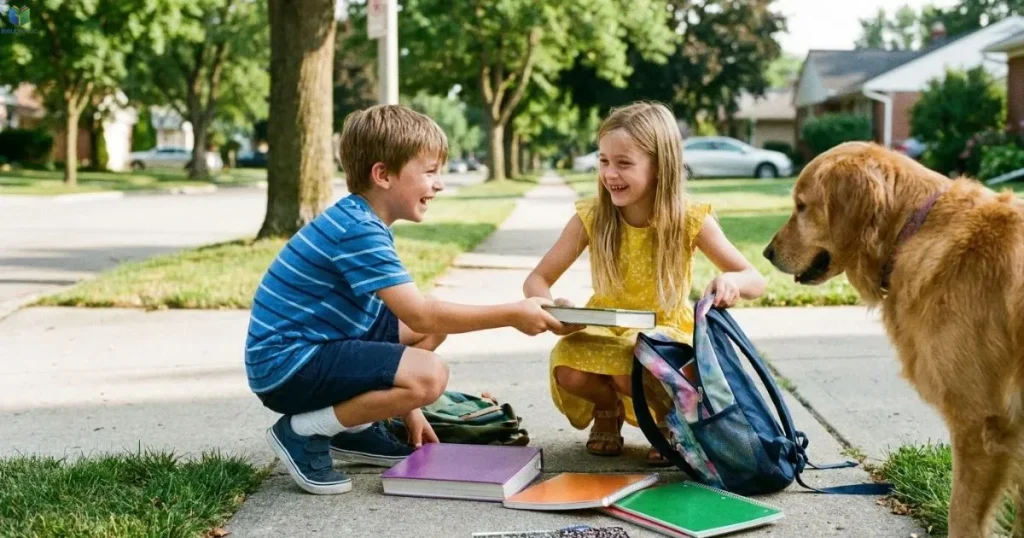
The Bible teaches that loving your neighbor is an important part of faithful living. In Luke 10:27, the lawyer refers to the commandments to love God and to love one’s neighbor as oneself. Jesus affirms his answer before using the parable to address the lawyer’s question about who his neighbor is.
This passage connects love with mercy in action. It encourages readers to consider how they treat people rather than merely speaking about kindness. For children, this teaching can be practiced through everyday choices such as speaking respectfully, including others, sharing when appropriate, and seeking help for someone who is hurt or unsafe.
“Love Thy Neighbour as Thyself”
In Luke 10:27 (KJV), the lawyer quotes the commandment, “Thou shalt love thy neighbour as thyself.” He also describes loving God with all his heart, soul, strength, and mind. Jesus responds that he has answered correctly and says, “this do, and thou shalt live” (Luke 10:28, KJV).
Loving others as ourselves means taking their needs and dignity seriously. It does not mean we must agree with everyone or become close friends with every person. Instead, it means showing the care and respect we would want others to show us.
Parents and Sunday school teachers can help children apply this commandment by discussing familiar situations. How would you want someone to treat you if you were new at school, had made a mistake, or felt sad? These questions help children connect biblical teaching with their daily relationships.
Showing Mercy Through Our Actions
Mercy means responding to another person’s difficulty with compassion and a willingness to help. In the parable, the Samaritan demonstrates mercy by approaching the injured man, treating his wounds, arranging care, and helping pay for his needs (Luke 10:33-35, KJV). His actions show that compassion can involve practical assistance.
Children can show mercy in age-appropriate ways. They might comfort a friend who is upset, apologize after hurting someone’s feelings, share supplies, or ask an adult to help an injured person. They do not have to solve every problem themselves to respond with care.
Mercy should also be practiced with wisdom. Children should not enter dangerous situations or attempt to handle emergencies alone. Asking a trusted adult for help can be a compassionate and responsible response. This helps children connect kindness with good judgment.
What Can Kids Learn From the Good Samaritan?
The Good Samaritan story teaches children that people in need deserve compassion, even when they seem different from us. It also shows that noticing a problem is not the same as helping. The Samaritan responded to the injured man’s needs through practical actions that required time, effort, and generosity.
Children can put these lessons into practice by including someone who feels left out, offering encouragement, or helping with an appropriate task. They can also learn that they are not responsible for solving every problem alone. When someone is hurt or in danger, seeking help from a trusted adult is a wise way to show care. The central lesson is to respond to others with mercy, kindness, and good judgment.
How Can Kids Be Good Samaritans Today?
Children can practice the Good Samaritan’s example through everyday choices at home, at school, and in their communities. They do not need money or special abilities to show kindness. Listening to someone, helping with a task, including another child, or telling an adult when someone needs help can all be meaningful responses.
Parents and Sunday school teachers can discuss real-life situations with children and help them identify safe ways to respond. The goal is not to make children feel responsible for every problem they encounter. It is to encourage them to notice others’ needs, act compassionately when appropriate, and recognize when adult assistance is necessary.
Showing Kindness at School and at Home
At school, children can welcome a new classmate, invite someone to join a game, share classroom supplies when permitted, or respond respectfully when someone is being excluded. At home, they can help with age-appropriate chores, listen to a family member, or comfort someone who is having a difficult day.
Parents and teachers can reinforce these habits by asking children what they noticed, how another person might have felt, and what helpful action they chose. These conversations help children think about the effects of their choices and recognize opportunities to show compassion. The goal is to develop genuine habits of kindness rather than doing good deeds only to receive praise.
Helping Others Safely
Being a good Samaritan does not mean putting yourself in danger. If a child sees someone injured, threatened, or in an unsafe situation, the child should move to safety and tell a trusted adult immediately. In an emergency, a responsible adult can contact the appropriate emergency services. Children should not approach dangerous people, enter unsafe places, or attempt medical treatment beyond their training.
Kids can still show compassion by getting a teacher, parent, or another responsible adult. If it is safe, they may offer calm reassurance while waiting for help. This approach applies the lesson of the Good Samaritan while recognizing that children need protection and guidance. Helping wisely is a meaningful way to care for others.
Good Samaritan Bible Verse for Kids
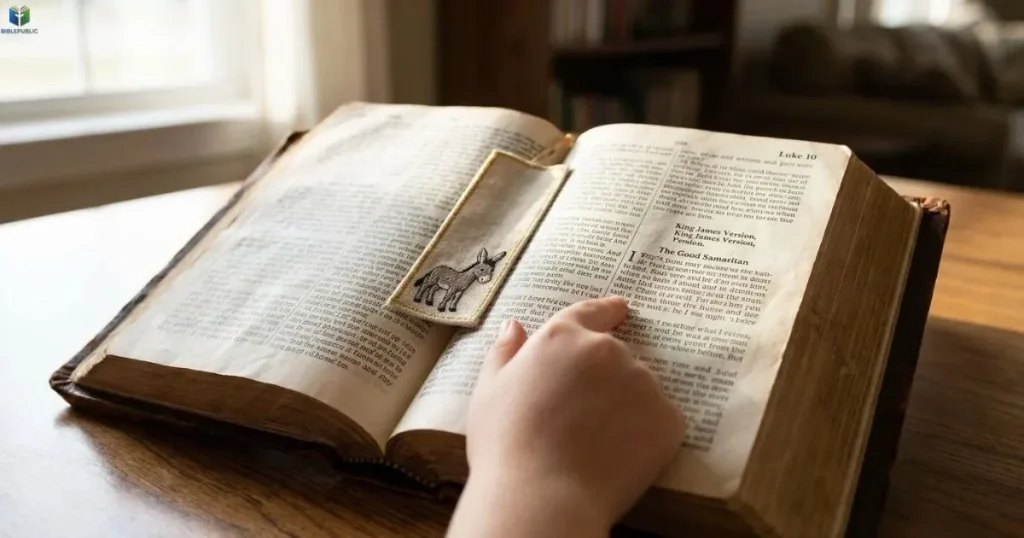
One key verse for understanding the Good Samaritan is Luke 10:37 (KJV): “Then said Jesus unto him, Go, and do thou likewise.” Jesus says this after the lawyer identifies the person who showed mercy as the neighbor in the story.
This verse reminds children that love for others should be reflected in their actions. They can think about ways to show mercy at school, at home, or in their community. Jesus’ instruction encourages compassionate behavior, but children do not need to handle difficult or dangerous situations alone. They can show kindness while seeking help from a trusted adult whenever necessary.
Good Samaritan Activities and Questions for Kids
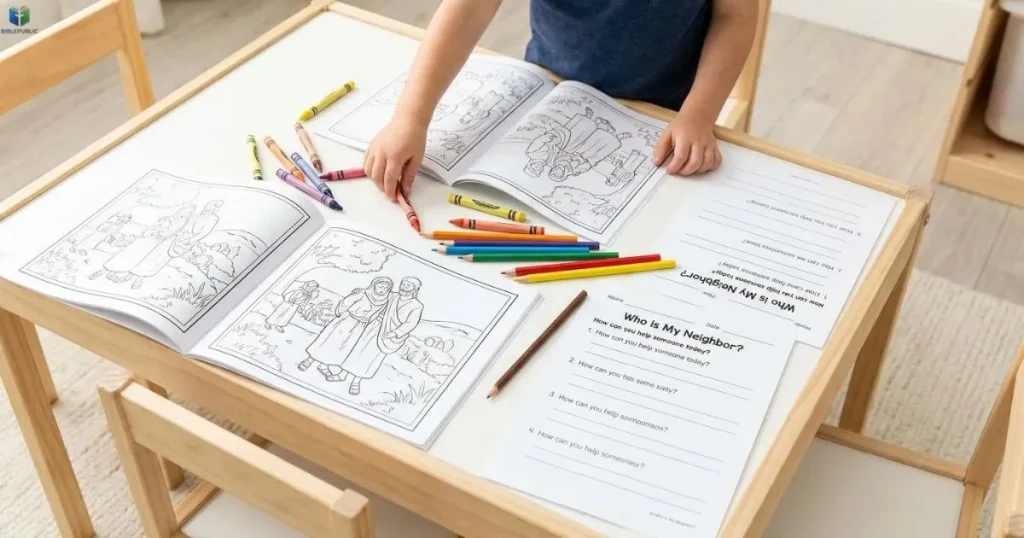
Activities and discussion questions can help children remember the story and think about how its message applies to daily life. Parents and Sunday school teachers can read Luke 10:25-37 (KJV) aloud, ask children to describe the events, and invite them to compare how the priest, Levite, and Samaritan responded to the injured man.
The goal is not simply to memorize the story but to understand mercy and practice safe, thoughtful kindness. Choose activities suited to the children’s ages and abilities, and give them opportunities to explain their ideas in their own words.
Good Samaritan Discussion Questions
After reading Luke 10:25-37, use questions that help children recall the story and reflect on its meaning:
- What happened to the man traveling from Jerusalem to Jericho?
- Who passed by the injured man before the Samaritan arrived?
- What did the Samaritan do to help him?
- What does the story teach us about loving our neighbors?
- What is one kind thing you could do for someone at school or at home?
- If you saw someone hurt or in danger, which trusted adult could you ask for help?
Allow children to answer in their own words rather than expecting every response to be identical. If they have trouble remembering details, guide them back to the passage. Reinforce the lesson that kindness involves responding to others’ needs and that children should seek adult help when a situation is unsafe.
Simple Good Samaritan Activities
- Kindness drawing: Ask children to draw a safe, everyday example of helping someone, such as welcoming a new student or sharing supplies. Invite each child to explain how the picture demonstrates kindness and how the action might help another person.
- Story sequencing: Prepare simple descriptions of the main events in Luke 10:25=37 and ask children to arrange them in the correct order. This activity helps children remember the narrative and understand how the Samaritan’s actions differed from those of the priest and Levite.
- Kindness plan: Invite each child to choose one realistic act of kindness to practice during the week. Examples include helping with a household task, welcoming a classmate, or offering encouragement to someone who feels sad. At the next lesson, ask children what they learned from the experience without making praise or rewards the main goal.
These activities connect the biblical story with practical ways children can show mercy. They also give parents and Sunday school teachers opportunities to discuss how kindness can be expressed thoughtfully and safely.
Conclusion
The Good Samaritan for Kids teaches an important lesson about loving our neighbors through kindness, mercy, and action. Jesus’ parable in Luke 10:25-37 reminds children that everyone deserves compassion, even people who seem different from them. True kindness means noticing when someone needs help and responding with care, respect, and understanding.
Parents and teachers can help children put this lesson into practice through small, thoughtful actions. Encourage your child to include someone who feels left out, help with a simple task, or ask a trusted adult when someone is hurt. These everyday choices can help children grow in kindness and live out Jesus’ teaching each day.
Frequently Asked Questions
What is the main lesson of the Good Samaritan story for kids?
The main lesson is to show love and mercy through helpful actions. Jesus teaches children to care for people in need, even when they seem different from them or come from unfamiliar backgrounds.
Where can children read the Good Samaritan story in the Bible?
Children can read the Good Samaritan story in Luke 10:25-37. Jesus tells this parable after a lawyer asks, “And who is my neighbour?” (Luke 10:29), leading to a lesson about mercy.
Why did the priest and Levite pass by the injured man?
Luke 10:31-32 says the priest and Levite passed by the injured man, but it does not explain their reasons. Rather than guessing their motives, readers can focus on the Samaritan’s compassionate actions.
Who is our neighbor according to the Good Samaritan story?
Jesus teaches that being a neighbor means showing mercy to someone in need. In Luke 10:36-37, Jesus directs attention toward the person who showed compassion and tells the lawyer to do likewise.
Does being a good Samaritan mean children should help strangers alone?
No. Children should never put themselves in danger to help someone. They can move to safety, tell a trusted adult, and let responsible adults handle unsafe situations or contact emergency services when needed.
How can kids practice the Good Samaritan’s lesson every day?
Kids can practice the lesson by including someone who feels left out, helping with age-appropriate tasks, or comforting a sad friend. If someone is hurt or unsafe, they should ask a trusted adult for help.

Chris Saadil is the founder of BiblePublic.com, where he shares biblical insights to help readers understand God’s Word and grow in faith. His mission is to make Scripture clear, practical, and encouraging through Bible verses, biblical teachings, prayer, and Christian living, helping believers build a deeper relationship with God every day.