
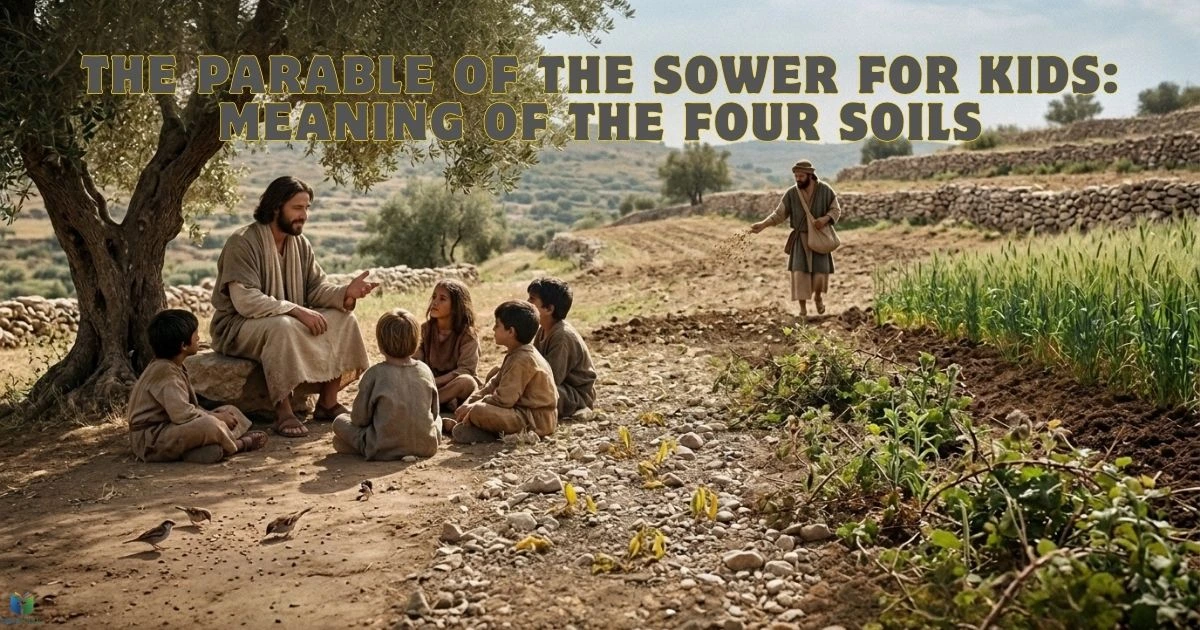
The Parable of the Sower for Kids helps children understand how people respond to God’s Word. In this story, Jesus describes four kinds of soil to show why some seeds grow while others do not. It helps kids learn about faith, listening to Scripture, and spiritual growth.
In this Bible lesson, you’ll discover what each of the four soils means and the main message Jesus wanted to teach. You’ll also find practical examples, Bible verses, fun activities, and discussion questions to help children understand the parable and apply its lessons in their everyday lives.
The Parable of the Sower for Kids: Bible Story Summary
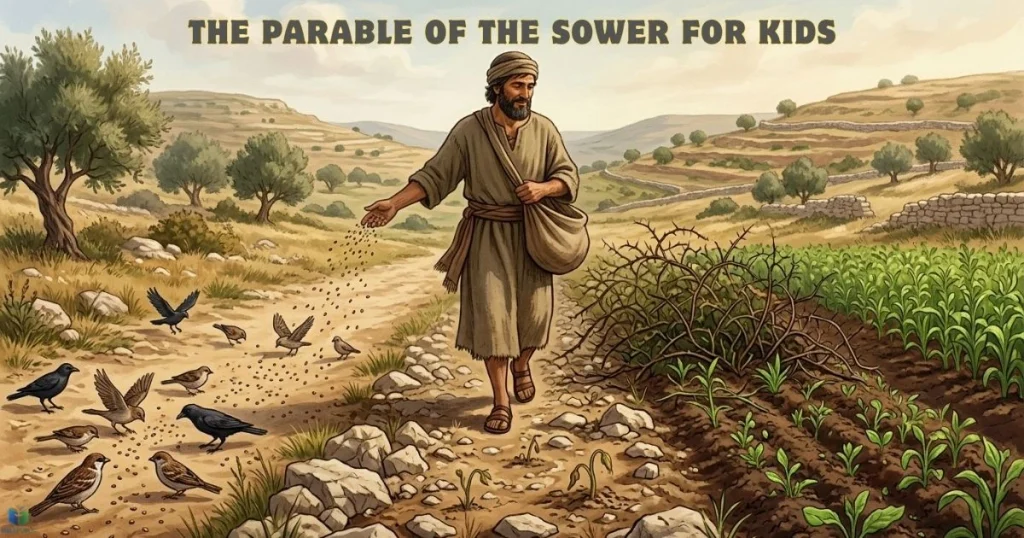
The Parable of the Sower is a story Jesus told to explain how people respond to God’s Word. A farmer went out to sow seeds, and the seeds landed on four kinds of ground. Some fell by the wayside, some on stony places, some among thorns, and others on good ground. Each type of soil produced a different result.
In Matthew 13:1-9, Jesus tells the story, and in Matthew 13:18-23, He explains its meaning. The seed represents the word of the kingdom, while the soils illustrate different responses to hearing it. Some people do not understand the message, some receive it joyfully but stumble when trouble comes, and others allow worldly worries and the desire for riches to hinder spiritual growth. The good ground represents those who hear and understand the Word and bear fruit. This story helps children understand why receiving God’s Word matters.
Where Is the Parable of the Sower Found in the Bible?
The Parable of the Sower appears in three Gospel accounts: Matthew 13:1-23, Mark 4:1-20, and Luke 8:4-15. Each passage includes Jesus’ parable and His explanation of the different soils. Matthew and Mark describe the good ground producing different amounts of fruit, while Luke emphasizes hearing the Word with an honest and good heart, keeping it, and bearing fruit with patience.
For a children’s Bible lesson, Matthew 13:1-9 and Matthew 13:18-23 are especially useful because they present both the story and Jesus’ explanation. Parents and Sunday school teachers can read the passages together and ask children to identify what happened to each group of seeds. Comparing Mark 4:1-20 and Luke 8:4-15 can provide additional context. Children who want to explore other stories Jesus told can also learn from Parables of Jesus for Kids, which introduces simple lessons that teach God’s love. All three accounts emphasize that people respond differently to God’s Word and that receiving it should lead to a fruitful response.
What Do the Four Soils Mean in the Parable of the Sower?
In Matthew 13:18-23, Jesus explains that the four soils represent different responses to hearing the Word of the kingdom. The wayside represents those who hear but do not understand, the stony places represent those who receive the Word joyfully but do not endure through trouble, and the thorny ground represents those whose response is hindered by worldly concerns and the deceitfulness of riches. The good ground represents those who hear and understand the Word and bear fruit.
These four pictures help children see that hearing a Bible lesson is only the beginning. Jesus’ explanation encourages them to pay attention to Scripture, continue learning when faith is challenged, and let God’s Word influence their choices. Each soil illustrates a different response to the same message.
The Seed That Fell by the Wayside
In the parable, some seeds fell beside the path, where birds came and ate them (Matthew 13:4). Jesus explained that this soil represents people who hear the word of the kingdom but do not understand it. The wicked one then takes away what was sown in their hearts (Matthew 13:19). The seed does not grow into a fruitful plant, illustrating how the message can be lost when it is not received.
Children can connect this picture with the importance of paying attention during Bible lessons. If they do not understand a verse or story, they can ask questions rather than pretending they understand. Parents and Sunday school teachers can help by explaining unfamiliar words, inviting children to describe what they heard, and connecting the lesson to a familiar example. The point is not that children must understand every Bible passage immediately, but that they should be willing to listen and learn what God’s Word teaches.
The Seed That Fell on Stony Places
Some seeds fell on stony ground, where the soil was shallow. They sprang up quickly but withered when the sun rose because they had no deep roots (Matthew 13:5-6). Jesus explained that this soil represents people who hear the Word and receive it with joy but have no root in themselves. When trouble or persecution arises because of the Word, they stumble (Matthew 13:20-21).
For children, this part of the parable shows that following God is not limited to happy or easy moments. A child might enjoy a Bible lesson but later feel pressure to do something that goes against what the Bible teaches. Learning Scripture, praying, and seeking guidance from trusted Christian adults can help children understand and remain committed to what they learn. The passage does not mean that every struggle proves someone has weak faith. Rather, Jesus warns that a joyful beginning must be accompanied by a response that endures when following the Word becomes difficult.
The Seed That Fell Among Thorns
Other seeds fell among thorns. The plants began to grow, but the thorns grew alongside them and choked them (Matthew 13:7). Jesus explained that this soil represents people who hear the Word but allow the cares of the world and the deceitfulness of riches to make them unfruitful (Matthew 13:22). The problem is that these competing concerns crowd out the Word’s influence.
Children can understand this lesson by considering what happens when distractions become more important than doing what is right. For example, a child might become so focused on winning, gaining possessions, or pleasing friends that honesty and kindness receive less attention. Having hobbies, enjoying toys, or wanting to succeed is not automatically wrong. Jesus’ warning concerns allowing worldly concerns to take priority over His teaching. Parents and teachers can help children reflect on their priorities and consider whether their choices show that they are taking God’s Word seriously.
The Seed That Fell on Good Ground
Some seeds fell on good ground and produced a crop, yielding thirty, sixty, or a hundred times what had been sown (Matthew 13:8). Jesus explained that the good ground represents those who hear and understand the Word and bear fruit (Matthew 13:23). Luke’s account adds that they keep the Word in an honest and good heart and bear fruit with patience (Luke 8:15).
For children, the good ground illustrates receiving God’s Word and allowing it to influence their lives. They can practice what they learn by telling the truth, forgiving others, showing kindness, and helping people in need. These are practical examples of a response shaped by Scripture, not a complete definition of everything the Bible means by bearing fruit. Children also need time to learn, grow, and understand God’s teaching. Just as a plant develops over time, spiritual growth involves continuing to receive the Word and responding to it faithfully.
What Is the Main Message of the Parable of the Sower?
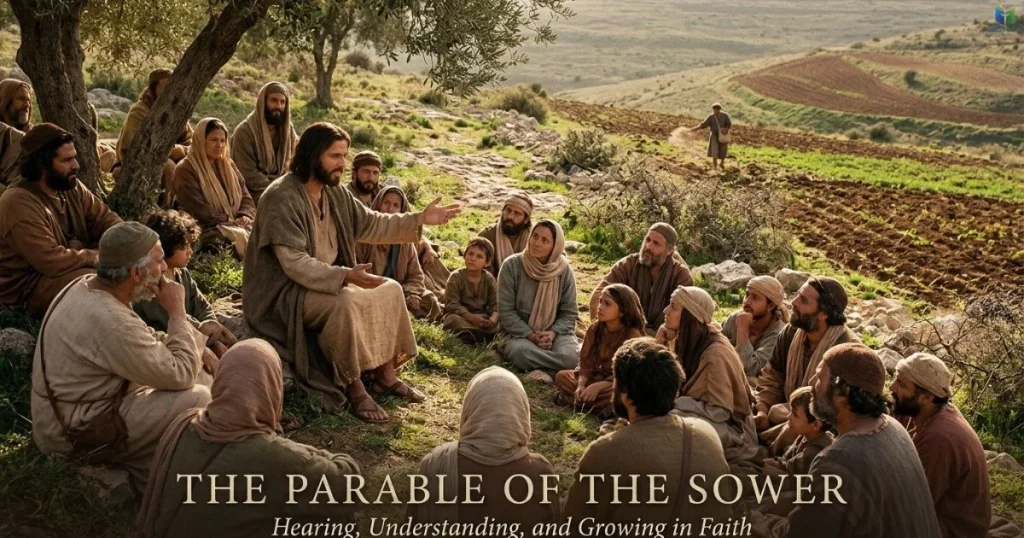
The main message of the Parable of the Sower is that people respond to God’s Word in different ways, and those responses affect whether the Word bears fruit in their lives. In Matthew 13:18-23, Jesus identifies obstacles such as a lack of understanding, trouble or persecution, and worldly worries and the desire for riches. In contrast, the good ground represents those who hear and understand the Word and bear fruit.
The parable encourages children to consider how they receive what the Bible teaches. Do they listen and seek understanding? Do they remember God’s Word when following it becomes difficult? Do other concerns distract them from doing what is right? These questions help children reflect on Jesus’ teaching without treating the four soils as labels to judge other people. The focus is on understanding the Word and responding to it faithfully.
What Can Kids Learn from the Parable of the Sower?
Children can learn three important lessons from the parable. First, they should listen carefully when learning what the Bible teaches. Second, they should continue seeking to follow God’s Word even when doing so becomes difficult. Third, they should recognize that worries and competing desires can distract them from what matters most. These lessons come from Jesus’ explanation of the soils in Matthew 13:18-23.
The parable also helps children understand that spiritual growth takes time. They can ask questions, learn Scripture, pray, and seek guidance from trusted adults as they grow in their understanding of God. The aim is not to make children feel that they must never struggle or make mistakes. Instead, the story encourages them to take God’s Word seriously and keep learning how to respond to it. Parents and teachers can reinforce these lessons by discussing the passage and giving children opportunities to reflect on what it means.
How Can Kids Apply the Parable of the Sower in Everyday Life?

Children can apply the parable by connecting what they learn from the Bible with specific choices at home, school, and with friends. For example, when they learn that honesty matters, they can tell the truth even when they are afraid of getting into trouble. When they learn about loving others, they can include a classmate who feels left out or offer help to someone who needs it.
Children can also think about the distractions Jesus describes. If they become overly concerned with possessions, winning, or pleasing friends, they can talk with a trusted adult about keeping those concerns in the right place. When following God’s teaching feels difficult, they can pray for help and continue learning from Scripture. These everyday choices provide opportunities to put biblical teaching into practice. Children do not need to understand everything at once; they can keep growing as they learn to hear, understand, and respond to God’s Word.
What Bible Verse Teaches the Main Lesson of the Parable of the Sower?
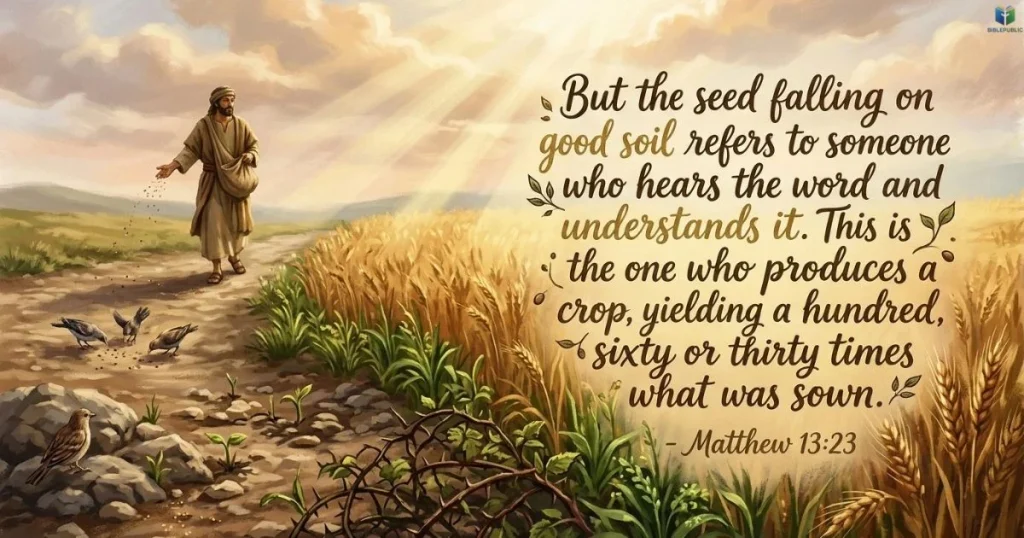
Matthew 13:23 explains the meaning of the good ground in Jesus’ parable. The verse reads in the King James Version (KJV):
“But he that received seed into the good ground is he that hearth the word, and understandeth it; which also bearish fruit, and brength forth, some an hundredfold, some sixty, some thirty.”
This verse highlights three connected ideas: hearing the Word, understanding it, and bearing fruit. The different amounts of fruit-one hundredfold, sixtyfold, and thirtyfold-show that the harvest can vary. Jesus’ central point is that the Word is received in a way that produces a fruitful response.
Parents and Sunday school teachers can help children understand the verse by asking what it might look like to follow a biblical teaching during the week. A child might tell the truth in a difficult situation, forgive someone, or help a person in need. These examples make the idea of bearing fruit easier to understand while keeping the emphasis on hearing and responding to God’s Word rather than simply performing good deeds.
Parable of the Sower Activities and Questions for Kids
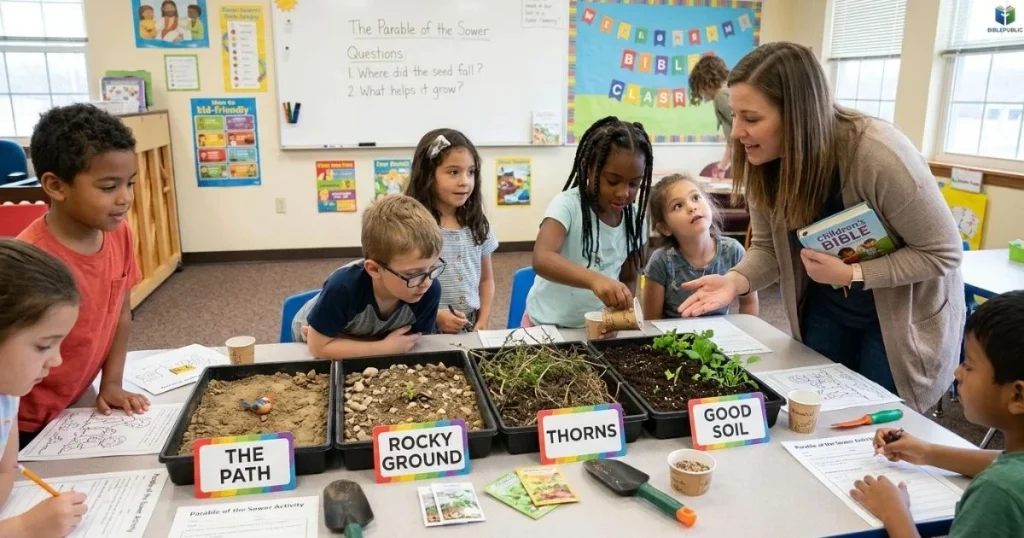
Activities and discussion questions can help children remember Jesus’ story and understand its meaning. Before beginning, read Matthew 13:1-9 and Matthew 13:18-23 together. Ask children to listen for what happened to each group of seeds and what Jesus said the different soils represented.
Choose an activity that suits the children’s ages and available materials. Younger children may benefit from sorting pictures or drawing the four soils, while older children may enjoy explaining the meaning of each soil in their own words. Keep the goal focused on understanding Scripture and reflecting on its message, rather than treating the activity as a test of a child’s faith.
Simple Parable of the Sower Activities
1. Four-soil sorting activity: Label four pieces of paper or containers wayside, stony places, among thorns, and good ground. Give children pictures or short descriptions of what happened to the seeds and ask them to match each one to the correct soil. Then read Matthew 13:18-23 and discuss Jesus’ explanation. This activity helps children connect the details of the story with their meanings.
2. Plant-a-seed activity: Give each child a small pot, suitable soil, and a seed that can be grown indoors. Help the children plant and water their seeds, then observe their growth over the following days. Explain that caring for a growing plant can remind them of Jesus’ teaching about receiving God’s Word and bearing fruit. Make clear that the plant is an illustration of growth, not a complete representation of every detail in the parable.
Discussion Questions for Kids
After reading Matthew 13:1-9 and Matthew 13:18-23, ask children the following questions. Encourage them to answer in their own words and refer to the passage when they need help.
- Who scattered the seeds in Jesus’ story?
- What does the seed represent?
- What happened to the seed that fell beside the path?
- Why did the plants in stony ground wither?
- What do the thorns represent in Jesus’ explanation?
- What does the good ground teach us about hearing God’s Word?
- What is one teaching from the Bible you can practice this week?
Give children time to think before answering. If a question is difficult, reread the relevant verses and help them find the answer in the text. The final question invites them to connect the parable with everyday life, while the other questions check their understanding of Jesus’ story and explanation. The goal is to help children understand the passage and reflect on how they can respond to God’s Word.
Conclusion
The Parable of the Sower for Kids teaches an important lesson about how we receive God’s Word. Jesus shows that hearing Scripture is only the beginning. We also need to understand its message and let it shape our choices. The four soils remind children that faith grows as they keep learning and following God’s teachings each day.
Parents and Sunday school teachers can help children apply this lesson by reading Matthew 13:18-23 together and discussing what it means to have good ground. Encourage kids to choose one biblical teaching to practice this week, such as showing kindness, telling the truth, or helping someone in need. These everyday choices can help children put God’s Word into practice.
Explore More Bible Lessons for Kids
Understanding the four soils helps children learn how to receive God’s Word, grow in faith, and put Jesus’ teachings into practice. Exploring other Bible stories can build on these lessons by showing how biblical principles guide our choices, shape our character, and help us treat others with love, kindness, and compassion.
The Good Samaritan for Kids: Bible Story and Meaning
The Prodigal Son for Kids: Bible Story and Meaning
Frequently Asked Questions
What does the Parable of the Sower teach children about faith?
The Parable of the Sower teaches children that people respond to God’s Word in different ways. Faith grows when they listen, understand Scripture, and put Jesus’ teachings into practice.
What are the four soils in the Parable of the Sower?
The four soils are the path, rocky ground, thorny ground, and good soil. They represent different responses to God’s Word, including rejection, temporary faith, distraction, and fruitful growth.
Where is the Parable of the Sower found in the Bible?
The parable appears in Matthew 13:1-23, Mark 4:1-20, and Luke 8:4-15. Matthew 13:18-23 is especially helpful because Jesus explains the meaning of the four soils.
Why did some seeds fail to grow in Jesus’ parable?
Some seeds fell on the path, rocky ground, or among thorns. Jesus explains that these represent people who reject the Word, fall away during trouble, or become distracted by worldly concerns.
What does the good soil represent in the Parable of the Sower?
The good soil represents people who hear and understand God’s Word and bear fruit. Matthew 13:23 connects this fruitfulness with a faithful response to Jesus’ teaching.
How can parents teach the Parable of the Sower to children?
Parents can read Matthew 13:18-23 together, explain each soil, and discuss everyday examples. Encourage children to practice God’s Word through kindness, honesty, forgiveness, and helping others.

Chris Saadil is the founder of BiblePublic.com, where he shares biblical insights to help readers understand God’s Word and grow in faith. His mission is to make Scripture clear, practical, and encouraging through Bible verses, biblical teachings, prayer, and Christian living, helping believers build a deeper relationship with God every day.

1 thought on “The Parable of the Sower for Kids: Meaning of the Four Soils”