

Family struggles can sometimes repeat across generations, leaving people wondering whether these patterns can change. Bible Verses About Breaking Generational Curses offer biblical guidance on sin, personal responsibility, forgiveness, and freedom through Christ. Understanding these teachings can help you face your family history with faith rather than fear.
In this article, you will explore 25 Bible verses in the King James Version (KJV), along with simple explanations of their meaning and practical applications. You will also learn what Scripture says about generational consequences, personal accountability, and building a healthier family legacy through faith and wise choices.
What Does the Bible Say About Breaking Generational Curses?
The Bible addresses the effects of sin, personal responsibility, repentance, and God’s power to restore lives. Although the phrase “generational curse” is common in some Christian communities, Scripture does not teach that every repeated family struggle proves a spiritual curse has passed from one generation to another.
Understanding this subject requires reading Scripture in context and distinguishing personal guilt from the consequences of family behavior. The following sections explore what the Bible teaches about family patterns, Christ’s redemption, and the hope of lasting change.
What Is a Generational Curse According to the Bible?
A generational curse generally refers to the belief that the effects of sin or spiritual wrongdoing continue from parents to their children. Some Christians use this term to explain recurring struggles within families. However, Scripture does not identify every repeated problem as a curse. Understanding the biblical context helps Christians distinguish theological interpretations from learned behaviors, harmful habits, and the consequences of past choices.
Do Children Inherit the Guilt of Their Parents’ Sins?
The Bible distinguishes between experiencing the consequences of another person’s actions and being personally guilty of that person’s sin. Children may suffer because of a parent’s harmful choices, but they do not automatically inherit the parent’s guilt before God. Ezekiel 18 emphasizes individual accountability. This teaching offers hope to people who fear that their family history determines their spiritual standing or future.
How Does Christ’s Redemption Relate to Generational Curses?
Christ’s redemption offers forgiveness, reconciliation with God, and hope for a transformed life. Christians can trust in His finished work rather than live in fear that their family history defines them. Galatians 3:13–28 discusses Christ redeeming believers from the curse of the law in the context of the law and God’s promise to Abraham. Applying this passage requires care rather than assuming it directly teaches that every family problem is a generational curse.
25 Bible Verses About Breaking Generational Curses and Finding Freedom

Bible verses about breaking generational curses can help readers explore freedom through Christ, personal responsibility, repentance, and God’s mercy. These biblical themes offer guidance for people who want to understand family struggles and move toward healthier relationships without assuming that every repeated hardship has a supernatural cause.
The following sections organize the Scripture collection by theme. Each category focuses on a different aspect of spiritual growth, from receiving forgiveness to overcoming harmful family patterns and building a healthier legacy for future generations.
Bible Verses About Freedom and Redemption Through Christ
Freedom through Christ is central to the Christian understanding of forgiveness and spiritual renewal. This collection focuses on Scripture passages related to redemption, release from sin, and a restored relationship with God. These themes can encourage readers who feel burdened by past mistakes or difficult family histories and help them understand the hope available through Christ.
1. Redemption from the Curse of the Law – Galatians 3:13
Christ hath redeemed us from the curse of the law, being made a curse for us: for it is written, Cursed is every one that hangeth on a tree:
This verse explains Christ’s redemptive work in relation to the curse of the law. For Christians concerned about generational curses, it directs attention to Christ rather than fear of family history. Apply this truth by grounding your faith in His redemption instead of assuming every repeated family struggle is a supernatural curse.
2. Freedom Through the Son – John 8:36
If the Son therefore shall make you free, ye shall be free indeed.
Jesus identifies Himself as the source of true freedom. This verse encourages believers who want to leave sinful or destructive habits behind. For example, someone who grew up around frequent anger can seek Christ’s guidance while learning to respond with patience and self-control.
3. A New Life in Christ – 2 Corinthians 5:17
Therefore if any man be in Christ, he is a new creature: old things have passed away; behold, all things have become new.
Paul describes the new identity believers receive in Christ. Your family history does not have to determine every future decision. Apply this teaching by choosing honesty, kindness, and responsible behavior even when these differ from patterns you experienced growing up.
4. Deliverance from the Power of Darkness – Colossians 1:13-14
Who hath delivered us from the power of darkness, and hath translated us into the kingdom of his dear Son:
In whom we have redemption through his blood, even the forgiveness of sins:
These verses emphasize God’s deliverance and the forgiveness available through Christ. They encourage Christians to focus on their relationship with God rather than live in fear of inherited spiritual guilt. A practical response is to seek forgiveness for personal wrongdoing and pursue a life shaped by Christ’s teaching.
Bible Verses About Personal Responsibility for Sin
Personal responsibility is essential when examining family patterns and generational curses. This collection focuses on biblical teaching about individual choices, accountability, and the difference between another person’s wrongdoing and one’s own actions. These passages can help readers approach their family history honestly without accepting guilt for sins they did not commit.
5. Each Person Is Accountable for Their Own Sin – Ezekiel 18:20
The soul that sonnet, it shall die. The son shall not bear the iniquity of the father, neither shall the father bear the iniquity of the son: the righteousness of the righteous shall be upon him, and the wickedness of the wicked shall be upon him.
Ezekiel emphasizes personal accountability before God. Children may experience the consequences of their parents’ choices, but they do not automatically inherit their parents’ guilt. Apply this principle by acknowledging past family harm without accepting responsibility for sins you did not commit.
6. Personal Responsibility Under God’s Law – Deuteronomy 24:16
The fathers shall not be put to death for the children, neither shall the children be put to death for the fathers: every man shall be put to death for his own sin.
This law establishes individual responsibility in the administration of justice. It supports the distinction between a person’s own wrongdoing and another family member’s guilt. In practice, focus on making responsible choices rather than blaming yourself for another person’s actions.
7. Giving an Account to God – Romans 14:12
So then every one of us shall give account of himself to God.
Paul reminds believers that each person will answer to God for their own life. This verse encourages self-examination rather than placing all the blame on previous generations. Consider your own attitudes and decisions, and identify one area where you can act with greater integrity.
8. Bearing Personal Responsibility – Galatians 6:5
For every man shall bear his own burden.
Paul teaches that individuals have responsibilities they must carry. In the same chapter, Galatians 6:2 also calls believers to bear one another’s burdens. Together, these teachings encourage personal accountability alongside compassionate support. Apply them by taking ownership of your choices while seeking help when you need it.
Bible Verses About Repentance, Confession, and Forgiveness
John emphasizes God’s faithfulness to forgive those who confess their sins. This verse concerns personal sin and God’s forgiveness, not a special formula for breaking a generational curse. Apply it through honest confession, genuine repentance, and a willingness to turn away from wrongdoing. Understanding the importance of forgiveness in the Bible can also help readers approach relationships with compassion and seek reconciliation where appropriate.
9. Forgiveness Through Confession – 1 John 1:9
If we confess our sins, he is faithful and just to forgive us our sins, and to cleanse us from all unrighteousness.
John emphasizes God’s faithfulness to forgive those who confess their sins. This verse concerns personal sin and God’s forgiveness, not a special formula for breaking a generational curse. Apply it through honest confession, genuine repentance, and a willingness to turn away from wrongdoing.
10. Turning to God Through Repentance – Acts 3:19
Repent ye therefore, and be converted, that your sins may be blotted out, when the times of refreshing shall come from the presence of the Lord;
Peter calls his hearers to repent and turn to God. Repentance involves more than regretting past mistakes; it includes a change in direction. For example, if dishonesty has damaged your relationships, begin practicing truthfulness and take responsibility for the harm caused.
11. Finding Relief Through Confession – Psalm 32:5
I acknowledged my sin unto thee, and my iniquity have I not hid. I said, I will confess my transgressions unto the LORD; and thou forgavest the iniquity of my sin. Selah.
David describes the relief that came when he acknowledged his sin before God. This passage encourages honesty instead of hiding personal wrongdoing. Apply its lesson by bringing your struggles to God in prayer and seeking appropriate reconciliation when your actions have hurt someone.
12. Practicing Forgiveness and Kindness – Ephesians 4:32
And be ye kind one to another, tenderhearted, forgiving one another, even as God for Christ’s sake hath forgiven you.
Paul calls Christians to show kindness, compassion, and forgiveness. These qualities can help interrupt cycles of resentment and hostility within families. In practice, work toward reconciliation when appropriate while maintaining necessary boundaries. Forgiveness does not mean excusing abuse or remaining in an unsafe situation.
Bible Verses About Overcoming Harmful Family Patterns
Harmful family patterns may include anger, dishonesty, neglect, or repeated conflict. This collection explores biblical themes of self-control, wisdom, and changed behavior. These Bible verses about family conflict can encourage readers to recognize damaging habits, take responsibility for their actions, and develop healthier ways of communicating and responding to difficult situations.
13. Changing Through a Renewed Mind – Romans 12:2
And be not conformed to this world: but be ye transformed by the renewing of your mind, that ye may prove what is that good, and acceptable, and perfect, will of God.
Paul teaches that believers should allow their thinking to be transformed according to God’s will. This principle is relevant when familiar family habits conflict with biblical values. Apply it by examining your reactions, reflecting on Scripture, and deliberately practicing healthier responses.
14. Choosing Patience Over Anger – James 1:19-20
Wherefore, my beloved brethren, let every man be swift to hear, slow to speak, slow to wrath:
For the wrath of man worketh not the righteousness of God.
James encourages careful listening, thoughtful speech, and restraint in anger. These qualities can help change patterns of heated arguments and hurtful communication. When conflict arises, pause before responding, listen to the other person, and choose words that address the issue without causing unnecessary harm.
15. Avoiding Harmful Family Conflict – Colossians 3:21
Fathers, provoke not your children to anger, lest they be discouraged.
This verse addresses how parents’ behavior can affect their children emotionally. It encourages parents to avoid conduct that needlessly discourages or frustrates them. Apply this teaching by correcting children with patience, offering appropriate encouragement, and setting boundaries without humiliation or harsh treatment.
16. Leaving Old Habits Behind – Ephesians 4:22-24
That ye put off concerning the former conversation the old man, which is corrupt according to the deceitful lusts;
And be renewed in the spirit of your mind;
And that ye put on the new man, which after God is created in righteousness and true holiness.
Paul describes putting away the former way of life and embracing a renewed character. This passage encourages deliberate change rather than resignation to destructive habits. Identify one behavior you want to leave behind and replace it with a specific action that reflects righteousness and holiness.
Bible Verses About God’s Mercy and Blessings for Future Generations
God’s mercy offers hope beyond a family’s painful history. This collection focuses on biblical themes of compassion, faithfulness, and the influence of a person’s choices on future generations. These passages can encourage readers to build a family legacy shaped by love, integrity, and devotion to God rather than fear or blame.
17. Trusting God’s Faithfulness Across Generations – Deuteronomy 7:9
Know therefore that the LORD thy God, he is God, the faithful God, which keepeth covenant and mercy with them that love him and keep his commandments to a thousand generations;
Moses emphasizes God’s faithfulness and covenant mercy toward His people. The verse offers reassurance about God’s character rather than a guarantee that families will never experience hardship. Apply its message by cultivating faithfulness to God and teaching future generations through consistent examples.
18. God’s Mercy Toward Future Generations – Psalm 103:17
But the mercy of the LORD is from everlasting to everlasting upon them that fear him, and his righteousness unto children’s children;
This psalm celebrates God’s enduring mercy and righteousness. It encourages a family legacy rooted in reverence for God rather than fear of the past. Parents and caregivers can apply this principle by modeling compassion, integrity, and devotion in everyday life.
19. Leaving a Legacy of Integrity – Proverbs 20:7
The just man walketh in his integrity: his children are blessed after him.
This proverb highlights the value of living with integrity and the positive influence it can have on children. It does not guarantee that children will never struggle, but it encourages responsible example-setting. Practice honesty, keep your commitments, and treat others fairly so younger family members can learn from your actions.
20. A Family Legacy Shaped by Righteousness – Psalm 112:1-2
Praise ye the LORD. Blessed is the man that feareth the LORD, that delighteth greatly in his commandments.
His seed shall be mighty upon earth: the generation of the upright shall be blessed.
These verses connect reverence for God with a life shaped by His commandments. They encourage families to value faithfulness and righteousness. Apply this teaching by making Scripture, integrity, and compassionate service part of your family’s daily life rather than relying on words alone.
Bible Verses About Hope, Restoration, and New Beginnings
A difficult family history does not have to determine every future choice. This collection explores biblical themes of restoration, renewed thinking, spiritual growth, and hope. These passages can encourage readers to move forward with faith while taking practical steps toward healthier relationships and a more peaceful home.
21. Hope for Restoration After Loss – Joel 2:25
And I will restore to you the years that the locust hath eaten, the cankerworm, and the caterpillar, and the palmerworm, my great army which I sent among you.
In context, God promises restoration to His people after devastation. This passage offers hope when family history includes painful experiences or serious mistakes, but it does not guarantee that every loss will be reversed in the same way. Apply its message by seeking God’s help as you rebuild what can be restored.
22. Trusting God for a New Beginning – Isaiah 43:18-19
Remember ye not the former things, neither consider the things of old.
Behold, I will do a new thing; now it shall spring forth; shall ye not know it? I will even make a way in the wilderness, and rivers in the desert.
God speaks to His people about a new work and deliverance. The passage encourages hope beyond past difficulties while retaining its original context. In your own life, learn from previous mistakes without allowing them to prevent you from making wise, faithful choices today.
23. Finding Strength in God’s Daily Mercies – Lamentations 3:22-23
It is of the LORD’S mercies that we are not consumed, because his compassions fail not.
They are new every morning: great is thy faithfulness.
These verses celebrate God’s compassion in the midst of suffering. They remind readers that hardship does not mean God’s mercy has failed. When changing long-standing family habits feels difficult, seek His guidance each day and continue making steady, responsible choices.
24. Looking Forward to God’s Renewal – Revelation 21:5
And he that sat upon the throne said, Behold, I make all things new. And he said unto me, Write: for these words are true and faithful.
This verse points to God’s ultimate renewal of all things in the new creation. It offers lasting Christian hope without promising that every present family problem will disappear immediately. Apply its message by remaining faithful amid present difficulties and remembering the hope Christians have in God’s final restoration.
25. Trusting God to Continue His Work – Philippians 1:6
Being confident of this very thing, that he which hath begun a good work in you will perform it until the day of Jesus Christ:
Paul expresses confidence that God will continue His work among believers. This verse encourages perseverance in spiritual growth rather than expecting instant transformation. If you are working to change a harmful family pattern, keep practicing healthier responses, seek wise support, and remain committed to growing in Christ.
What Do Exodus 20:5-6, Ezekiel 18:20, and Jeremiah 31:29-34 Teach?
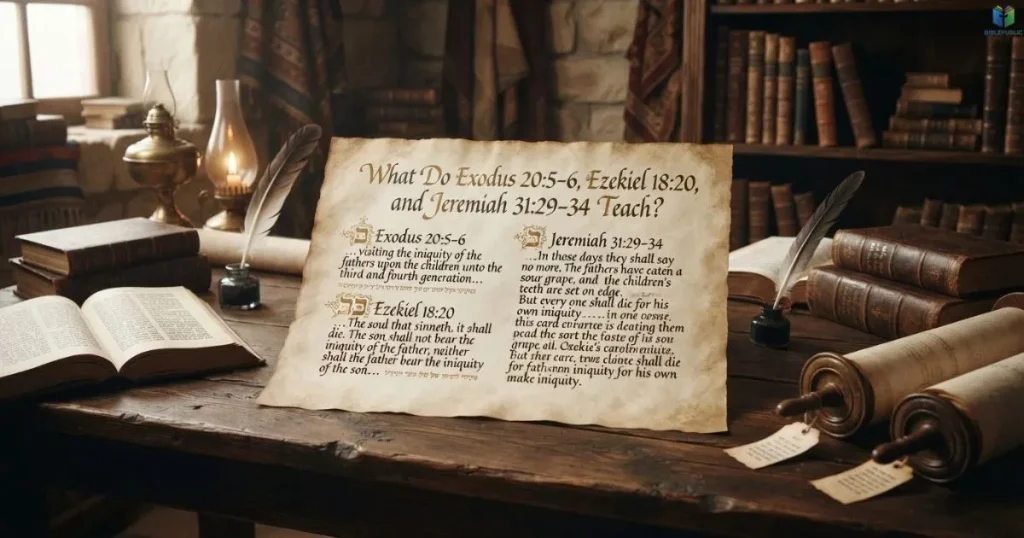
Exodus 20:5-6, Ezekiel 18:20, and Jeremiah 31:29-34 are important passages when discussing generational curses. Read in context, they address the consequences of sin, personal accountability, God’s mercy, and a renewed relationship with Him.
These passages should not be reduced to a single formula. Their historical settings and messages help clarify what Scripture teaches about family responsibility and personal guilt. Examining each passage carefully helps Christians avoid conclusions that go beyond the biblical text.
Understanding Exodus 20:5-6 in Its Biblical Context
Exodus 20:5-6 appears within the Ten Commandments, specifically the command against idolatry. God warns of consequences extending to later generations among those who hate Him, while also describing His mercy toward those who love Him and keep His commandments. The passage highlights the seriousness of idolatry and the lasting effects of rebellion. It should be read alongside the Bible’s broader teaching about personal responsibility and God’s compassion.
Understanding Personal Accountability in Ezekiel 18:20
Ezekiel 18:20 addresses whether children bear the guilt of their parents’ sins. In this chapter, God challenges a saying that treated children as responsible for their ancestors’ wrongdoing. The passage emphasizes that the person who sins is accountable for that sin. It does not deny that families can experience painful consequences, but it rejects the idea that children automatically carry their parents’ guilt before God.
How Jeremiah 31:29-34 Addresses Personal Responsibility and the New Covenant
Jeremiah 31:29-34 responds to a proverb about parents eating sour grapes and their children’s teeth being set on edge. In context, the passage announces a new covenant with God’s people. It emphasizes personal accountability, forgiveness, and God’s law being written in the heart. Christians understand this promise in relation to God’s redemptive work, but it should not be treated as a simple statement that every generational consequence disappears immediately.
What These Passages Mean for Christians Today
Together, these passages encourage Christians to take sin seriously without assuming that they inherit the guilt of previous generations. Family choices can affect later generations, yet each person remains responsible for their own response to God. Christians can acknowledge past harm, seek forgiveness, and make healthier choices. This approach replaces fear with biblical responsibility, trust in God’s mercy, and hope for meaningful change.
Generational Curses vs. Generational Consequences
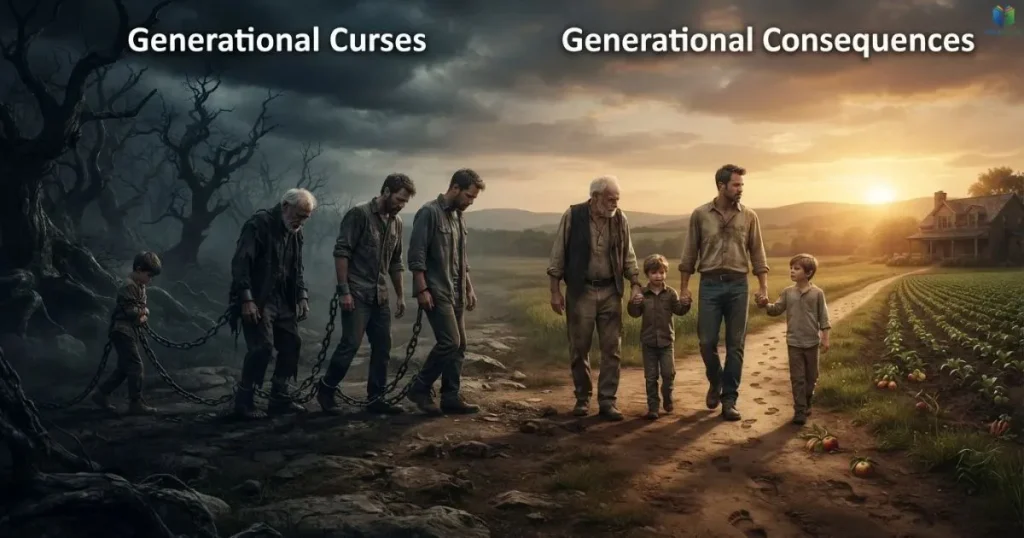
Generational curses and generational consequences are sometimes treated as the same thing, but the distinction matters. Some Christians use “generational curse” to describe spiritual effects believed to pass through a family. Generational consequences, by contrast, can describe the lasting effects of choices, habits, and family relationships.
The Bible clearly addresses sin, accountability, and the influence of family life. It does not require Christians to interpret every repeated hardship as evidence of a curse. Understanding this difference can help readers respond with wisdom instead of fear.
How Family Consequences Differ from Personal Accountability
Family consequences occur when one person’s actions affect others, sometimes for years. A parent’s dishonesty, for example, may damage trust and influence how children approach relationships. Personal accountability concerns an individual’s own choices before God. Recognizing both truths helps Christians acknowledge real harm without assuming that children automatically inherit the spiritual guilt of their parents.
Why Harmful Behaviors Can Repeat Across Generations
Harmful behaviors can repeat when children observe and learn the same responses to stress, conflict, or disappointment. Anger, avoidance, dishonesty, and poor communication may become familiar patterns unless someone chooses a different response. These habits can affect relationships and family well-being. Recognizing how patterns develop helps families pursue change through honest reflection, wise support, accountability, and healthier daily habits.
Do Repeated Family Problems Automatically Mean a Curse?
No. Repeated family problems do not automatically prove that a generational curse exists. Similar struggles can result from learned behavior, difficult circumstances, unresolved conflict, or other factors. Christians may hold different theological views about spiritual influences, but Scripture encourages careful judgment rather than fear-based conclusions. Prayer and spiritual guidance can be valuable alongside practical steps that address the actual causes of a family’s difficulties.
What the Bible Teaches About Changing Harmful Patterns
The Bible encourages people to turn from sin, renew their thinking, practice self-control, and treat others with love. Changing harmful family patterns begins with recognizing damaging behavior and taking responsibility for one’s own actions. Christians can seek God’s wisdom while building healthier habits and relationships. A person’s past may shape their challenges, but it does not remove their responsibility or opportunity to grow.
How Can Christians Respond to Harmful Family Patterns?
Christians can respond to harmful family patterns by combining faith with honest self-examination and practical action. Prayer, Scripture, repentance, forgiveness, and wise counsel can support meaningful change, while accountability helps turn good intentions into daily practice.
The goal is not to blame previous generations or search for a supernatural explanation for every problem. Instead, believers can seek God’s guidance, address harmful behavior, and work toward a family environment marked by truth, compassion, and responsibility.
Recognize the Patterns You Want to Change
Start by identifying repeated behaviors that damage your relationships or spiritual life. These might include uncontrolled anger, dishonesty, neglect, or difficulty resolving conflict. Consider when these patterns occur and how they affect others. Honest reflection is not about blaming your family or condemning yourself. It is an opportunity to recognize what needs to change and take the first responsible step toward healthier choices.
Practice Repentance, Forgiveness, and Accountability
Repentance involves acknowledging wrongdoing and turning toward a different way of living. Forgiveness can help release bitterness, although rebuilding trust may also require time, boundaries, and consistent change. Accountability means accepting responsibility for your actions rather than blaming family history or spiritual forces. Christians can seek pastoral guidance when helpful and pursue professional support when harmful patterns involve serious conflict, addiction, or abuse.
Renew Your Mind Through Scripture and Prayer
Scripture and prayer can help Christians examine their attitudes, strengthen their faith, and seek wisdom when old habits return. Regular Bible reading provides opportunities to reflect on God’s character and the life He calls believers to live. Prayer can support honesty, patience, and perseverance. These practices are most helpful when they lead to meaningful changes in choices, relationships, and daily behavior.
Build Healthier Habits and Relationships for Future Generations
A healthier family legacy develops through repeated choices, not one emotional moment. Parents and other family members can model honesty, respectful communication, accountability, and compassion. Clear boundaries and consistent routines can also help create a more stable home. Even when you cannot change what previous generations did, you can take responsibility for your actions and work toward relationships that support the well-being of those who come after you.
A Prayer for Family Healing, Freedom, and Spiritual Growth
Prayer can help Christians bring family pain, personal struggles, and hopes for change before God. A prayer for family healing does not need to assume that a curse is present. It can instead focus on repentance, wisdom, forgiveness, protection from harmful behavior, and the grace to build healthier relationships.
The following prayers offer words for personal reflection or family devotion. Adapt them to your circumstances, remembering that prayer can accompany practical action, responsible choices, and support from trusted people.
A Prayer for Repentance and Personal Transformation
Heavenly Father, please show me the attitudes and actions I need to change. Forgive my sins and help me turn away from harmful habits. Give me humility to accept responsibility, wisdom to make better choices, and strength to follow Your Word. Help me treat others with patience, honesty, and love. Guide me toward lasting spiritual growth through Jesus Christ. Amen.
A Prayer for Wisdom and a Healthier Family Legacy
Heavenly Father, give my family wisdom, patience, and compassion. Help us recognize harmful patterns and choose healthier ways to live together. Teach us to speak truthfully, forgive wisely, and respect one another. Give us courage to seek help when needed and strength to make lasting changes. May our choices reflect Your love and help future generations grow in faith, integrity, and peace. In Jesus’ name, Amen.
Finding Biblical Hope for a New Family Legacy

Your family history may include painful experiences, repeated mistakes, or relationships that need healing, but those experiences do not have to define every choice you make. Scripture offers hope through God’s mercy, forgiveness, and call to live with wisdom and love. Christians can acknowledge the past without assuming they are destined to repeat it.
As you reflect on Bible verses about breaking generational curses, focus on what Scripture clearly teaches: take responsibility for your own actions, seek God’s forgiveness, and pursue meaningful change. A healthier family legacy begins with faithful choices today. Through prayer, Scripture, accountability, and compassionate relationships, you can work toward a future shaped more by God’s truth than by past patterns.
Conclusion
The Bible Verses About Breaking Generational Curses offer biblical guidance on personal responsibility, forgiveness, and freedom through Christ. Scripture teaches that family history does not have to define every future choice. By understanding these teachings in context, you can recognize harmful family patterns, take responsibility for your actions, and find hope in God’s mercy.
Start by reflecting on the verses that speak most clearly to your situation. Pray for wisdom, seek God’s guidance through Scripture, and practice healthier habits in your daily life. Choose forgiveness where appropriate, maintain safe boundaries, and seek trusted support when needed. Small, faithful steps can help you build a family legacy rooted in love, integrity, and faith.
Frequently Asked Questions
What does the Bible say about breaking generational curses?
The Bible emphasizes Christ’s redemption, personal responsibility, repentance, and God’s mercy. Galatians 3:13 addresses redemption from the curse of the law, while Ezekiel 18:20 teaches individual accountability for sin.
Which Bible verses help Christians overcome harmful family patterns?
Romans 12:2, James 1:19–20, and Ephesians 4:32 offer guidance on renewing your mind, controlling anger, and practicing forgiveness. These teachings can help Christians build healthier relationships and habits.
Do children inherit the sins or guilt of their parents?
No, children do not automatically inherit their parents’ guilt before God. Ezekiel 18:20 distinguishes personal accountability from family consequences, although parents’ choices can still affect their children’s lives.
Does Galatians 3:13 specifically refer to generational curses?
Galatians 3:13 refers to Christ redeeming believers from the curse of the law. Its context concerns the law and God’s promise to Abraham, not a specific formula for breaking family curses.
How can Christians break harmful patterns passed down through families?
Christians can recognize damaging habits, pray for wisdom, study Scripture, and take responsibility for their actions. Forgiveness, healthy boundaries, accountability, and trusted support can also help change destructive family patterns.
Can prayer help Christians overcome generational curses?
Prayer can help Christians seek God’s wisdom, strength, forgiveness, and guidance. It can accompany practical steps toward healthier relationships, but the Bible does not promise that a particular prayer will automatically remove every family struggle.

Chris Saadil is the founder of BiblePublic.com, where he shares biblical insights to help readers understand God’s Word and grow in faith. His mission is to make Scripture clear, practical, and encouraging through Bible verses, biblical teachings, prayer, and Christian living, helping believers build a deeper relationship with God every day.







1 thought on “25 Powerful Bible Verses About Breaking Generational Curses”