
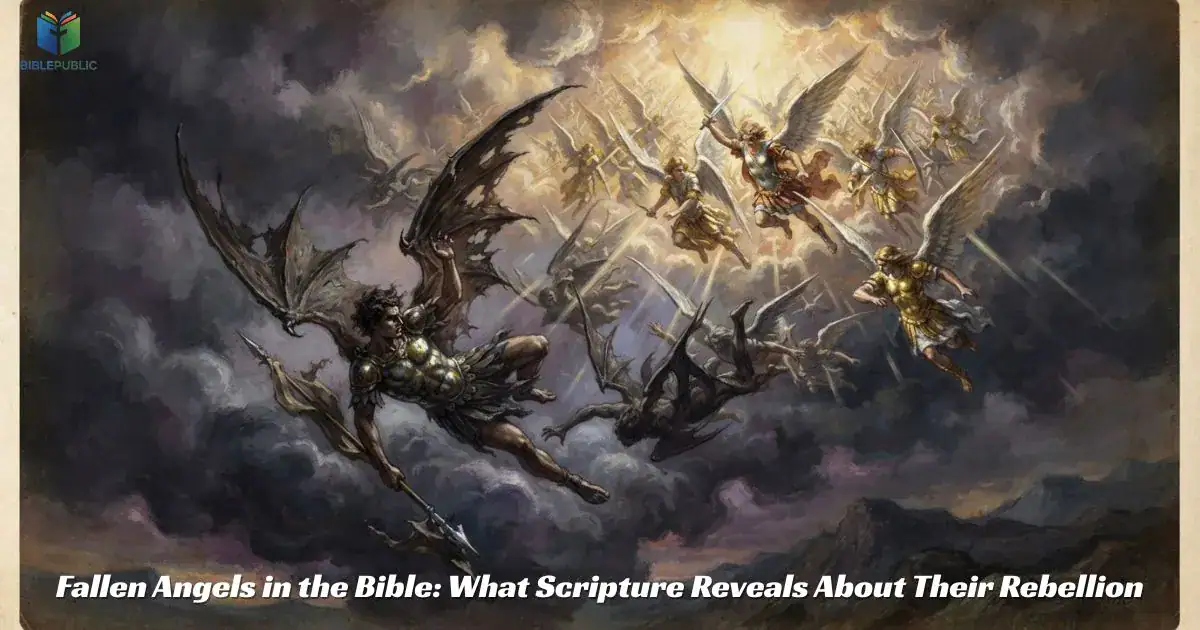
Fallen Angels in the Bible are often linked to spiritual rebellion, Satan, and God’s judgment. But what does Scripture actually say about these beings? The Bible describes angels who sinned, yet it leaves some details unexplained. Understanding these passages helps separate biblical teachings from common beliefs.
In this guide, you’ll explore key Bible verses about fallen angels, why some angels rebelled, and how Satan, demons, and Genesis 6 relate to this topic. You’ll also learn where Christian interpretations differ and what Scripture says about their final judgment. Let’s examine the evidence carefully.
What Are Fallen Angels in the Bible?
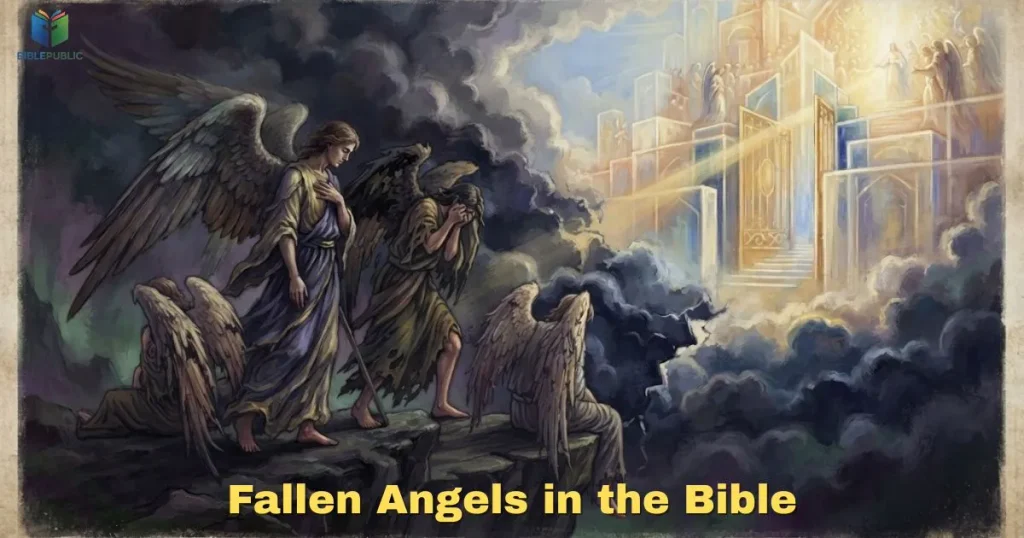
Fallen angels are commonly understood as angels who rebelled against God or disobeyed His commands. The expression is a theological description rather than a formal title used consistently throughout Scripture. Passages such as 2 Peter 2:4 and Jude 6 refer to angels who sinned and abandoned their proper position.
These passages establish that some angels sinned and came under divine judgment. They do not provide a complete account of every angel involved, the precise moment of their rebellion, or all the circumstances surrounding it. Those details require careful interpretation rather than assumptions presented as established biblical facts.
What Does the Term Fallen Angels Mean?
The term fallen angels generally describes spiritual beings who turned away from their proper service to God. In Christian discussions, it is often associated with Satan and other rebellious spiritual powers. However, different passages address different aspects of angelic sin, Satan’s opposition to God, and spiritual evil.
It is important to distinguish this common theological term from the exact language of a biblical passage. Reading each text in context helps readers understand what it actually teaches without adding details that the text does not establish.
Does the Bible Explicitly Use the Term Fallen Angels?
The Bible refers to angels who sinned, angels who abandoned their proper dwelling, and the dragon’s angels in Revelation. These descriptions provide the biblical basis for the traditional expression of fallen angels. However, the phrase itself is not presented as a detailed formal category with a complete account of their history.
For that reason, discussions of fallen angels should begin with passages such as 2 Peter 2:4 and Jude 6. These texts offer clearer evidence about angelic rebellion than attempts to construct a complete history from scattered references.
What Does the Bible Say About Angels Who Sinned?
Two important New Testament passages address angels who sinned or failed to remain in their appointed position. Second Peter 2:4 describes God judging sinful angels, while Jude 6 refers to angels who did not keep their proper position and abandoned their dwelling. Both passages emphasize accountability before God.
Neither passage answers every question readers may have about these angels. Their primary emphasis is divine judgment: spiritual beings are not exempt from God’s authority when they rebel. The texts should therefore be read for what they affirm, while unresolved details remain open to careful interpretation.
What Does 2 Peter 2:4 Reveal About Sinning Angels?
Second Peter 2:4 states that God did not spare angels who sinned but cast them into a place of gloomy restraint, where they are kept for judgment. The verse appears within a discussion warning against false teachers and illustrating that God judges rebellion.
The Greek verb commonly translated as “cast down to hell” is related to Tartarus, a term associated with a place of confinement, as explained in NET Bible’s notes on 2 Peter 2:4. This wording should not be treated as proof that every biblical description of the final judgment or hell refers to exactly the same place or condition. The central point is that sinful angels face God’s judgment.
What Does Jude 6 Say About Rebellious Angels?
Jude 6 describes angels who did not keep their proper position but abandoned their assigned dwelling. Jude says they are being kept in restraint for the judgment of the great day. The passage highlights their failure to remain within the place or responsibility assigned to them.
Some interpreters connect this passage with the account of the “sons of God” in Genesis 6, while others are more cautious about making that identification. Jude 6 itself does not explain every detail of the angels’ offense, so the proposed connection should be identified as an interpretation rather than an undisputed fact.
Why Did Some Angels Rebel Against God?
Scripture confirms that some angels sinned, but it does not provide a complete, direct explanation of why every rebellious angel acted as it did. Christian interpretations often connect angelic rebellion with pride, disobedience, or a desire to oppose God’s authority. These ideas must be evaluated through the passages commonly used to support them.
The Bible’s clearest emphasis is not a detailed psychological account of the angels. Instead, it shows that rebellion does not place any spiritual being beyond God’s authority or judgment. Where Scripture leaves the motive unexplained, readers should avoid presenting a traditional inference as though it were an explicit biblical statement.
Does the Bible Explain Why Angels Sinned?
Second Peter 2:4 and Jude 6 identify sinful conduct and judgment, but neither offers a full explanation of the rebels’ motives. First Timothy 3:6 warns against pride by referring to the devil’s condemnation, yet it does not give a comprehensive history of Satan or every angel who sinned.
Pride is therefore an important theme in some Christian explanations of angelic rebellion, but it should not be used to fill every gap in the biblical account. A careful reading distinguishes the Bible’s direct statements from conclusions drawn by comparing different passages.
Is Satan a Fallen Angel?
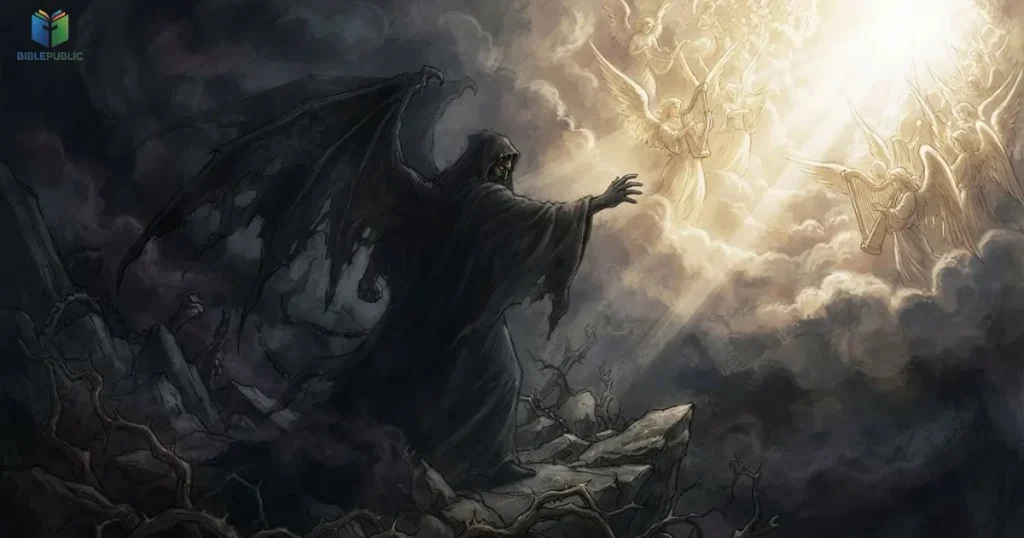
Many Christian traditions understand Satan as a rebellious spiritual being and associate him with the broader discussion of fallen angels. The New Testament portrays Satan as an adversary who opposes God’s work, tempts people, and is ultimately subject to divine judgment. Revelation 12:7–9 also describes the dragon and his angels being cast down.
However, the Bible does not present one single passage that narrates every stage of Satan’s origin and rebellion in chronological detail. Understanding the biblical account of Satan’s fall and origins requires bringing several passages together, so the interpretation should be explained without claiming that every detail is stated explicitly in one text.
What Does the Bible Say About Satan’s Rebellion?
Revelation 12:7–9 describes a conflict in heaven involving Michael, the dragon, and the dragon’s angels. The dragon is identified as the ancient serpent, the devil, and Satan, who leads the world astray. This passage helps explain what the Bible says about Satan’s identity and role, portraying him as an opponent who is cast down along with his angels.
Luke 10:18 records Jesus saying that He saw Satan fall like lightning from heaven. Christians interpret these passages in different ways, including as references to Satan’s defeat and loss of authority. Because Revelation uses apocalyptic imagery and the texts do not provide a complete chronological biography, readers should be cautious about constructing a precise timeline from them alone.
How Should Isaiah 14 and Ezekiel 28 Be Interpreted?
Isaiah 14:12–15 appears within a taunt against the king of Babylon, while Ezekiel 28:11–19 is directed toward the ruler or king of Tyre. Both passages use elevated imagery to describe pride, arrogance, and downfall. Their immediate literary and historical contexts are essential to understanding their meaning.
Some Christian interpreters also see a broader spiritual connection between these descriptions and Satan’s pride or fall. Others understand the passages primarily in reference to the rulers addressed by the prophets. Neither passage explicitly names Satan, so an article should present the Satan-related reading as a traditional interpretation, not as the only possible meaning.
Are Fallen Angels and Demons the Same?

The New Testament describes demons as evil spiritual beings that oppose God’s purposes and, in Gospel accounts, afflict people. Christian teaching often identifies demons with fallen angels, but the Bible does not provide a single explicit statement explaining that every demon is an angel who rebelled with Satan.
This distinction matters because related spiritual beings are not automatically identical in every biblical passage. Readers can recognize the traditional connection while acknowledging that Scripture does not fully explain the origin and nature of all demons.
What Does the New Testament Say About Demons?
The Gospels describe Jesus confronting demons and exercising authority over them. In Mark 1:23–27, Jesus commands an unclean spirit to leave a man, and in Mark 5:1–20, He delivers a man afflicted by a group of demons. These accounts portray demons as hostile spiritual beings that cannot withstand Jesus’ authority.
Other passages describe spiritual opposition more broadly. Ephesians 6:12 speaks of a struggle against spiritual forces of evil, while James 2:19 notes that demons believe God is one and shudders. These texts contribute to the New Testament’s picture of spiritual evil without offering a complete account of the origin of demons.
Does Scripture Identify All Demons as Fallen Angels?
The Bible connects Satan with other evil spiritual beings, and Revelation 12:7–9 mentions the dragon’s angels. These passages have contributed to the widespread Christian belief that demons belong to the same rebellious spiritual realm as Satan. Nevertheless, Scripture does not explicitly state in one direct definition that every demon is a fallen angel.
It is therefore more accurate to describe this as a traditional Christian understanding than as a fact fully explained by a single verse. The New Testament clearly presents demons as evil spiritual beings under God’s authority, while leaving some details about their identity and origin unresolved.
What Is the Connection Between Genesis 6 and Fallen Angels?
Genesis 6:1–4 describes the “sons of God,” the “daughters of humans,” and the Nephilim in a brief and difficult passage. Some readers understand the sons of God as rebellious heavenly beings, connecting the passage with traditions about angels who transgressed their boundaries. Other interpreters understand the figures differently.
The passage does not explicitly use the expression fallen angels. Its meaning has been debated for centuries, and the text does not resolve every question about the identities of the figures mentioned. Understanding the main interpretations helps readers see why Genesis 6 is often discussed alongside 2 Peter 2:4, Jude 6, and 1 Enoch.
Who Are the Sons of God in Genesis 6?
Three major interpretations are commonly discussed. The angelic interpretation understands the sons of God as heavenly beings. The Sethite interpretation identifies them with the line of Seth, while another view understands them as powerful rulers or human leaders. Each interpretation attempts to explain the passage’s unusual language and its place in Genesis.
The angelic interpretation is often linked to 1 Enoch and to Jude 6, but these connections do not settle the question for all Christian traditions. A responsible explanation presents the main views fairly and avoids claiming that Genesis 6 explicitly identifies the sons of God as fallen angels.
What Does the Bible Say About the Nephilim?
Genesis 6:4 mentions the Nephilim in connection with the period before the flood and refers to mighty figures of ancient times. The passage is brief and does not provide a full account of their origin, nature, or later history. The relationship between the Nephilim and the sons of God is consequently interpreted in different ways.
Numbers 13:33 also mentions the Nephilim in the report of the spies, but that account reflects the spies’ fearful description of the inhabitants of the land. These references should be considered in their own contexts rather than used to assert more about the Nephilim than the text supports.
How Do Interpretations of Genesis 6 Differ?
The angelic interpretation sees the sons of God as heavenly beings who crossed a boundary established by God. The Sethite interpretation understands the passage as describing relationships between different human lineages, while the ruler interpretation focuses on powerful men and their conduct. Each view has a different explanation for the language and events in Genesis 6.
The Bible does not directly identify which interpretation readers must adopt in a separate explanatory statement. Readers should therefore examine the wording, literary context, and related passages before reaching a conclusion. The existence of multiple interpretations is not a reason to treat all details as equally certain.
What Does 1 Enoch Say About Fallen Angels?
First Enoch is an ancient Jewish religious work that expands on themes associated with Genesis 6, particularly the identity and actions of the Watchers. It describes heavenly beings who descend to earth, transgress their appointed boundaries, and contribute to human corruption. These details became influential in some Jewish and early Christian discussions of rebellious angels.
First Enoch is not part of the biblical canon for most Christian traditions, although it is considered canonical in the Ethiopian Orthodox Tewahedo and Eritrean Orthodox Tewahedo Churches. It is useful for understanding the historical development of interpretations of Genesis 6, but its additional details should not automatically be presented as teachings accepted by every Christian tradition.
Who Are the Watchers in 1 Enoch?
In 1 Enoch, the Watchers are heavenly beings who descend to earth and become involved in forbidden actions. The work presents their conduct as a transgression of the order established for them and describes consequences for their rebellion. This account provides far more narrative detail than the brief description in Genesis 6.
The Watchers are important for understanding how some ancient Jewish interpreters read the sons of God passage. However, readers should distinguish what 1 Enoch says from what the biblical text of Genesis directly states. This distinction is particularly important when discussing traditions that are not shared across all Christian canons.
How Does 1 Enoch Expand on Genesis 6?
Genesis 6 offers only a short account of the sons of God, the daughters of humans, and the Nephilim. First Enoch expands this material with stories about the Watchers, their leaders, their forbidden actions, and the judgment that follows. It supplies a developed narrative where Genesis leaves many details unexplained.
Jude 14–15 also contains language closely associated with a passage in 1 Enoch, demonstrating that Enochic tradition was known in the early Jewish and Christian world. This relationship is historically significant, but it does not mean that every detail in 1 Enoch is accepted as Scripture by all Christian denominations.
What Happens to Fallen Angels According to the Bible?
The Bible presents rebellious spiritual beings as accountable to God and subject to judgment. Second Peter 2:4 and Jude 6 describe certain sinful angels as being kept for judgment, while Revelation portrays Satan and his angels in the context of spiritual conflict and eventual defeat. These passages emphasize divine authority rather than offering a complete timeline of every spiritual being’s fate.
It is also important to distinguish present restraint from final judgment. Some passages describe beings already held for judgment, while others use apocalyptic imagery to portray the defeat of evil. Reading them together provides a broad picture without requiring readers to assume that every passage describes the same event or moment.
What Does the Bible Say About Fallen Angels Being Restrained?
Second Peter 2:4 describes sinful angels as being held in gloomy restraint for judgment, and Jude 6 similarly speaks of angels kept in bonds for the judgment of the great day. Both passages portray their condition as part of God’s response to rebellion.
These verses do not establish that every evil spiritual being is restrained in precisely the same way. The passages specifically address the angels they describe, so their wording should not be extended beyond its scope without further textual support.
What Does Revelation Say About the Dragon and His Angels?
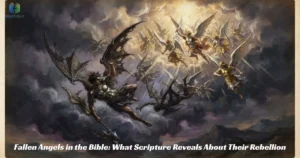
Revelation 12:7–9 depicts Michael and his angels fighting the dragon and the dragon’s angels. The dragon is identified as Satan, and the scene describes his being cast down from heaven. The passage portrays a decisive defeat of Satan’s power within the vision’s apocalyptic framework.
Interpreters differ over how this vision relates chronologically to other biblical events. Some understand it as describing an earlier heavenly rebellion, while others emphasize its connection with Christ’s victory and the unfolding events of Revelation. The passage clearly presents Satan as defeated and opposed to God, but its symbolism should not be reduced to a universally agreed timeline.
What Does Scripture Reveal About the Judgment of Rebellious Angels?
Matthew 25:41 refers to eternal fire prepared for the devil and his angels, while Revelation 20:10 describes the devil’s final judgment. Together with 2 Peter 2:4 and Jude 6, these passages present judgment as the ultimate outcome for spiritual rebellion.
The texts differ in context and imagery, so they should not be combined into a detailed chronology unless the interpretation is carefully explained. Their shared message is that Satan and rebellious spiritual powers cannot escape God’s final authority. Scripture gives readers confidence in divine justice without answering every question about the nature or timing of each event.
Conclusion
The Bible’s teaching on Fallen Angels in the Bible shows that spiritual rebellion has consequences, yet some details remain unclear. Scripture describes angels who sinned, Satan’s opposition to God, and the certainty of divine judgment. By studying these passages in context, readers can separate clear biblical teachings from traditional beliefs and disputed interpretations with greater care.
As you continue studying, read 2 Peter 2:4, Jude 6, and Revelation 12:7–9 in your preferred Bible translation. Consider what each passage clearly states before drawing conclusions. This approach helps you understand the biblical account more accurately and recognize the central message: God’s authority remains greater than any spiritual power.
Frequently Asked Questions
What does the Bible say about fallen angels?
The Bible describes angels who sinned against God and faced judgment. Second Peter 2:4 and Jude 6 mention these angels, though they leave many details unexplained.
Why did some angels choose to rebel against God?
The Bible does not fully explain why angels rebelled. Some Christians connect Satan’s rebellion with pride, but Scripture leaves important details unclear and open to interpretation.
Does the Bible explicitly use the term fallen angels?
“Fallen angels” is a theological term for angels who sinned or rebelled against God. Second Peter 2:4 and Jude 6 describe sinful angels without using that exact phrase.
Are fallen angels and demons the same thing?
Some Christian traditions identify demons as fallen angels, but the Bible does not explicitly say every demon is a fallen angel. The New Testament discusses both separately.
Is Satan described as a fallen angel in the Bible?
The Bible portrays Satan as God’s opponent but does not directly call him a fallen angel. Isaiah 14 and Ezekiel 28 address earthly rulers, though some Christians see a spiritual meaning in these passages.
What does the Bible say will happen to fallen angels?
The Bible teaches that rebellious angels face judgment. Jude 6 describes angels held for judgment, while Matthew 25:41 speaks of eternal fire prepared for the devil and his angels.

Chris Saadil is the founder of BiblePublic.com, where he shares biblical insights to help readers understand God’s Word and grow in faith. His mission is to make Scripture clear, practical, and encouraging through Bible verses, biblical teachings, prayer, and Christian living, helping believers build a deeper relationship with God every day.



2 thoughts on “Fallen Angels in the Bible: What Scripture Reveals About Their Rebellion”