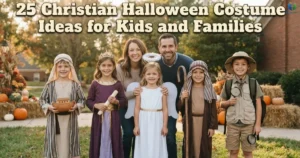
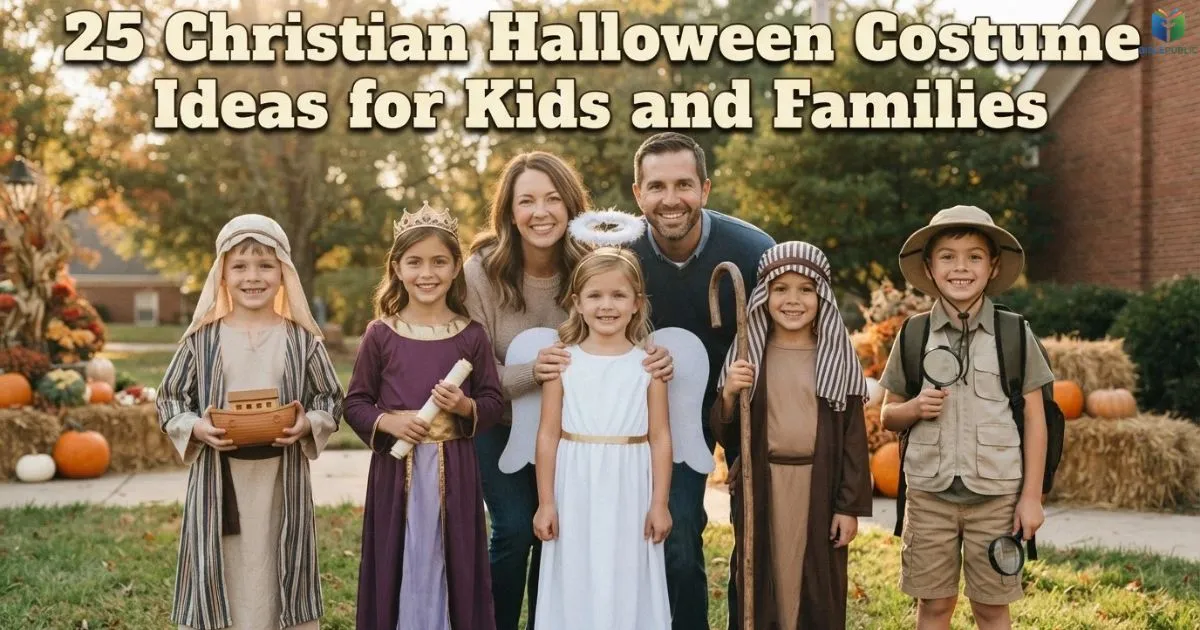
Choosing a costume can be a fun way for children and families to celebrate together. These Christian Halloween Costume Ideas offer creative ways to dress up as Bible characters, share faith, and enjoy meaningful family activities. From Noah and Esther to angels and shepherds, there are options for different ages and interests.
In this guide, you’ll find simple costume ideas inspired by Bible stories, Christian values, and familiar Scripture themes. You’ll also discover budget friendly DIY tips, age appropriate choices, and matching outfits for siblings or the whole family. Let’s explore ideas that make dressing up fun, thoughtful, and easy.
Christian Halloween Costume Ideas Inspired by Bible Characters
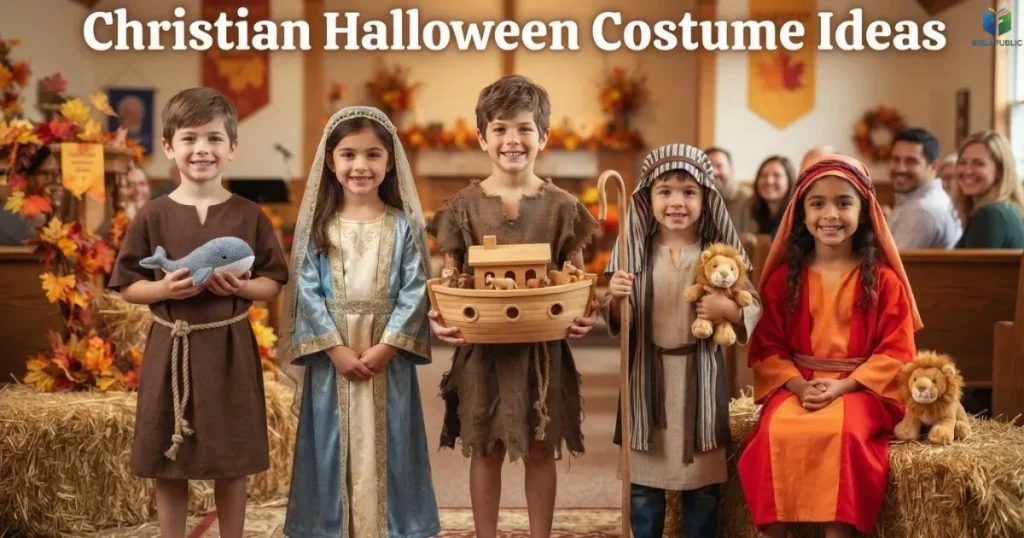
Bible character costumes introduce children to people and events described in Scripture. Simple clothing, recognizable props, and a brief explanation of the biblical account can make each costume meaningful without requiring expensive materials.
1. Noah Costume
Create a Noah costume with a brown or beige robe, a fabric belt, and a simple head covering. Add a stuffed animal or a cardboard ark prop to make the character recognizable. Choose lightweight accessories that allow your child to move comfortably.
Genesis 6–9 tells the story of Noah and the flood. Genesis 9:12–17 describes the rainbow as the sign of God’s covenant with Noah, his descendants, and every living creature. Use this costume to discuss obedience and God’s covenant without suggesting that the rainbow guarantees freedom from future hardships.
2. David Costume
Dress your child as David with a simple tunic, a cloth sash, sandals, and a shepherd’s pouch. A small stuffed sheep can represent his early life as a shepherd. If you want to portray David and Goliath, add a cardboard shield or a paper stone instead of a realistic weapon.
In 1 Samuel 17:45–47, David confronts Goliath while expressing his trust in the Lord. This costume offers an opportunity to discuss courage and dependence on God. Explain that David’s confidence rested in God rather than in his own strength, without promising that every difficult situation will end as someone hopes.
3. Esther Costume
Create an Esther costume with a colorful dress or long tunic, a fabric sash, and a lightweight paper crown. Gold ribbon or inexpensive decorative trim can give the outfit a royal appearance. Choose comfortable clothing that allows your child to walk and play freely.
The Book of Esther describes how Esther, a Jewish woman who became queen of Persia, risked approaching the king to advocate for her people. Esther 4:14–16 provides a natural connection to courage, responsibility, and speaking up for others. Scripture does not provide a detailed description of Esther’s clothing, so a simple, imaginative design is appropriate.
4. Daniel Costume
A Daniel costume can include a plain robe, a cloth belt, sandals, and a small stuffed lion. You could also attach a lion-shaped paper badge to the outfit. These inexpensive accessories help children recognize the connection to Daniel’s story.
Daniel 6 describes Daniel’s faithfulness to God despite a decree restricting prayer. In Daniel 6:22, Daniel recounts God’s protection in the lions’ den. Use the costume to discuss faithfulness, prayer, and courage under pressure, while explaining that the account does not guarantee every faithful person will be spared from suffering.
5. Jonah Costume
Make a Jonah costume with a blue or neutral tunic, a rope belt, and a small fabric fish attached to a sash. A cardboard fish prop can make the theme more recognizable. Keep the outfit simple and ensure that any accessories are securely attached.
Jonah 1–4 recounts Jonah’s flight from God’s command, his time in the great fish, and his preaching to Nineveh. Jonah 3 describes the Ninevites’ response to his message. This costume can introduce conversations about obedience, repentance, and God’s mercy.
New Testament Character Costume Ideas
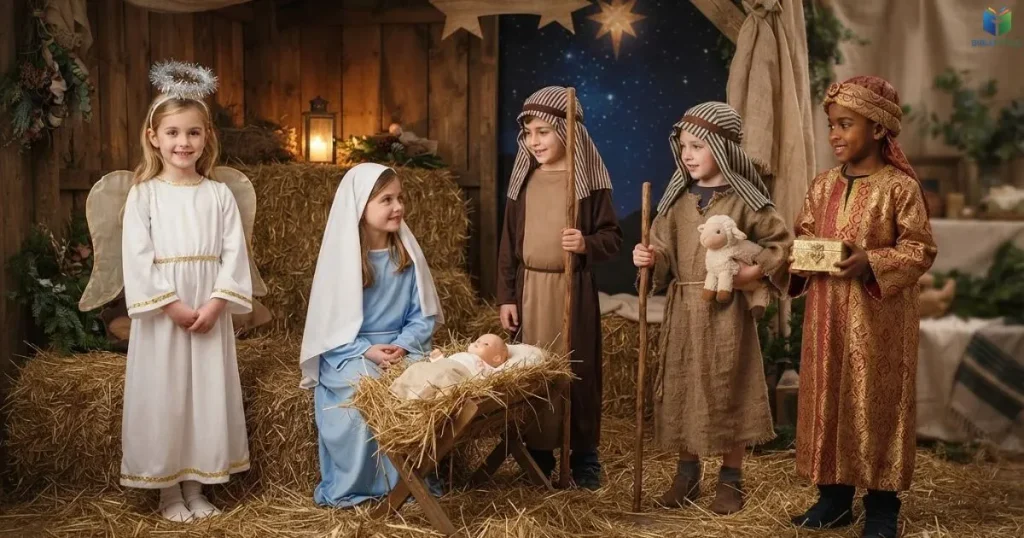
New Testament costumes help children explore the people and events surrounding Jesus’ birth and ministry. These designs work well for Halloween, church gatherings, Bible-themed celebrations, and family activities throughout the year. Families seeking a broader understanding of the holiday can also explore Christian perspectives on Halloween through biblical wisdom when deciding how to approach Halloween in a way that reflects their beliefs.
6. Mary Costume
Create a Mary costume with a long blue or neutral dress, a simple head covering, and a fabric sash. Blue is common in traditional Christian depictions of Mary, but Scripture does not specify the color of her clothing. Choose comfortable materials that are easy to find at home.
Luke 1:26–38 describes the angel Gabriel’s announcement to Mary that she would give birth to Jesus. Mary’s response in Luke 1:38 expresses her willingness to accept God’s message. This costume can introduce her role in the biblical account of Jesus’ birth and encourage discussion about her response to God’s calling.
7. Joseph Costume
A Joseph costume can include a brown or beige robe, a cloth belt, sandals, and a simple head covering. For a family nativity theme, pair the outfit with Mary’s costume and a wrapped doll representing the infant Jesus.
Matthew 1:18–25 describes Joseph’s response after an angel tells him in a dream to take Mary as his wife. Joseph follows the instruction and names the child Jesus. His story offers an opportunity to discuss obedience, responsibility, and care for family without inventing details about his appearance.
8. Shepherd Costume
Use a loose tunic, a fabric sash, sandals, and a simple head covering to create a shepherd costume. A small stuffed sheep makes a suitable accessory for younger children. If you add a staff, choose a lightweight, smooth prop and supervise its use.
Luke 2:8–20 describes shepherds who receive an angelic announcement about Jesus’ birth and visit the child. Their response provides an opportunity to discuss the good news of Jesus’ birth and the shepherds’ role in the nativity account.
9. Angel Costume
Make an angel costume with a white outfit, lightweight cardboard or fabric wings, and a soft halo attached securely to a headband. Avoid sharp edges, heavy wings, and accessories that obstruct vision. White and gold are familiar design choices, although Scripture does not prescribe one standard costume for angels.
Luke 1:11–20 describes Gabriel’s appearance to Zechariah, while Luke 1:26–38 recounts Gabriel’s announcement to Mary. Luke 2:8–14 describes the angelic announcement to the shepherds. These passages help children understand angels as messengers in particular biblical accounts.
10. Wise Man Costume
Create a Wise Man costume with a colorful robe, a fabric sash, and a lightweight crown or headpiece. A small decorated box can represent one of the gifts brought to Jesus. For a family group, choose different robe colors so each person has a distinct outfit.
Matthew 2:1–12 describes wise men from the East who follow a star and bring Jesus gifts of gold, frankincense, and myrrh. The passage does not specify that there were exactly three wise men; the traditional number comes from the three gifts mentioned. This distinction can help children separate biblical details from familiar nativity traditions.
Faith-Inspired Christian Costume Ideas
Faith-inspired costumes represent Christian teachings through symbols rather than portraying specific biblical characters. They are useful for children who prefer creative designs or families who want to communicate a meaningful theme through their outfits.
11. Armor of God Costume
Use cardboard to make a lightweight shield and breastplate, then add a simple helmet and labels representing the armor described in Ephesians 6:10–18, the Armor of God passage. The passage refers to truth, righteousness, readiness from the gospel of peace, faith, salvation, and the word of God. It also emphasizes prayer.
Paul uses armor as a metaphor for standing firm against evil, not as encouragement to fight other people. Explain the symbols in child-friendly language and connect the costume to spiritual readiness, truthfulness, and prayer. Avoid sharp edges and realistic weapons.
12. Fruit of the Spirit Costume
Create a fruit-themed outfit with a green shirt, colorful paper or felt fruit shapes, and a leaf-shaped headband. Each child in a group can represent a different quality, such as kindness, patience, joy, or peace. Use soft, securely attached materials and avoid small pieces that could become choking hazards.
Galatians 5:22–23 lists the fruit of the Spirit: love, joy, peace, patience, kindness, goodness, faithfulness, gentleness, and self-control. Explain that these qualities describe the Spirit’s work in believers. They are not a checklist for earning God’s love.
13. Light of the World Costume
Use a yellow or white shirt, paper rays, and star-shaped decorations to create a bright costume. A sign reading “Light of the World” can complete the design. Battery-powered lights are optional, but avoid exposed wiring, hot bulbs, or anything that could overheat against clothing.
John 8:12 records Jesus describing Himself as the light of the world. In Matthew 5:14–16, Jesus tells His followers that they are the light of the world and teaches them to let their light shine through good works that glorify the Father. These passages offer complementary ideas for the costume: Jesus as the source of light and His followers reflecting that light through their actions. Help children connect the theme to welcoming someone, helping a classmate, or showing kindness to a neighbor.
14. Good Shepherd Costume
A Good Shepherd costume can include a plain robe, a cloth sash, a head covering, and a stuffed sheep. A lightweight staff may add detail, but it is not essential. The outfit can portray Jesus as the Good Shepherd or represent the shepherd imagery found in Scripture.
In John 10:11, Jesus describes Himself as the Good Shepherd who lays down His life for the sheep. This image emphasizes His care and sacrificial love. Psalm 23 offers a related shepherd image, although it is a psalm attributed to David rather than a direct statement by Jesus.
15. Faith, Hope, and Love Group Costume
For siblings or friends, create three coordinated outfits labeled “Faith,” “Hope,” and “Love.” Plain T-shirts, fabric letters, and matching colors make the costumes affordable and comfortable. Each child can decorate their own shirt with simple symbols, such as a heart or star.
First Corinthians 13:13 identifies faith, hope, and love as abiding qualities and states that love is the greatest of these. Read the verse in the context of 1 Corinthians 13, where Paul emphasizes love in Christian relationships and the life of the church. The costumes can prompt conversations about how these qualities shape everyday actions.
Simple DIY Christian Costume Ideas
DIY costumes are useful when you need an affordable outfit or want children to participate in making their own designs. Ordinary clothes, recycled cardboard, paper, and fabric scraps can often provide everything required.
16. Bible Explorer Costume
Create a Bible explorer outfit with a khaki shirt, comfortable trousers, a small backpack, and a notebook. Add a homemade map marked with places from familiar Bible stories, such as Bethlehem or Jerusalem. Present the outfit as an imaginative explorer theme rather than a costume of a specific biblical character.
This idea encourages children to explore Scripture, ask questions, and learn where biblical events took place. Choose one story for the child to introduce and help them locate its passage in a children’s Bible or another reliable Bible edition.
17. Rainbow Covenant Costume
Use a plain white shirt or dress as the base, then attach broad rainbow-colored fabric or felt strips. A cardboard cloud or small animal accessory can connect the design to Noah’s story. Secure all pieces firmly and keep the costume light enough for comfortable movement.
Genesis 9:12–17 describes the rainbow as the sign of God’s covenant with Noah, his descendants, and every living creature. Explain the passage carefully: the rainbow represents God’s covenant promise in this account, not a guarantee that individuals will never experience suffering or hardship.
18. Dove of Peace Costume
Make a dove costume with a white shirt, lightweight paper or fabric wings, and a simple dove-shaped badge. Keep the wings flexible and secure, and avoid materials that interfere with the child’s arms or vision. A peace symbol can be added as a decorative element.
Doves appear in several biblical contexts. In Genesis 8:8–12, Noah sends out a dove during the flood narrative. In Matthew 3:16, the Spirit of God descends like a dove at Jesus’ baptism. A dove can also serve as a general symbol of peace, but explain the specific passage behind your design rather than treating every reference as having the same meaning.
19. Prayer Warrior Costume
Create a prayer-themed outfit with a plain shirt, a fabric cape, and a paper badge displaying the word “Prayer.” A lightweight shield decorated with a prayer symbol can connect the design to Ephesians 6. Avoid realistic weapons or accessories that suggest prayer means attacking other people.
Ephesians 6:18 encourages believers to pray at all times as part of Paul’s teaching about the armor of God. “Prayer warrior” is a modern Christian expression, not the name of a biblical character. This costume can represent perseverance in prayer, trust in God, and concern for others.
20. Creation and Nature Costume
Use a green or blue shirt and add paper leaves, flowers, stars, or animal shapes. A child might represent the Earth, a garden, or a particular part of the natural world. For a group, assign each child a different element so the costumes fit together.
Genesis 1 describes God creating the heavens, the earth, plants, animals, and human beings. Choose one part of the account to explain rather than trying to represent every detail in one outfit. You can also discuss caring for creation as a practical application of Christian stewardship.
Christian Family and Group Costume Ideas
Coordinated costumes help families and church groups tell a shared story. Choose a central theme, comfortable outfits, and roles that suit each participant’s age and interests. For churches planning a community event around these costumes, Christian Trunk-or-Treat ideas for churches can provide a relevant direction for organizing a Bible-themed activity.
21. Noah’s Ark Family Costumes
One family member can dress as Noah while others wear simple animal costumes, such as a lion, sheep, bird, or elephant. Use matching colors and homemade animal ears to coordinate the group without buying a separate costume for everyone. A cardboard ark sign or rainbow backdrop can complete the theme.
Genesis 6–9 provides the biblical account behind this idea. Animal pairs can connect the costumes to details in the narrative, but decorative choices should not be presented as direct biblical instructions. Keep animal masks open around the eyes and nose so children can see and breathe comfortably.
22. Nativity Scene Group Costumes
A nativity group can include Mary, Joseph, shepherds, an angel, and wise men. Use plain robes, fabric sashes, simple head coverings, and small gift boxes to make the roles recognizable. A wrapped doll can represent the infant Jesus. The costumes do not need elaborate details to communicate the theme.
Luke 2:1–20 recounts Jesus’ birth and the shepherds’ visit, while Matthew 2:1–12 describes the visit of the wise men. The Gospels do not place the wise men’s visit at the same moment as the shepherds’ visit. A combined nativity display is a traditional presentation that brings together details from both accounts.
23. Bible Story Group Costume Combinations
Invite each child to choose a different Bible character, such as Noah, Esther, David, Daniel, or Jonah. Coordinate the group with simple robes, fabric belts, and small props related to each story. A display card naming each character and giving a Bible reference can help others recognize the theme.
This approach works well for siblings, Sunday school classes, and church gatherings because each child can choose a role that interests them. Encourage children to learn one accurate fact about their character before the event. A short explanation adds educational value without requiring everyone to memorize a long story.
24. Fruit of the Spirit Group Costumes
For a larger group, assign the qualities listed in Galatians 5:22–23 across the participants. Children can wear different colors and carry signs representing love, joy, peace, patience, kindness, goodness, faithfulness, gentleness, or self-control. If fewer than nine children participate, some can represent more than one quality.
Help the group understand that these qualities belong together in Paul’s description of the fruit of the Spirit. Avoid turning the activity into a competition over who is the kindest or most patient. Instead, invite each child to share one practical example of the quality they represent.
25. Faith-Inspired Superhero Family Costumes
Design matching capes and shirts with words such as “Kindness,” “Courage,” “Service,” or “Compassion.” Use original symbols and inexpensive fabric rather than relying on branded superhero costumes. Each family member can choose a different quality while keeping the colors and overall style coordinated.
Philippians 2:3–4 encourages believers to act with humility and look to the interests of others. Connect the theme to serving people, helping neighbors, and showing compassion. Explain that the superhero concept is imaginative; Christian faith does not give people supernatural powers like fictional characters.
How to Make Christian Costumes at Home on a Budget

You can make many Christian costumes with items already in your home. Start with a plain shirt, dress, robe, or pair of trousers, then add two or three recognizable accessories. Reusing clothing and fabric is often cheaper than buying a complete costume, especially when several children need outfits.
- Choose a simple design: Select one character or biblical theme and identify the details that make it recognizable.
- Reuse household materials: Cardboard, fabric scraps, old sheets, felt, ribbon, and paper can become crowns, shields, wings, or signs.
- Make props lightweight: Use soft or flexible materials instead of heavy, sharp, or fragile objects.
- Invite children to help: Let them color signs, choose fabric, or decorate safe accessories according to their ages.
- Plan for reuse: Store durable pieces in a labeled box for future church events, Bible lessons, or celebrations.
Before finishing, have your child try on the costume and walk, sit, and move in it. Check that nothing drags on the floor, blocks vision, restricts breathing, or creates a tripping hazard.
How to Choose Age-Appropriate Christian Costumes for Children
A suitable costume should fit your child’s age, interests, comfort, and ability to move safely. Younger children often do best with familiar characters and soft accessories, while older children may enjoy costumes that represent a Bible theme or communicate a Christian teaching.
For toddlers and preschoolers, choose simple outfits with minimal accessories. Avoid masks that limit visibility, small detachable parts that could be swallowed, and long props that are difficult to carry. For school-age children, involve them in selecting a character and learning the related Bible story so the costume feels engaging rather than imposed.
Consider your child’s preferences, sensory sensitivities, the weather, and the setting where the costume will be worn. If the event takes place after dark, use reflective details or carry a flashlight, and make sure the costume does not cover the child’s eyes. A meaningful costume should also be comfortable enough for the child to enjoy the event.
How to Coordinate Christian Costumes for Families and Siblings
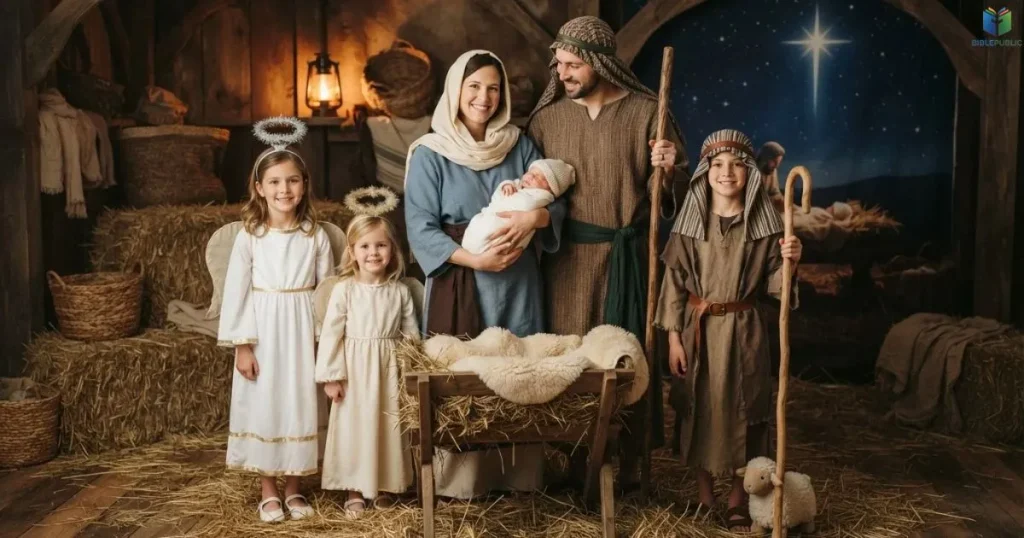
When planning family or sibling costumes, begin with a shared theme and assign roles based on each person’s interests and comfort. Noah’s Ark, a nativity scene, or a collection of Bible characters can work well because each participant has a distinct role within one overall idea.
Make a simple list of the participants, their chosen characters, and the clothing or props each person needs. Coordinate colors or accessories to make the group look connected, but avoid requiring everyone to wear identical outfits. If a child prefers not to dress up, a themed T-shirt or a small matching accessory can still fit the group.
Prepare costumes early enough to test the fit and make adjustments. Keep props manageable, ensure everyone can move safely, and discuss the biblical story or Christian value behind the theme. The goal is a positive shared experience that respects each family member while making the costumes meaningful and enjoyable.
Conclusion
Choosing from these Christian Halloween Costume Ideas can help children explore Bible stories, express their faith, and enjoy creative moments with family. Whether you prefer a simple DIY outfit or a coordinated family costume, focus on ideas that reflect Christian values and suit your child’s age. A thoughtful costume can make the occasion fun, meaningful, and memorable for everyone.
Before choosing an outfit, discuss its Bible story or message with your children. Use safe, comfortable materials and involve them in decorating their costumes. You can also coordinate outfits with siblings or plan a Bible-themed family look. Choose an idea that fits your budget and gives your children an opportunity to learn something meaningful from Scripture.
Frequently Asked Questions
What are some Christian Halloween costume ideas for kids and families?
Popular Christian Halloween costume ideas include Noah, David, Esther, angels, shepherds, and the Armor of God. Families can also create matching Bible story costumes or simple faith-inspired outfits.
Is it okay for Christians to celebrate Halloween with costumes?
Christians have different views about Halloween. Some participate in family-friendly activities, while others avoid the holiday for personal or spiritual reasons. Families can consider their beliefs and make thoughtful choices.
Which Bible characters make the best costumes for children?
Noah, David, Esther, Daniel, Mary, and the shepherds are good choices. Their stories offer children opportunities to learn about courage, faith, obedience, and trust in God.
What does the Bible say about dressing up for Halloween?
The Bible does not directly address modern Halloween costumes. Romans 14:5–6 discusses personal convictions about special days. Christians can consider their conscience, intentions, and responsibility toward others when deciding how to participate.
How can families make easy Christian Halloween costumes at home?
Families can use simple materials such as old sheets, cardboard, fabric, and paper to create Bible character outfits. Choose comfortable clothing, avoid sharp edges, and involve children in decorating.
How can parents choose age-appropriate Christian costumes for children?
Parents can choose costumes that fit their children’s ages, interests, and comfort levels. Simple designs inspired by Bible stories work well, especially when children understand the character or message their outfit represents.

Chris Saadil is the founder of BiblePublic.com, where he shares biblical insights to help readers understand God’s Word and grow in faith. His mission is to make Scripture clear, practical, and encouraging through Bible verses, biblical teachings, prayer, and Christian living, helping believers build a deeper relationship with God every day.