
The Lord’s Prayer is one of the most familiar prayers in the Bible, yet many Christians still wonder what each line truly means. Jesus gave this prayer as a pattern for approaching God, making it valuable for anyone seeking stronger faith and a deeper understanding of biblical prayer.
In this guide, you will discover where the Lord’s Prayer appears in Scripture, explore the meaning behind each petition, and learn practical ways to apply its principles. You will also gain a clearer understanding of how this prayer can shape your daily devotion and Christian life.
Where Is the Lord’s Prayer in the Bible?
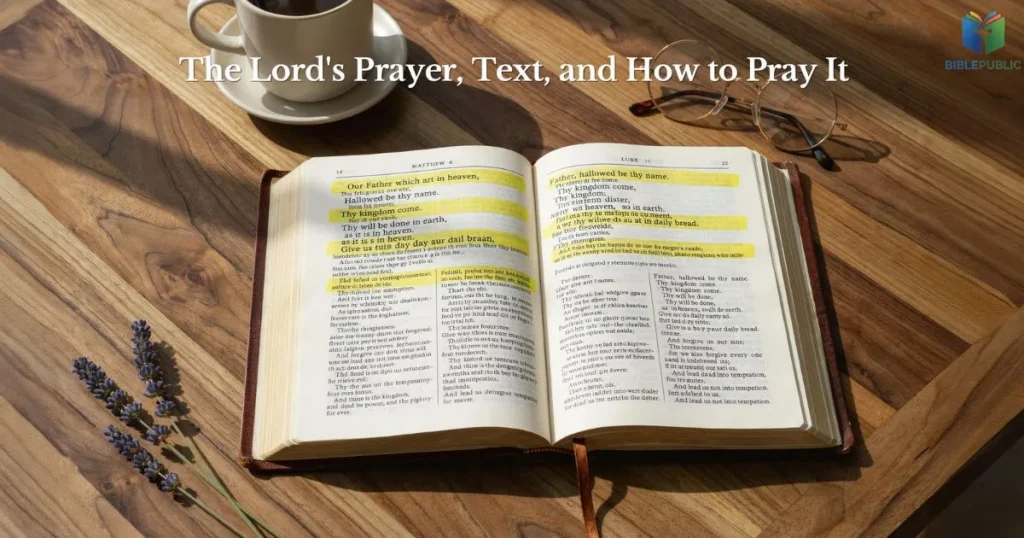
The Lord’s Prayer is found in Matthew 6:9-13 and Luke 11:2-4. Matthew records Jesus’ teaching on prayer during the Sermon on the Mount, while Luke presents a shorter form after a disciple asks Jesus to teach His followers how to pray.
These two Gospel accounts help explain the biblical context of Jesus’ prayer teaching. Together, they show a pattern centered on worship, God’s kingdom, daily provision, forgiveness, obedience, and trust in the heavenly Father.
The Lord’s Prayer in Matthew 6:9-13
Matthew 6:9-13 presents the Lord’s Prayer within Jesus’ teaching about sincere prayer. Before giving this pattern, Jesus warns against praying to gain human approval and directs His followers toward genuine communion with the Father. The passage connects biblical prayer with worship, surrender, forgiveness, daily needs, and faithful dependence on God.
The Lord’s Prayer in Luke 11:2-4
Luke 11:2-4 records the Lord’s Prayer after a disciple says, “Lord, teach us to pray.” This setting emphasizes Jesus as the Teacher of prayer and shows His disciples seeking a practical model for their devotional life. Luke’s shorter account still preserves the central themes of God’s holiness, kingdom, provision, forgiveness, and spiritual dependence.
Matthew 6 and Luke 11: What Is the Difference?
Matthew and Luke present closely related accounts of the Lord’s Prayer, but their settings and wording differ. Matthew records it within the Sermon on the Mount, while Luke presents it after a disciple’s request for instruction. Matthew includes additional wording about God’s will, while Luke gives a shorter form. Comparing both passages provides a fuller biblical perspective.
What Is the Full Text of the Lord’s Prayer?
The Lord’s Prayer is recorded in Matthew 6:9-13 and Luke 11:2-4. The traditional KJV wording begins, “Our Father which art in heaven,” and continues with petitions about God’s name, kingdom, will, daily bread, forgiveness, temptation, and deliverance. When quoting the prayer, identify the Bible translation because wording can vary between versions.
In the King James Version, Matthew 6:13 concludes with the familiar doxology, “For thine is the kingdom, and the power, and the glory, forever. Amen.” Some modern translations treat this closing differently because of manuscript evidence. Identifying the translation helps readers understand why the wording may differ across Bibles.
What Does the Lord’s Prayer Mean in the Bible?

The Lord’s Prayer is a biblical model for approaching God, not merely a formula to memorize. Jesus begins with God’s name and kingdom before addressing daily needs, forgiveness, temptation, and deliverance. Its structure teaches Christians to worship the Father, submit to His will, trust His provision, and seek His help.
Each petition contributes to a larger picture of Christian discipleship and prayer. The prayer teaches believers to approach God with reverence and confidence, recognize His holiness, seek His kingdom, depend on His care, practice forgiveness, and remain faithful when facing temptation or spiritual opposition.
Our Father Who Art in Heaven
The words “Our Father who art in heaven” introduce God as both a loving Father and the sovereign heavenly Lord. Jesus teaches believers to approach Him through a relationship marked by trust, reverence, and dependence. The word “our” also reminds Christians that prayer is not only personal but shared within the family of God.
Hallowed Be Thy Name
“Hallowed be thy name” expresses the desire that God’s name be honored as holy. God does not become holy because people praise Him; rather, believers acknowledge and honor the holiness already belonging to Him. Jesus places this focus on God’s character and glory before personal requests, establishing worship as a foundation of prayer.
Thy Kingdom Come
“Thy kingdom come” asks for God’s reign and purposes to be recognized and fulfilled. This petition turns the believer’s attention from personal circumstances toward God’s greater purposes. It also connects prayer with discipleship because Christians are called to seek God’s kingdom, follow Christ, and live in ways that reflect His righteous rule.
Give Us This Day Our Daily Bread
“Give us this day our daily bread” teaches daily trust in God’s provision. The petition includes ordinary human needs while encouraging believers to depend on God rather than live controlled by anxiety about tomorrow. It points Christians toward gratitude, contentment, and faithful reliance on the Father for what is needed each day.
Forgive Us Our Debts
“Forgive us our debts” acknowledges the need for God’s forgiveness and genuine repentance. In Matthew’s account, Jesus connects this request with forgiving others, showing that receiving mercy should transform how Christians respond to those who have wronged them.
Lead Us Not Into Temptation
“Lead us not into temptation” expresses a believer’s need for God’s guidance when facing testing and the possibility of sin. It does not mean that God causes people to sin. Instead, the petition recognizes human weakness and asks God to guide and protect His people as they seek obedience and resist spiritual temptation.
Deliver Us From Evil
“Deliver us from evil” is a request for God’s help and protection in the face of evil and spiritual opposition. Bible translations differ between “evil” and “the evil one,” reflecting a meaningful translation nuance. Either rendering directs believers toward God’s strength and away from fear, reminding Christians to remain faithful under spiritual pressure.
What Does the Lord’s Prayer Teach Christians Today?
The Lord’s Prayer teaches Christians to begin with God rather than personal concerns. It calls believers to honor His name, seek His kingdom, submit to His will, trust Him for daily provision, receive forgiveness, forgive others, and depend on His guidance and protection. These principles form a practical pattern for Christian prayer and discipleship.
These lessons also shape everyday Christian living. Worship influences priorities, trust replaces anxious self-reliance, forgiveness changes relationships, and seeking God’s will shapes decisions. When believers apply these principles beyond their prayer time, the Lord’s Prayer becomes a pattern for living with faith, humility, obedience, and dependence on God.
How to Pray the Lord’s Prayer in Daily Life
Christians can pray the Lord’s Prayer as both a familiar prayer and a biblical model for personal devotion. Rather than rushing through the words, believers can pause over each petition and consider what it teaches about God, their needs, their relationships, and their daily walk with Christ.
A simple approach is to use the prayer during morning or evening devotion and reflect on one petition at a time. Powerful prayers in the Bible for Christians can also reveal different expressions of prayer alongside Jesus’ model. The purpose is sincere communion with God and faithful application, not empty repetition.
Which Bible Verses Relate to the Lord’s Prayer?
The themes of the Lord’s Prayer appear throughout Scripture, including God’s fatherly care, holiness, kingdom, provision, forgiveness, and protection. Studying related passages helps readers connect Jesus’ teaching with the broader biblical message and understand how these themes appear across both the Old and New Testaments.
For deeper Bible study, readers can follow each theme through relevant cross-references rather than treating individual verses as isolated quotations. This approach strengthens biblical understanding and creates natural connections to related topics such as Bible verses about prayer, forgiveness, God’s provision, and spiritual protection.
Bible Verses About God as Father
Scripture reveals God as Father through themes of His love, care, authority, and relationship with His people. These passages can deepen the meaning of “Our Father” and help Christians understand why Jesus taught His followers to approach God personally while still honoring His heavenly authority and holiness.
Bible Verses About God’s Kingdom and Will
Many biblical passages call believers to seek God’s kingdom and follow His will. These Scriptures provide deeper context for “Thy kingdom come” and “Thy will be done.” They help Christians see prayer as an act of surrender in which personal desires are brought under God’s purposes and His righteous rule.
Bible Verses About Forgiveness and Mercy
The Bible repeatedly connects God’s forgiveness with repentance, grace, mercy, and the call to forgive others. These passages deepen the meaning of “Forgive us our debts” and show why forgiveness is central to Christian relationships. They can also guide believers toward humility, reconciliation, and Christlike treatment of others.
Bible Verses About God’s Provision
Scripture consistently encourages believers to trust God for their needs and recognize His faithful care. Related passages can deepen the meaning of “daily bread” by connecting God’s provision with dependence, gratitude, contentment, and trust. They remind Christians to bring daily needs before God without allowing anxiety about tomorrow to dominate their hearts.
Bible Verses About Protection From Evil
Scripture teaches believers to remain alert to spiritual opposition while trusting God’s strength and protection. Related passages can deepen the meaning of the Lord’s Prayer’s closing petitions by addressing temptation, deliverance, spiritual warfare, and faithful perseverance. They encourage Christians to resist evil, seek God’s guidance, and remain confident in His care.
Conclusion
The Lord’s Prayer shows us that prayer is more than asking God for what we need. It teaches us to honor His name, seek His kingdom, trust His provision, receive forgiveness, forgive others, and depend on His guidance. This simple pattern can deepen our faith, strengthen our prayer life, and draw us closer to God each day.
Take time today to pray through each part slowly and thoughtfully. Bring your needs, decisions, relationships, and struggles before God with faith. Let this biblical prayer guide your daily devotion and help you seek His will. As you practice its principles, allow prayer to shape not only your words, but also your life.
More Biblical Guidance for Prayer, Strength, and Peace
The Lord’s Prayer provides a biblical pattern for worship, dependence on God, forgiveness, and daily trust. Related Scripture-based guidance can help you apply these principles when seeking God’s strength and peace in challenging seasons. The resource below is relevant to and closely related to this article’s focus on understanding and practicing biblical prayer.
40 Faith-Filled Prayers for Strength and Peace to Calm Your Heart (With Bible
Frequently Asked Questions
Where is the Lord’s Prayer found in the Bible?
The Lord’s Prayer appears in Matthew 6:9–13 and Luke 11:2–4, where Jesus teaches His followers a biblical pattern for approaching God through sincere, faithful prayer.
What does the Lord’s Prayer teach Christians about daily prayer?
It teaches Christians to honor God, seek His kingdom, trust His provision, ask forgiveness, forgive others, and depend on God through temptation, uncertainty, and everyday needs.
Should Christians pray the Lord’s Prayer word for word?
Christians may pray it word for word, but Jesus also presents it as a model that teaches believers to pray sincerely, thoughtfully, and with dependence on God.
Why are Matthew and Luke different when recording the prayer?
Matthew and Luke present Jesus’ prayer teaching in different settings and wording, while preserving its central themes of worship, dependence, forgiveness, God’s kingdom, and trust in the Father.
What does “Give us this day our daily bread” mean?
This petition expresses daily dependence on God for our needs and encourages believers to trust His provision, practice gratitude, and resist anxiety about tomorrow.
What does “Hallowed be thy name” mean for Christians today?
It means recognizing God’s name as holy and living in ways that honor His character, authority, and glory through faith, worship, obedience, and daily Christian devotion.
Does the Lord’s Prayer mean Christians should never make personal requests?
No, it does not forbid personal requests. Instead, Jesus provides a God centered pattern that places worship, God’s will, daily needs, forgiveness, and spiritual protection together.

Chris Saadil is the founder of BiblePublic.com, where he shares biblical insights to help readers understand God’s Word and grow in faith. His mission is to make Scripture clear, practical, and encouraging through Bible verses, biblical teachings, prayer, and Christian living, helping believers build a deeper relationship with God every day.