
Who Was Solomon in the Bible? Solomon was the son of David and Bathsheba who became king of Israel. God blessed him with great wisdom, and he became known for his wealth and the temple he built in Jerusalem. Yet his life also shows how turning away from God can lead to spiritual decline despite great success.
In this article, you will learn how Solomon gained wisdom, became famous for his wealth, and built the temple in Jerusalem. You will also explore why he turned away from God, what happened to his kingdom, and the important biblical lessons his life teaches about wisdom, obedience, and faithfulness to the LORD.
Who Was Solomon in the Bible?
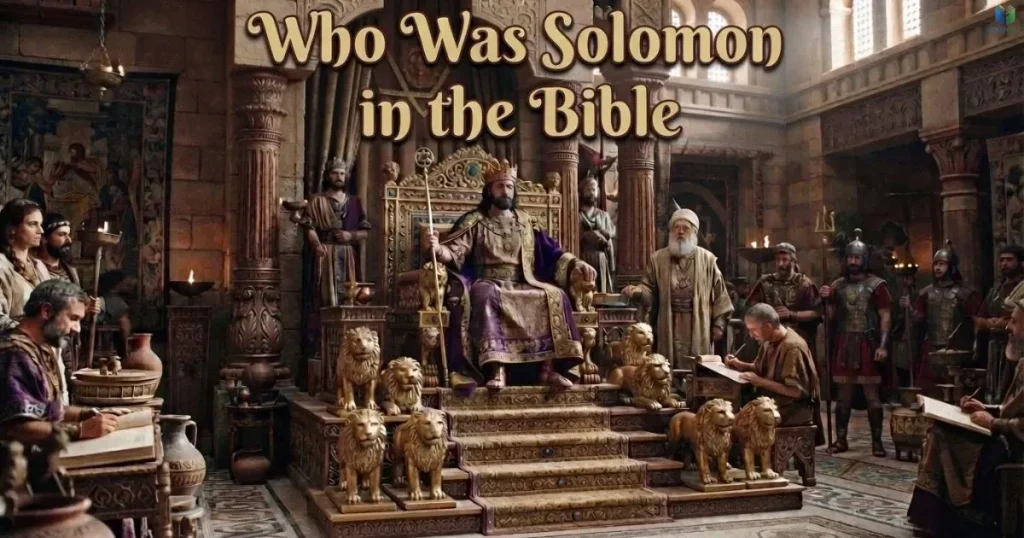
Solomon was the son of David and Bathsheba and became king of Israel after David. He is best known for his God-given wisdom, great wealth, and the construction of the temple in Jerusalem. His reign is remembered for its prosperity and major building projects, making him one of the most prominent kings described in the Old Testament.
The Bible presents Solomon’s life as a story of both achievement and failure. God granted him wisdom and honour, but Solomon later turned toward the worship of other gods. His story appears mainly in 1 Kings and 2 Chronicles and illustrates the importance of remaining faithful to God despite success and influence.
Who Were Solomon’s Parents?
Solomon was the son of David, king of Israel, and Bathsheba. After their first child died, Bathsheba gave birth to Solomon, and the Bible says that the LORD loved him. Nathan the prophet delivered a message from the LORD and called him Jedidiah, meaning “beloved of the LORD” (2 Samuel 12:24-25, KJV).
How Did Solomon Become King of Israel?
Solomon became king after David, although his succession faced opposition from his half-brother Adonijah. David directed his officials to establish Solomon as king, and Zadok the priest anointed him. After David died, Solomon’s position was firmly established. His succession is described in 1 Kings 1-2, including David’s instructions and Solomon’s early actions as king (1 Kings 1:28-40; 2:10-12, KJV).
Why Did God Give Solomon Wisdom?
God gave Solomon wisdom after he asked for an understanding heart to govern Israel and distinguish between right and wrong. Instead of asking primarily for riches, long life, or victory over his enemies, Solomon requested the discernment needed to lead God’s people. God was pleased with his request and promised him wisdom, riches, and honour (1 Kings 3:5-14, KJV).
Solomon’s wisdom became a defining feature of his reign. His decisions gained recognition, and people travelled to hear his understanding. Yet his later disobedience reveals an important contrast in his story: receiving wisdom did not prevent him from making choices that went against God’s commands.
Solomon’s Request for an Understanding Heart
At Gibeon, the LORD appeared to Solomon in a dream and invited him to ask for what he desired. Solomon acknowledged the responsibility of leading Israel and asked for an understanding heart to judge the people wisely. God approved his request and granted him wisdom, along with riches and honour, as recorded in 1 Kings 3:5-14 (KJV).
How Solomon’s Wisdom Was Revealed in His Judgment
Solomon’s wisdom became evident when two women came before him, each claiming to be the mother of the same living child. He proposed dividing the child, and the true mother immediately pleaded for the baby to be spared, even if that meant giving him to the other woman. Solomon recognized her response and returned the child to her. This judgment increased the people’s respect for his wisdom (1 Kings 3:16-28, KJV).
How Wealthy and Powerful Was King Solomon?
Solomon became famous for his wealth, royal splendour, and international influence. The Bible describes a prosperous kingdom with gold, valuable goods, a richly furnished court, and impressive royal possessions. His reputation spread beyond Israel, attracting visitors and rulers who wanted to hear his wisdom and learn about his kingdom.
First Kings 10 describes the gold Solomon received, his throne, and the gifts brought by visitors. These details illustrate the scale of his wealth and influence. However, his later spiritual decline shows that material prosperity and public reputation do not necessarily reflect a person’s continued faithfulness to God.
Solomon’s Riches, Gold, and Royal Court
First Kings 10 describes Solomon’s extraordinary wealth, including the gold brought to him, his elaborate throne, and the possessions of his royal court. His throne was made of ivory and overlaid with gold, while his drinking vessels were made of gold. The biblical account uses these details to show the splendour and prosperity associated with his reign (1 Kings 10:14-25, KJV).
The Queen of Sheba’s Visit to Solomon
The Queen of Sheba travelled to Solomon after hearing of his reputation and wisdom. She tested him with difficult questions and observed his court, the food at his table, and the service of his officials. Impressed by what she witnessed, she praised the LORD for placing Solomon on Israel’s throne. Her visit demonstrates how Solomon’s wisdom and reputation reached beyond his own kingdom (1 Kings 10:1-13, KJV).
What Did Solomon Build During His Reign?
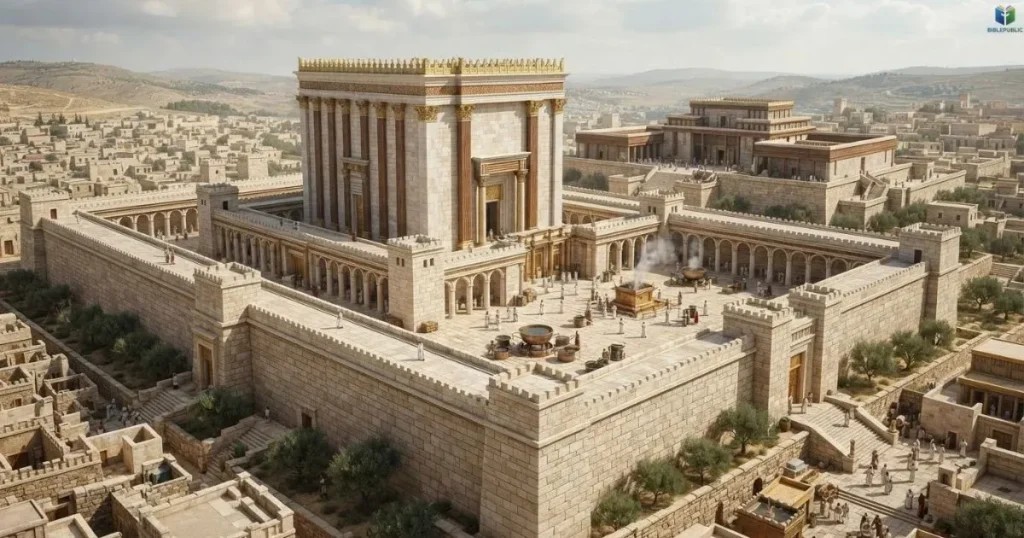
Solomon’s most significant building achievement was the temple in Jerusalem. David had wanted to build a house for the LORD, but Solomon was the king who carried out the project. The temple became a central place of worship for Israel and one of the defining achievements of Solomon’s reign.
Solomon also built a royal palace and undertook other construction projects, including work described in 1 Kings 7. These projects reflected the scale of his building programme, but the temple holds particular importance in the biblical account because of its religious purpose and dedication ceremony. Its construction fulfilled a major responsibility associated with David’s plans for his son’s reign.
Solomon’s Temple in Jerusalem
Solomon began building the temple in Jerusalem during the fourth year of his reign. The project involved skilled workers and materials that included cedar from Lebanon. The temple was built as a house for the worship of the LORD and became Israel’s central sanctuary. Its construction, design, and furnishings are described in 1 Kings 6 (KJV).
The Dedication of the Temple
After the temple was completed, Solomon gathered Israel’s elders and leaders for its dedication. The priests brought the ark of the covenant into the most holy place, and the glory of the LORD filled the house. Solomon prayed before the assembly, acknowledging God’s greatness and asking Him to hear the prayers offered toward the temple. His prayer also recognized that even the heaven of heavens could not contain God, much less the temple he had built (1 Kings 8:1-30, KJV).
What Books of the Bible Are Associated With Solomon?

Solomon is associated with three books of biblical wisdom and poetry: Proverbs, Ecclesiastes, and the Song of Solomon. These works explore subjects such as wisdom, the meaning of life, and love. Their introductions differ in how they identify Solomon, so it is important to distinguish the wording of Scripture from conclusions about the composition and authorship of each book.
Proverbs and the Song of Solomon explicitly associate themselves with Solomon in their opening verses. Ecclesiastes introduces its speaker as the Preacher, the son of David and king in Jerusalem. Although Ecclesiastes is traditionally linked with Solomon, its authorship is debated among scholars, and the article should not present that question as settled.
Solomon and the Book of Proverbs
Proverbs 1:1 identifies the proverbs of Solomon, the son of David and king of Israel. The book offers practical instruction about speech, work, relationships, justice, discipline, and reverence for the LORD. Its teachings present wisdom as more than knowledge: wisdom also involves sound judgment and making choices that reflect righteousness (Proverbs 1:1-7, KJV).
Solomon and Ecclesiastes
Ecclesiastes opens by identifying its speaker as the Preacher, the son of David and king in Jerusalem. The book examines human life, work, pleasure, wealth, and the limits of earthly achievement. It is traditionally associated with Solomon because of this description and its reflections on wisdom and royal experience. However, its precise authorship is debated, so the association should be presented with appropriate qualification (Ecclesiastes 1:1-2, KJV).
Solomon and the Song of Solomon
The Song of Solomon, also called the Song of Songs, opens with a title associating it with Solomon. It uses poetic language to explore love and desire through the relationship between a bride and her beloved. Readers and religious traditions have interpreted the book in different ways, including as poetry about human love and through spiritual interpretations. Its poetic form distinguishes it from the historical narratives about Solomon in 1 Kings.
Why Did Solomon Turn Away From God?
Despite his wisdom and prosperity, Solomon did not remain fully faithful to God. First Kings 11 explains that he loved many foreign women and that, as he grew older, his wives turned his heart toward other gods. The passage connects his downfall to divided loyalty and disobedience rather than a lack of wisdom or material success.
The LORD was displeased with Solomon because he turned away from God’s commands. As a consequence, God announced that the kingdom would be taken from his house, though not entirely during his lifetime, for David’s sake. This judgment provides the background for the division that occurred after Solomon’s death.
Solomon’s Foreign Wives and Divided Heart
First Kings 11 records that Solomon loved many foreign women from nations concerning which the LORD had warned Israel. As he grew older, his wives turned his heart toward other gods, and he did not remain wholly devoted to the LORD as David had been. Solomon also established places of worship for foreign deities, actions that brought God’s disapproval (1 Kings 11:1-10, KJV).
God’s Judgment on Solomon’s House
Because Solomon turned away from God and failed to keep His covenant and statutes, the LORD announced that the kingdom would be torn from his house and given to his servant. The judgment would not take place entirely during Solomon’s lifetime, and his son would retain part of the kingdom for David’s sake. This passage explains the biblical background to the division that followed Solomon’s reign (1 Kings 11:11-13, KJV).
What Happened to Solomon’s Kingdom After His Death?
After Solomon died, his son Rehoboam became king. Tensions arose when the people asked Rehoboam to ease the burdens imposed during Solomon’s reign. Rehoboam rejected their request and followed harsher advice, leading most of the tribes to reject his rule. The kingdom then divided, following the judgment announced during Solomon’s lifetime.
The northern tribes accepted Jeroboam as king, while Rehoboam continued to rule over Judah. This division marked a major turning point in Israel’s history. The account in 1 Kings 12 connects the political split to the people’s grievances and Rehoboam’s response, while the preceding chapter explains the judgment announced against Solomon’s house (1 Kings 11:26-43; 12:1-24, KJV).
Rehoboam and the Division of the Kingdom
At Shechem, the people asked Rehoboam to lighten the heavy service and burdens associated with Solomon’s rule. Rehoboam rejected the advice of the older counsellors and followed the harsher counsel of younger advisers. Most of the tribes then rebelled, and Jeroboam became king over Israel, while Rehoboam ruled Judah (1 Kings 12:1-24, KJV).
What Can Christians Learn From Solomon’s Life?

Solomon’s life highlights the importance of seeking wisdom and using responsibility wisely. His request for an understanding heart shows the value of recognizing the needs of others when making decisions. His later disobedience, however, demonstrates that wisdom and achievement must be accompanied by faithfulness to God’s commands.
His story also cautions against treating wealth, influence, or reputation as proof of lasting spiritual faithfulness. Solomon accomplished remarkable things, yet his divided loyalty brought serious consequences. Christians can learn from his life by seeking wisdom through Scripture, examining their priorities, and remembering that obedience matters throughout life. Israel’s later spiritual struggles, including those addressed through Elijah’s prophetic ministry and miracles, further illustrate the importance of remaining faithful to the LORD.
Why Wisdom Must Be Accompanied by Obedience
Solomon’s story distinguishes wise judgment from continued obedience. In 1 Kings 3, he asks God for wisdom to govern Israel; in 1 Kings 11, he turns away from God’s commands. Read together, these passages show that understanding what is right is not the same as consistently doing it. Biblical wisdom should lead to reverence for God and faithful conduct.
The Danger of Wealth and Spiritual Compromise
Solomon’s riches and influence did not prevent his spiritual decline. His downfall was not simply the result of being wealthy; the biblical account specifically emphasizes his divided heart and worship of other gods. First Kings 11:1-10 describes how Solomon’s wives turned his heart toward other gods and how he failed to remain fully faithful to the LORD. His life warns readers against allowing personal desires, relationships, or worldly success to take priority over obedience to God and encourages careful reflection on what shapes their loyalties.
Conclusion
Who Was Solomon in the Bible? His life shows how wisdom, wealth, and success cannot replace faithfulness to God. Although Solomon became famous for his wisdom and achievements, his later disobedience brought serious consequences. His story reminds us that true wisdom means more than making good decisions. It also means following God’s commands throughout life.
Christians can learn from Solomon by seeking wisdom through Scripture, examining their priorities, and putting obedience to God above worldly success. Take time to reflect on the choices that shape your faith and relationships. Ask God for an understanding heart and the strength to remain faithful to Him, even when success, wealth, or difficult decisions test your commitment.
Explore More Biblical Lessons Through Other Figures
Solomon’s life reveals important lessons about wisdom, leadership, wealth, and obedience to God. Studying other biblical figures can help you understand how faith, courage, and obedience shape a person’s relationship with the LORD. Explore the lives of Joshua and Daniel to discover more biblical lessons about leadership, faithfulness, and trusting God through life’s challenges.
Who Was Joshua in the Bible? His Leadership, Faith, and Conquest of Canaan
Who Was Daniel in the Bible? His Faith, Visions, and Life in Babylon
Frequently Asked Questions
Who Was Solomon in the Bible and Why Is He Remembered?
Solomon was King David’s son and successor, known for his God-given wisdom, great wealth, and construction of the temple in Jerusalem.
Why Did God Give Solomon Great Wisdom?
God gave Solomon wisdom after he asked for an understanding heart to govern Israel. In 1 Kings 3:9-12, God approved his request.
What Was Solomon Most Famous for During His Reign?
Solomon was famous for his wisdom, wealth, and the temple he built in Jerusalem. His judgment involving a child demonstrated his discernment (1 Kings 3:16-28).
Why Did Solomon Turn Away From God Despite His Wisdom?
Solomon turned away from God when his foreign wives influenced him to worship other gods. First Kings 11:1-10 describes his disobedience despite God’s earlier blessings.
What Happened to Solomon’s Kingdom Because of His Disobedience?
God declared that most of Solomon’s kingdom would be taken from his son because of his disobedience. First Kings 11:11-13 explains this judgment and the exception made for David’s dynasty.
What Can Christians Learn From Solomon’s Life and Mistakes?
Christians can learn that wisdom and success do not replace obedience to God. Solomon’s life encourages believers to guard their hearts and remain faithful to the LORD.

Chris Saadil is the founder of BiblePublic.com, where he shares biblical insights to help readers understand God’s Word and grow in faith. His mission is to make Scripture clear, practical, and encouraging through Bible verses, biblical teachings, prayer, and Christian living, helping believers build a deeper relationship with God every day.