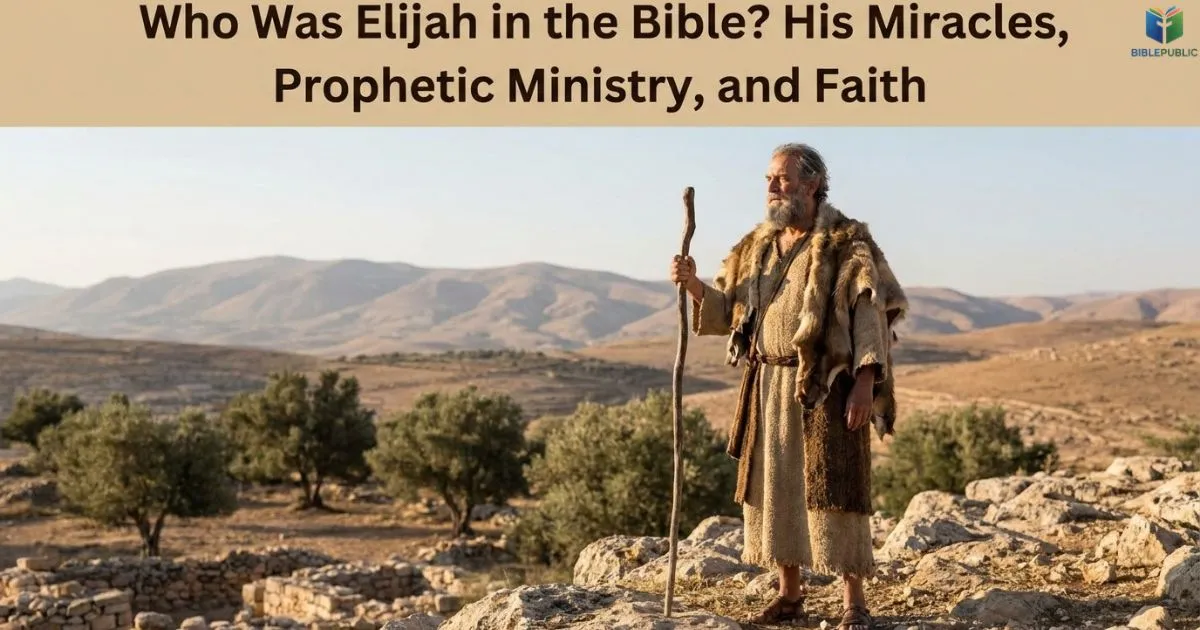
Elijah was one of the most courageous prophets in the Bible. Who Was Elijah in the Bible is a question that reveals a powerful story of faith, miracles, and obedience to God. He stood against the worship of Baal, trusted God during a severe drought, and witnessed God’s power in remarkable ways.
In this article, you will discover Elijah’s life, his greatest miracles, and his role in calling Israel back to God. You will also learn about his struggles, his relationship with Elisha, and how God took him to heaven without experiencing death.
Who Was Elijah in the Bible?
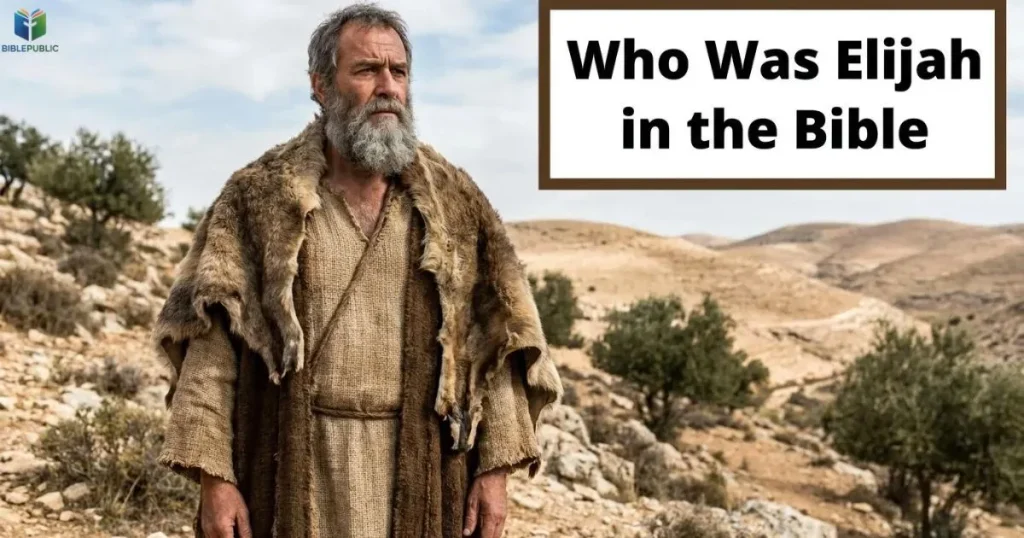
Elijah was a prophet of God who lived in the northern kingdom of Israel during the reign of King Ahab. His story appears mainly in 1 Kings 17–19 and 2 Kings 1–2. He delivered God’s messages to kings, challenged the worship of Baal, and called the Israelites to return to the Lord.
Elijah’s life included remarkable miracles, courageous acts of faith, and periods of discouragement. His story highlights obedience to God, trust during difficult circumstances, and the challenges faced by someone called to deliver an unpopular message.
Where Did Elijah Come From?
The Bible identifies Elijah as a Tishbite from Tishbe in Gilead, east of the Jordan River (1 Kings 17:1). Scripture provides little information about his family or childhood. Instead, it introduces him through his prophetic mission, beginning with his announcement that Israel would experience a drought.
Why Was Elijah an Important Prophet in Israel?
Elijah confronted idolatry and called Israel to worship the Lord. During King Ahab’s reign, Baal worship had become prominent. Elijah challenged the people to decide whom they would serve, asking them to stop wavering between two opinions (1 Kings 18:21). His ministry included warnings, miracles, and direct challenges to the religious practices promoted by Israel’s rulers.
Why Did God Call Elijah to Be a Prophet?
Elijah’s ministry took place during a period of serious religious conflict in Israel. King Ahab promoted Baal worship, while Elijah delivered messages from the Lord and challenged the nation’s unfaithfulness. His prophetic work confronted the king’s religious policies and called the people to recognize the Lord as their God.
Through Elijah, God delivered warnings and called Israel away from idolatry. Elijah’s role involved more than performing miracles; he also spoke against religious practices that conflicted with worship of the Lord and urged the people to return to Him.
King Ahab, Jezebel, and the Worship of Baal
First Kings 16:29–33 describes Ahab’s reign and his promotion of Baal worship. His wife, Jezebel, supported this worship and persecuted the Lord’s prophets (1 Kings 18:4). This religious climate placed Elijah in direct opposition to the royal household and made his prophetic mission especially challenging.
Elijah’s Mission to Call Israel Back to God
Elijah called the Israelites to abandon idolatry and return to the Lord. During the confrontation on Mount Carmel, he challenged the people to choose whom they would serve (1 Kings 18:21). His message addressed Israel’s divided worship and emphasized the need to recognize the Lord rather than continue following Baal.
What Were the Miracles of Elijah in the Bible?
The Bible records several miracles associated with Elijah’s ministry. God provided food for him during a drought, restored a widow’s son to life, answered his prayer with fire on Mount Carmel, and brought rain after a prolonged dry period. In 2 Kings 1, fire from God also falls on groups of soldiers sent by King Ahaziah, an episode connected to Elijah’s prophetic confrontation with the king.
These events occur in different circumstances and should be understood within their biblical context. The following accounts introduce Elijah’s major miracles, while the dedicated sections below explain the Mount Carmel confrontation and his prayer for rain in greater detail.
God Provides Food During the Drought
God instructed Elijah to stay near the Kerith Ravine, where ravens brought him bread and meat and he drank from the brook (1 Kings 17:2–6). When the brook dried up, God sent him to Zarephath, where a widow provided food despite her limited supplies (1 Kings 17:8–16).
The Widow’s Son Is Brought Back to Life
While Elijah was staying with the widow of Zarephath, her son became seriously ill and stopped breathing. Elijah prayed to the Lord, and the child’s life returned (1 Kings 17:17–24). The widow responded by recognizing Elijah as a man of God and acknowledging the truth of the Lord’s message through him.
Fire Falls from Heaven on Mount Carmel
On Mount Carmel, Elijah challenged the prophets of Baal to call upon their god while he called upon the Lord. God answered Elijah’s prayer with fire that consumed the offering and the surrounding materials (1 Kings 18:20–39). This event directly challenged Baal worship and demonstrated the Lord’s power.
Rain Returns After the Drought
After the Mount Carmel confrontation, rain returned following Elijah’s prayer (1 Kings 18:41–45). The rainfall marked a turning point in the drought described in the biblical narrative. Elijah’s persistence in prayer and the events leading to the rain are explained in the dedicated section below.
What Happened When Elijah Challenged the Prophets of Baal?
Elijah’s confrontation with the prophets of Baal took place on Mount Carmel. He gathered the Israelites and challenged them to recognize the true God. Two offerings were prepared, and neither side was to light its own sacrifice. The God who answered by fire would demonstrate His power.
Baal’s prophets called upon their god without receiving an answer. Elijah then prepared his offering and prayed to the Lord. Fire came from the Lord, and the people declared that the Lord was God (1 Kings 18:20–40). The event became a defining moment in Elijah’s challenge to Israel’s idolatry.
Elijah Rebuilds the Altar of the Lord
Elijah repaired the Lord’s altar using twelve stones, corresponding to the tribes of Israel (1 Kings 18:30–32). He prepared the offering and instructed the people to pour water over it and the wood, filling the surrounding trench. These preparations set the scene for the confrontation and emphasized that Elijah was relying on God to answer.
Fire Falls from Heaven
Elijah prayed that God would answer so the people would know that the Lord was God and that He was turning their hearts back to Him. Fire from the Lord consumed the offering, wood, stones, dust, and water in the trench (1 Kings 18:36–39). The people fell facedown and declared that the Lord was God.
How Did Elijah Pray for Rain, and What Does It Teach About Faith?
After the Mount Carmel confrontation, Elijah told Ahab that heavy rain was coming. He went up the mountain, bowed down, and prayed while his servant watched the sea. After the servant checked seven times, he reported seeing a small cloud. Soon, the sky darkened, the wind rose, and heavy rain fell (1 Kings 18:41–45).
This account highlights Elijah’s persistence as he waited for the rain. It also shows his dependence on God during an uncertain situation. Christians can reflect on the importance of persistent prayer and trust while recognizing that the passage describes a specific event rather than promising that every prayer will receive the same answer.
Elijah’s Persistent Prayer for Rain
Elijah continued praying while his servant checked the sea seven times. On the seventh attempt, the servant saw a small cloud rising from the sea, and the weather soon changed (1 Kings 18:42–45). The account emphasizes Elijah’s persistence as he waited for the rain he had announced to Ahab.
Why Did Elijah Run Away from Jezebel?
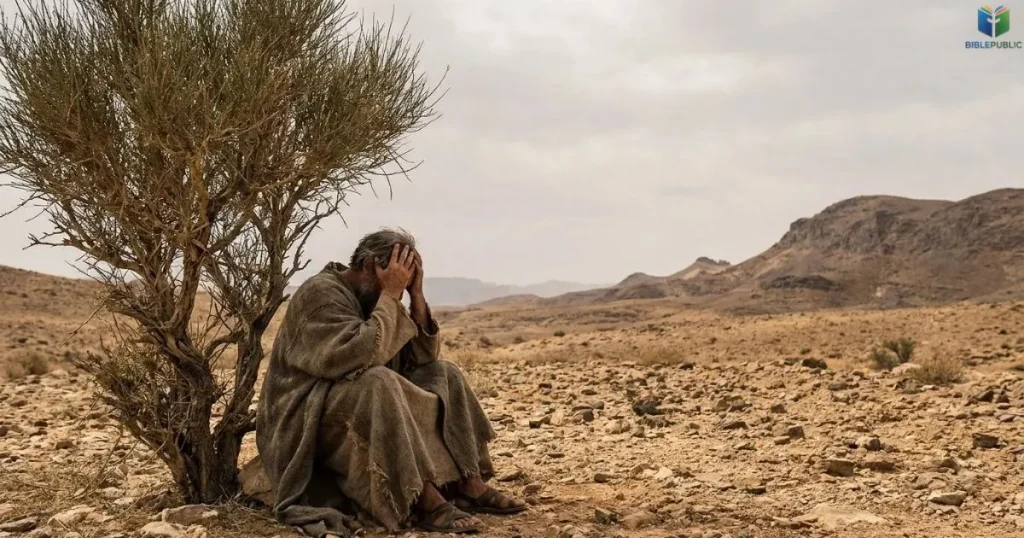
After the confrontation on Mount Carmel, Jezebel threatened to kill Elijah because of what had happened to Baal’s prophets. Elijah became afraid and fled to Beersheba before traveling into the wilderness (1 Kings 19:1–4). There, he became deeply discouraged and asked God to take his life.
This episode reveals Elijah’s vulnerability after a period of public confrontation and danger. Despite his earlier courage, he experienced fear and exhaustion. The biblical account then describes God providing for him and giving him further direction, showing that Elijah’s story included personal struggles as well as acts of faith.
Elijah’s Fear and Discouragement in the Wilderness
Elijah traveled into the wilderness, sat beneath a broom tree, and prayed that he might die (1 Kings 19:3–4). His words reveal the depth of his discouragement after fleeing Jezebel. The passage presents his distress openly without giving a modern medical diagnosis, showing that even a faithful prophet could experience profound weakness.
How God Strengthened Elijah
While Elijah rested beneath the broom tree, an angel touched him and told him to get up and eat. He found bread and water and later received food again before traveling to Horeb (1 Kings 19:5–8). God provided for Elijah’s immediate physical needs before giving him further instructions, illustrating care during a time of exhaustion.
How Did God Speak to Elijah in a Gentle Whisper?
Elijah traveled to Horeb, the mountain of God, where he stayed in a cave. The Lord asked him what he was doing there, and Elijah described his commitment to God and the opposition he faced. A powerful wind, an earthquake, and fire followed, but the account describes a gentle whisper afterward (1 Kings 19:9–13).
God continued to guide Elijah after this encounter. The passage shows that the Lord’s communication with Elijah was not limited to dramatic signs. It describes a particular moment in Elijah’s prophetic ministry, rather than establishing that God always speaks in the same way.
Elijah’s Encounter at Mount Horeb
At Horeb, God gave Elijah further instructions concerning the future leadership of the region (1 Kings 19:14–18). God also revealed that seven thousand people in Israel had not bowed to Baal. This information showed Elijah that he was not the only person remaining faithful to the Lord and that God’s work would continue beyond his own ministry.
Who Was Elisha, and How Did He Continue Elijah’s Ministry?
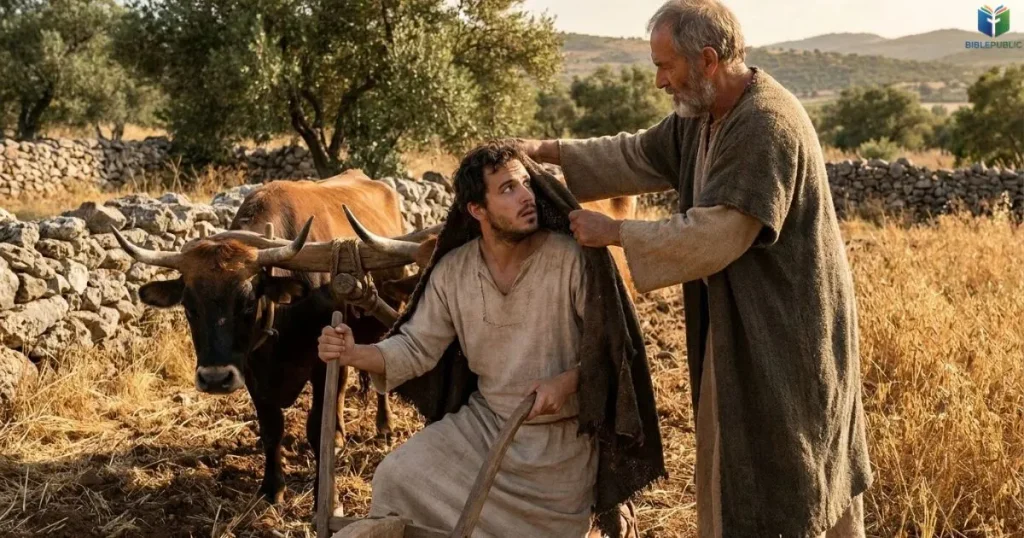
Elisha was the prophet chosen to succeed Elijah. God instructed Elijah to anoint Elisha son of Shaphat as a prophet in his place (1 Kings 19:16). Elijah found Elisha plowing in a field and called him to follow. Elisha left his former work and became Elijah’s attendant, preparing to continue the prophetic ministry.
Before Elijah’s departure, Elisha asked for a double portion of his spirit. After Elijah was taken away, Elisha picked up his fallen mantle and continued as a prophet (2 Kings 2:9–15). Their relationship illustrates the continuation of prophetic leadership in Israel.
Elijah Calls Elisha
Elijah found Elisha plowing with twelve pairs of oxen and threw his mantle over him, signaling his call to follow (1 Kings 19:19–21). Elisha left his work, said farewell to his family, and followed Elijah. His response marked a major change in his life as he began serving alongside the prophet.
Elijah Passes His Mantle to Elisha
Before Elijah’s departure, Elisha asked for a double portion of his spirit. Elijah explained that this request would be granted if Elisha saw him being taken away (2 Kings 2:9–10). After Elijah departed, Elisha picked up his mantle and struck the Jordan River with it. The waters divided, and the prophetic community recognized that Elijah’s spirit rested on Elisha (2 Kings 2:13–15).
How Did Elijah Leave Earth Without Dying?
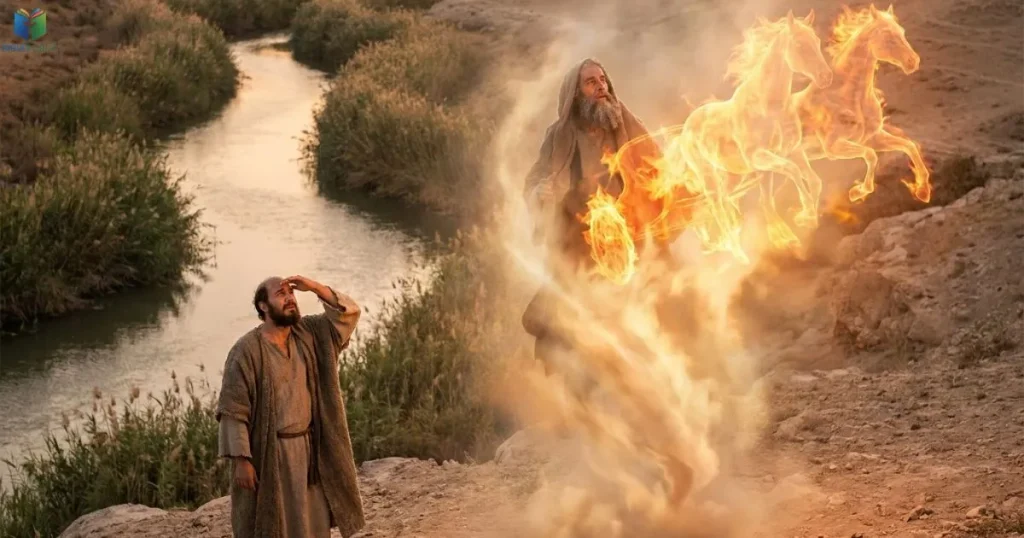
Second Kings 2:1–12 describes Elijah’s departure. As Elijah and Elisha traveled together, a chariot of fire and horses of fire separated them, and Elijah went up to heaven in a whirlwind. Elisha witnessed the event and cried out as Elijah disappeared from view.
The passage describes Elijah being taken away by God rather than reporting his death and burial. It does not explain every detail of the event, so the account should be presented according to what the text states without adding unsupported explanations.
The Chariot of Fire and the Whirlwind
Second Kings 2:11 distinguishes the chariot and horses of fire from the whirlwind that took Elijah up. The fiery chariot and horses separated Elijah and Elisha, while Elijah was taken away in the whirlwind. Elisha witnessed the event, tore his clothes in grief, and later picked up Elijah’s mantle.
What Does the Bible Say About Elijah and John the Baptist?
The New Testament connects Elijah with John the Baptist through the prophecy of a messenger who would prepare the way for the Lord. Malachi 4:5–6 foretells Elijah’s coming before the great and dreadful day of the Lord. Luke 1:16–17 describes John as going before the Lord in the spirit and power of Elijah.
Jesus also connected John’s ministry with the expected Elijah role (Matthew 11:13–14; 17:10–13). These passages present a prophetic connection and should not be used to claim that John was literally Elijah returned to earthly life.
The Prophecy of Elijah’s Return
Malachi 4:5–6 foretells that God would send Elijah the prophet before the great and dreadful day of the Lord. The passage describes a mission involving the turning of hearts. Luke 1:16–17 connects this expectation with John the Baptist, who would prepare people for the Lord in the spirit and power of Elijah.
What Jesus Taught About John the Baptist
Jesus connected John the Baptist with the expected Elijah role in Matthew 11:13–14. After the Transfiguration, He also addressed the disciples’ questions about Elijah in Matthew 17:10–13. These passages connect John’s call to repentance with Elijah’s prophetic mission without requiring the conclusion that the two men were literally the same person.
What Can Christians Learn From Elijah’s Life and Faith?
Elijah’s story offers lessons about faithfulness, courage, prayer, and dependence on God. He confronted idolatry despite opposition, followed God’s instructions during difficult circumstances, and continued praying while waiting for rain. His experiences also show that courage and faithfulness do not mean a person will never struggle with fear or discouragement.
These lessons arise from specific events in Elijah’s life. Christians can reflect on his example while recognizing that his prophetic calling and experiences belonged to the biblical setting in which he lived.
Stand Firm in Faith When Others Disagree
Elijah challenged the worship of Baal even when it was supported by King Ahab and Queen Jezebel (1 Kings 18:17–21). His example encourages Christians to remain faithful to their convictions when facing opposition. Similarly, Daniel’s faith, visions, and life in Babylon offer another biblical example of remaining faithful to God under pressure. Elijah’s story also invites readers to express their beliefs with courage, honesty, and respect.
Trust God During Difficult Seasons
During the drought, God provided food for Elijah at the Kerith Ravine and later through a widow in Zarephath Kings 17:2–16. When Elijah became exhausted in the wilderness, he received food and rest (1 Kings 19:5–8). These accounts illustrate God’s provision in difficult circumstances without promising that every hardship will end immediately.
Keep Praying and Obeying God
Elijah continued praying while waiting for rain after the confrontation on Mount Carmel (1 Kings 18:41–45). Throughout his ministry, he also followed God’s instructions, even when they led him into uncertain situations. His story encourages Christians to pray persistently, seek God’s guidance, and remain faithful during difficult seasons.
Conclusion
Elijah’s life shows what it means to trust God and stand firm in faith, even when facing fear or opposition. When asking, Who Was Elijah in the Bible, we discover a prophet who challenged false worship, witnessed powerful miracles, and learned to recognize God’s gentle voice. His story reminds us that faith can remain strong during difficult seasons.
You can apply Elijah’s example by praying regularly, obeying God’s Word, and trusting Him when life feels uncertain. Read 1 Kings 17–19 to explore Elijah’s journey and reflect on the lessons in each chapter. As you read, consider how you can remain faithful to God when you face challenges, fear, or discouragement in your own life.
Explore More Biblical Stories and Their Meaning
Elijah’s story reveals the importance of faith, obedience, and trusting God during difficult times. Exploring other biblical figures and their roles in Scripture can deepen your understanding of God’s message, the lives of His people, and the lessons their experiences offer Christians today. These related resources provide further context for your Bible study.
Elijah Meaning in the Bible: Hebrew Origin and Biblical Significance
Who Is Jesus Christ in the Bible? His Life, Teachings, Death, and Resurrection
Who Was Solomon in the Bible? His Wisdom, Wealth, and Downfall
Frequently Asked Question
Who Was Elijah in the Bible, and Why Was He Important?
Elijah was a prophet from Tishbe in Gilead who called Israel back to worshiping the Lord. His ministry included powerful miracles and a bold stand against Baal worship (1 Kings 17:1).
What Were the Most Important Miracles God Performed Through Elijah?
Elijah’s miracles included receiving food during a drought, raising a widow’s son, and calling down fire on Mount Carmel. He also prayed, and rain returned to the land (1 Kings 17–18).
Why Did Elijah Challenge the Prophets of Baal on Mount Carmel?
Elijah challenged Baal’s prophets because many Israelites had turned away from the Lord. God answered Elijah’s prayer with fire, and the people acknowledged the Lord’s power (1 Kings 18:20–39).
How Did Elijah Leave Earth Without Experiencing an Ordinary Death?
According to 2 Kings 2:11, Elijah was taken up into heaven in a whirlwind. A chariot and horses of fire separated him from Elisha during this extraordinary departure.
Why Did Elijah Become Afraid Despite His Strong Faith in God?
Elijah fled after Queen Jezebel threatened his life. In 1 Kings 19, he became afraid and discouraged. His experience shows that even faithful servants of God can face emotional struggles.
Was John the Baptist Elijah Returned to Earth, According to the Bible?
The Bible connects John the Baptist with Elijah’s prophetic mission but does not identify them as the same person. Luke 1:17 says John would serve in the spirit and power of Elijah.

Chris Saadil is the founder of BiblePublic.com, where he shares biblical insights to help readers understand God’s Word and grow in faith. His mission is to make Scripture clear, practical, and encouraging through Bible verses, biblical teachings, prayer, and Christian living, helping believers build a deeper relationship with God every day.