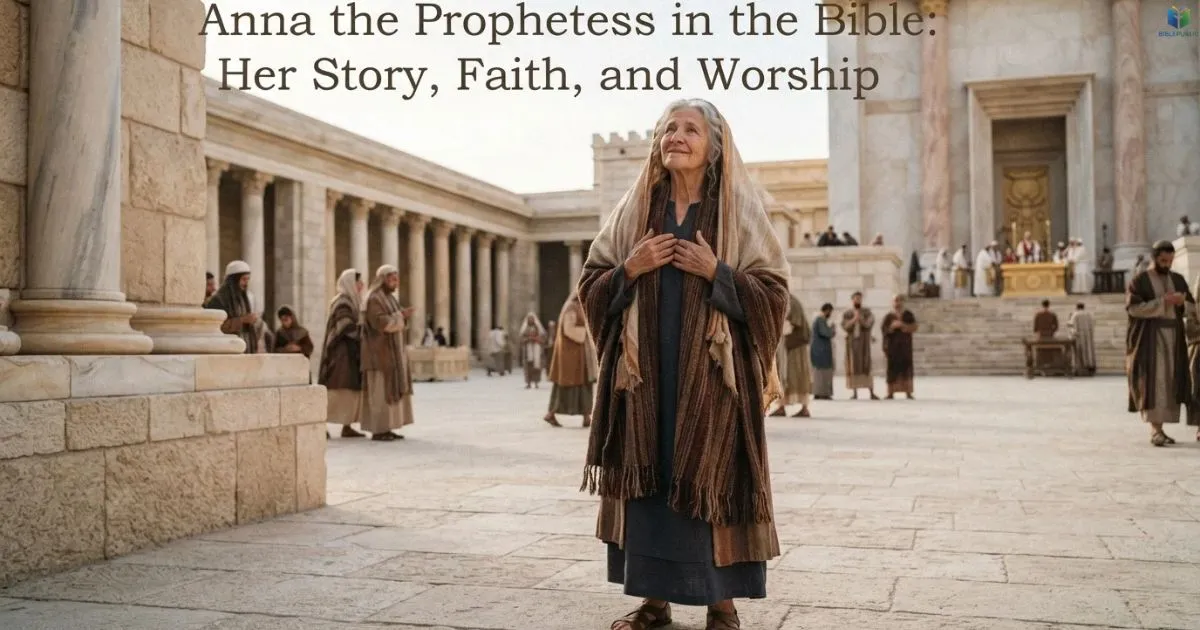
Anna the Prophetess in the Bible is remembered for her deep devotion to God, her life of prayer and fasting, and her encounter with baby Jesus at the temple. Her story offers a meaningful look at a woman whose faith remained strong through widowhood and whose response to Jesus brought hope to others.
In Luke 2:36-38, we learn about Anna’s family background, worship, and role in sharing the news of Jesus. This article explores what the Bible says about her life, why she was called a prophetess, and what Christians today can learn from her faithfulness, gratitude, and hope in God.
Who Was Anna the Prophetess in the Bible?
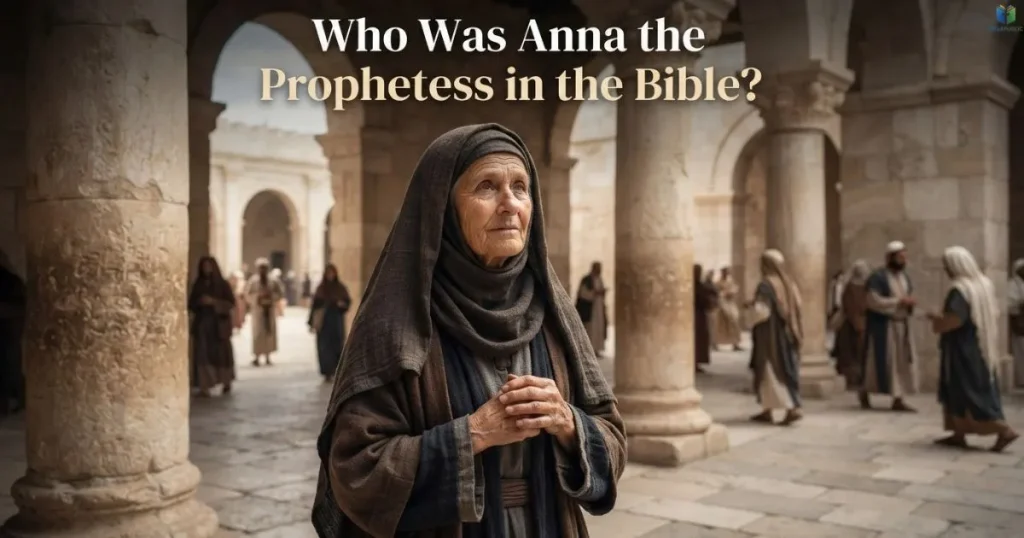
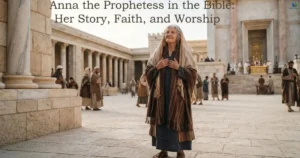
Anna was a prophetess who worshipped God at the temple in Jerusalem. According to Luke 2:36-38, she was the daughter of Phanuel, belonged to the tribe of Asher, and had been a widow for many years. When she saw Jesus, she gave thanks to God and spoke about Him to people who were waiting for Jerusalem’s redemption.
Her account appears during the events surrounding Jesus’ presentation at the temple. Simeon had already recognized the significance of the child and spoken about God’s salvation (Luke 2:25-35). Anna’s response follows in Luke’s narrative, highlighting her thanksgiving and testimony. Although the passage does not provide a complete biography, it presents her as a faithful worshipper who recognized the importance of this moment.
Who Were Anna’s Parents, and Which Tribe Was She From?
Luke 2:36 identifies Anna as the daughter of Phanuel and a member of the tribe of Asher. The Bible does not name her mother or provide further details about her family. Asher was one of the twelve tribes of Israel, descended from Asher, a son of Jacob.
These details establish Anna’s family background, but Scripture does not explain how her tribal identity influenced her life or worship. It is best to distinguish what Luke explicitly records from assumptions about her family history.
Where Is Anna the Prophetess Mentioned in the Bible?
Anna is mentioned in Luke 2:36-38, the only biblical passage that specifically describes her encounter with Jesus. The surrounding account begins with Mary and Joseph bringing the child Jesus to Jerusalem in accordance with the Law of Moses (Luke 2:22-24). Simeon then recognizes Jesus as God’s promised salvation before Anna appears in the narrative.
Luke records Anna’s identity, widowhood, worship, thanksgiving, and testimony. He does not provide a separate account of her earlier life or record a detailed speech from her. Readers can therefore understand her role most accurately by studying these verses alongside the surrounding events in Luke 2.
What Does the Bible Say About Anna’s Life?
The Bible describes Anna as a widow who remained devoted to God. Luke explains that she had lived with her husband for seven years after their marriage and later continued worshipping at the temple through prayer and fasting. Her story emphasizes her ongoing devotion rather than providing a detailed account of her personal circumstances.
Scripture does not explain how Anna’s husband died, describe her financial situation, or record the full course of her life. Although these details may prompt curiosity, they should not be filled in with speculation. What the passage clearly shows is that Anna was present at the temple and responded to Jesus with thanksgiving and testimony.
How Long Was Anna Married Before Becoming a Widow?
Luke 2:36 states that Anna had lived with her husband for seven years after their marriage before becoming a widow. The passage does not identify her husband or explain the circumstances of his death.
This detail helps readers understand part of Anna’s life, but the Bible does not provide further information about her marriage. The emphasis of Luke’s account is not on the cause of her widowhood but on her continued devotion to God and her response when she saw Jesus.
How Old Was Anna the Prophetess?
Luke 2:37 in the King James Version describes Anna as being “of about fourscore and four years.” A score means twenty, so fourscore and four equals eighty-four. Many readers therefore understand the verse to mean that Anna was about 84 years old.
Some interpreters understand the wording to mean that she had been a widow for approximately 84 years instead. The passage’s wording has led to this difference in interpretation, so her precise age cannot be stated with complete certainty. Either way, Luke presents Anna as a woman whose long life included sustained devotion to God.
Why Was Anna Called a Prophetess?

Luke directly identifies Anna as a prophetess in Luke 2:36. In biblical usage, a prophetess is a woman associated with prophetic activity or a prophetic calling. The title establishes how Luke presents Anna, although the passage does not explain the full nature of her prophetic ministry.
Luke does not preserve a specific prophecy spoken by Anna in this account. Instead, he records her thanksgiving to God and her speaking about Jesus to those who were waiting for redemption in Jerusalem. Her response is an important part of the narrative, but it should not be expanded into an invented prophecy or an unrecorded message.
What Does the Word Prophetess Mean in the Bible?
The word prophetess refers to a woman associated with prophetic activity in Scripture. The Bible uses this designation for certain women, although their circumstances and recorded roles differ. Anna is one such woman, and Luke explicitly gives her this title.
However, being called a prophetess does not mean that every detail of Anna’s ministry is known. Luke 2 does not provide a collection of her prophecies or quote a prophetic declaration from her. A careful reading recognizes the title Scripture gives her without claiming more than the passage supports.
How Did Anna Serve God Through Worship?
Luke 2:37 says that Anna did not depart from the temple but served God with fastings and prayers night and day. This description emphasizes her commitment to worship and her continued attention to God. Luke does not specify every activity she performed at the temple or provide a detailed timetable for her worship.
Her example illustrates that faithful service can be expressed through consistent devotion to God. Christians may draw encouragement from her commitment, while recognizing that the passage describes Anna’s particular circumstances rather than prescribing an identical routine for every believer.
How Did Anna Worship God Through Prayer and Fasting?
Anna’s worship involved prayer and fasting, practices that Luke explicitly connects with her service to God. Her devotion forms an important part of the account because it shows that her encounter with Jesus occurred within a life characterized by worship. The passage does not, however, explain the specific subjects of her prayers or the details of her fasting.
For Christians, Anna’s example can encourage a sincere and steady devotional life. Prayer and fasting can be meaningful expressions of seeking God, but the text does not present them as a way to earn salvation or guarantee a particular experience. The emphasis is on Anna’s devotion and her response when she encountered Jesus.
What Does the Bible Say About Anna’s Prayers and Fasting?
Luke 2:37 describes Anna’s devotion to God through prayer and fasting. The Version of Luke 2:36–38 records that she served God “with fasting’s and prayers night and day.” These words highlight the consistency of her worship, but they do not provide an hour-by-hour schedule or mean that she remained awake every moment without rest.
The passage also does not preserve Anna’s exact prayers or explain how frequently she fasted. Readers should therefore avoid inventing specific prayers or practices for her. The biblical point is clear: prayer and fasting were significant expressions of her service to God.
What Can Christians Learn From Anna’s Devotion to God?
Anna’s devotion offers Christians an example of continuing in worship through changing seasons of life. Luke describes her as a widow who remained committed to serving God, showing that her life was not defined solely by her marital status. Her faithfulness is worth considering without assuming that Scripture tells us everything she experienced or felt.
Christians can apply this example by seeking God through prayer, worship, and faithful living. However, Anna’s story is not a promise that every devoted believer will have the same experience or receive the same kind of recognition. Its value lies in the faithfulness Luke records and the thanksgiving and testimony that followed her encounter with Jesus.
What Happened When Anna Saw Baby Jesus?

Anna encountered Jesus when Mary and Joseph brought Him to the temple in Jerusalem. This event forms part of Luke’s account of Jesus’ early life and follows Simeon’s recognition of the child as God’s promised salvation (Luke 2:22-35). Anna came at that moment, gave thanks to the Lord, and spoke about Jesus to those who were looking for redemption in Jerusalem (Luke 2:38). Her encounter also connects with the life, teachings, death, and resurrection of Jesus Christ, which reveal the broader biblical account of God’s saving purpose.
Luke does not record Anna’s exact words or describe every detail of her interaction with the family. Nevertheless, her response is clear: she gave thanks to God and spoke about Jesus to others who were awaiting redemption. Her example highlights the importance of recognizing God’s work with gratitude and sharing hope grounded in the truth of Scripture.
Why Did Anna Give Thanks to God?
Luke 2:38 states that Anna gave thanks to the Lord when she came to the temple at that moment. The surrounding passage centers on Jesus and the fulfillment of God’s saving purpose, providing the context for her response. Her thanksgiving shows that she responded to the encounter with gratitude to God.
The Bible does not preserve Anna’s exact words of thanks or directly explain every reason behind them. It is reasonable to understand her response in light of the events Luke describes, but the article should not present imagined thoughts or private prayers as biblical facts. The text itself highlights her thanksgiving and her subsequent testimony about Jesus.
What Did Anna Tell Others About Jesus?
Luke 2:38 says that Anna spoke about Jesus to those who looked for redemption in Jerusalem. This means that she shared news about Him with people who were waiting for God’s promised deliverance. Her response connects her personal encounter with Jesus to a wider community of expectation and hope.
Luke does not record the exact words Anna used or provide a full transcript of her message. The safest conclusion is that she spoke about the child to those awaiting redemption. Christians can draw a lesson from her willingness to share hope, while keeping any modern application distinct from the words Scripture actually records.
What Does Anna’s Story Teach Christians About Faith?

Anna’s story highlights devotion to God, thanksgiving, and the sharing of hope in Jesus. Although Luke gives only a short account of her life, he includes meaningful details about her worship, widowhood, and response to the child Jesus. These details help readers reflect on faithfulness without needing to speculate about events the Bible leaves unrecorded.
Her example also points readers beyond Anna herself to Jesus, the central figure in Luke’s account. Christians can consider how worship, gratitude, and testimony shape their own lives. These applications arise from the passage’s themes, while the specific facts about Anna should remain grounded in Luke 2:36-38.
What Can Anna Teach Us About Faithfulness During Difficult Seasons?
Luke identifies Anna as a widow and describes her continued service to God through prayer and fasting. The passage does not explain how she personally experienced widowhood, so it would be inaccurate to claim that she felt a particular emotion or faced a specific hardship. Even so, her recorded devotion provides an example of faithfulness across the changing circumstances of life.
Christians may find encouragement in her continued worship, especially during uncertain or difficult seasons. Her story invites reflection on maintaining a relationship with God through prayer and faithful living. It does not promise that hardship will end in a particular way, but it demonstrates that a person’s life of faith can continue through many seasons.
What Does Anna’s Story Teach About Sharing Hope in Jesus?
After seeing Jesus, Anna spoke about Him to those who were looking for redemption in Jerusalem (Luke 2:38). Her response shows that the encounter was not kept entirely to herself: she gave thanks to God and shared the news with others who were awaiting His redemption.
Christians can apply this example by speaking truthfully and graciously about Jesus and the hope found in Him. Sharing faith does not require inventing experiences or claiming more than Scripture teaches. Anna’s brief account encourages believers to make Jesus known while grounding their testimony in biblical truth.
Conclusion
Anna the Prophetess in the Bible shows how a life of prayer, worship, and faithfulness can point others toward God. Although Scripture shares only a brief account of her life, her encounter with Jesus highlights the importance of gratitude and hope. Her story reminds Christians that devotion to God matters through every season of life.
You can reflect on Anna’s example by making time for prayer, studying God’s Word, and sharing the hope found in Jesus with others. Read Luke 2:36-38 in the King James Version to revisit her story. Consider how her devotion, thanksgiving, and willingness to speak about Jesus can encourage your own daily walk with God.
Related Bible Stories and Lessons of Faith
Anna’s story offers a meaningful example of devotion to God, faithful worship, and sharing hope in Jesus. Exploring other biblical accounts can deepen readers’ understanding of how women served God and demonstrated faithfulness in different circumstances. These additional resources offer helpful perspectives on biblical lives and spiritual lessons while keeping the focus on the faith and devotion reflected in Anna’s story.
Mary, Mother of Jesus: 12 Powerful Insights and Lessons
Women in the Bible: Faith, Courage, and Life Lessons
Deborah in the Bible: 8 Powerful Lessons of Leadership and Faith
Frequently Asked Questions
Who was Anna the Prophetess in the Bible?
Anna was a prophetess, the daughter of Phanuel, from the tribe of Asher. Luke 2:36-38 describes her devotion to God and her encounter with Jesus at the temple.
Where can you read Anna the Prophetess’s story in the Bible?
Anna’s story appears in Luke 2:36-38, during the account of Jesus’ presentation at the temple. She gives thanks to God and speaks about Him to those awaiting redemption in Jerusalem.
How old was Anna the Prophetess when she saw Jesus?
Luke 2:37 describes Anna as being “of about fourscore and four years” (KJV). Many understand this to mean about 84 years old, though some interpret it as her years of widowhood.
Why was Anna called a prophetess in the Bible?
Luke 2:36 identifies Anna as a prophetess, a woman associated with prophetic activity. However, Scripture does not record a specific prophecy from her in this passage. It highlights her worship, thanksgiving, and testimony about Jesus.
What does the Bible reveal about Anna’s husband and widowhood?
Luke 2:36 says Anna lived with her husband for seven years after their marriage before becoming a widow. The Bible does not name her husband or explain the circumstances of his death.
What lessons can Christians learn from Anna’s faith and devotion?
Anna’s story encourages Christians to remain devoted to God through prayer and worship. Luke 2:37-38 also highlights gratitude and sharing hope in Jesus with others who seek God’s redemption.

Chris Saadil is the founder of BiblePublic.com, where he shares biblical insights to help readers understand God’s Word and grow in faith. His mission is to make Scripture clear, practical, and encouraging through Bible verses, biblical teachings, prayer, and Christian living, helping believers build a deeper relationship with God every day.