
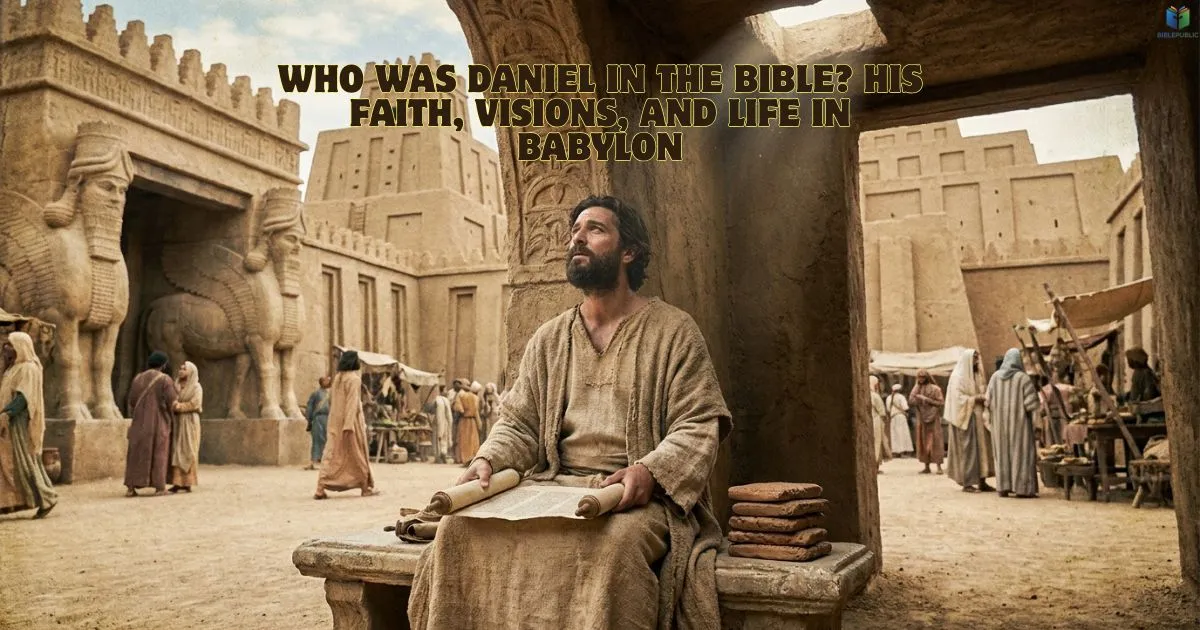
Daniel was a Jewish exile who remained faithful to God while serving under foreign kings in Babylon. If you want to understand who Daniel was in the Bible, his story shows how prayer, courage, and trust in God helped him face challenges without abandoning his beliefs.
Daniel’s life offers important lessons about faith, obedience, and standing firm during difficult times. This article explores his years in Babylon, his experience in the lions’ den, and the meaning of his dreams and prophetic visions, helping you understand why his story remains important to Christians today.
Who Was Daniel in the Bible?

Daniel was a Jewish man taken into Babylonian captivity who became known for his faithfulness to God, wisdom, and ability to interpret dreams and visions. The Book of Daniel in the Old Testament describes his life in a foreign kingdom and explains how he remained devoted to the God of Israel while living far from his homeland. His story combines historical accounts of life in exile with visions about kingdoms, judgment, and God’s rule over history.
Daniel served under several rulers, including Nebuchadnezzar, Belshazzar, and Darius the Mede. Scripture presents him as a man who sought God’s wisdom rather than claiming supernatural understanding for himself. Through his decisions, prayers, and interpretations, Daniel demonstrated integrity and courage in challenging circumstances. His life remains a biblical example of trusting God while serving responsibly in a society whose beliefs and practices differed from his own.
Where Did Daniel Live, and When Did He Serve in Babylon?
Daniel lived in Babylon after being taken from Judah during the Babylonian conquest of Jerusalem. Daniel 1 describes how he and other young men from Judah were selected for training and service in the king’s court. The book records events during Nebuchadnezzar’s reign and later refers to Cyrus, king of Persia. Scripture does not state Daniel’s exact age or provide a complete account of his later life.
What Is Daniel Known for in the Bible?
Daniel is known for his faithfulness to God, wisdom, interpretation of dreams, and prophetic visions. He interpreted Nebuchadnezzar’s dream, explained the writing at Belshazzar’s feast, and survived the lions’ den after continuing to pray. The Book of Daniel also records visions about kingdoms and future events. Together, these accounts highlight God’s sovereignty, the importance of faithful obedience, and the limits of earthly power.
Daniel’s Life in Babylon and His Service to the Kings
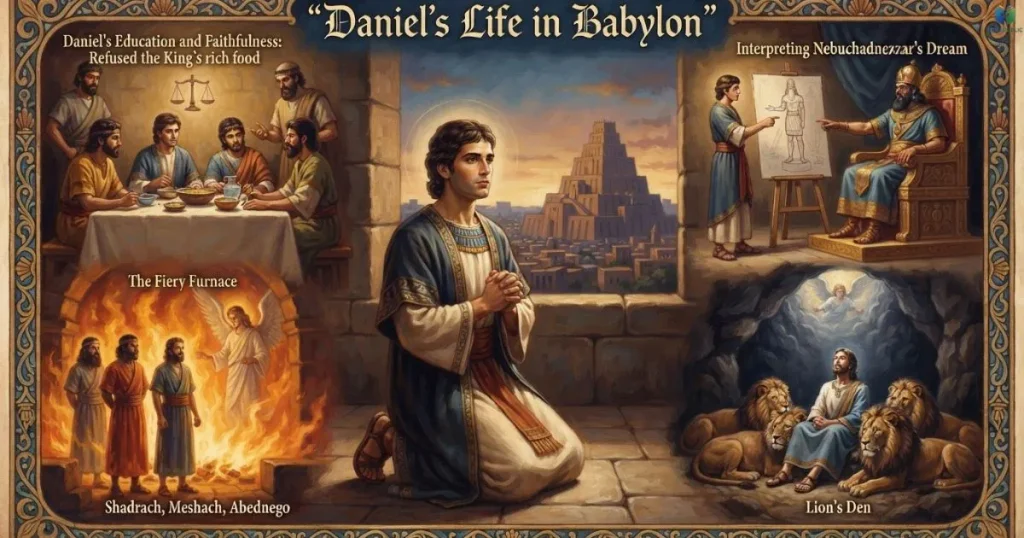
Daniel’s life in Babylon began during a difficult period in Judah’s history. After being taken into captivity, he entered the king’s training program and eventually gained a position of responsibility in the royal court. Although he lived under foreign rulers, Daniel continued to acknowledge the authority of the God of Israel. His story shows that service in an unfamiliar culture did not require him to abandon his faith or convictions.
Daniel’s influence grew through the wisdom and understanding God gave him. The book records his service under Nebuchadnezzar and Belshazzar and describes later events during the reign of Darius the Mede. Daniel did not present his abilities as independent achievements; he repeatedly directed attention to God as the source of wisdom and revelation. His example connects professional responsibility with humility, integrity, and devotion.
How Was Daniel Taken to Babylon?
Daniel was taken to Babylon when King Nebuchadnezzar besieged Jerusalem and ordered selected young men from the royal family and nobility to be trained for service in his palace. Daniel was among them, along with Hananiah, Mishael, and Azariah. The king’s officials assigned them new names and taught them the language and literature of the Babylonians (Daniel 1:1-7, KJV).
How Did Daniel Rise to a Position of Influence?
Daniel gained influence after God gave him knowledge, understanding, and wisdom. When Nebuchadnezzar demanded the interpretation of a troubling dream, Daniel prayed with his companions and sought God’s mercy. God revealed the mystery to him, and Daniel explained the dream to the king while giving God the credit for the revelation. Nebuchadnezzar then honored Daniel and appointed him to a position of authority (Daniel 2:17-49, KJV).
Daniel’s Faith and Commitment to God
Daniel remained faithful to God while living in a society with different religious practices. Rather than allowing his surroundings to determine his beliefs, he sought to honor the Lord through his choices and conduct. His commitment became clear when he faced pressure to follow practices that conflicted with his convictions. Daniel’s response was not marked by unnecessary hostility; he acted respectfully while remaining firm about what he believed was right.
His faith was also reflected in regular prayer and dependence on God for wisdom. Daniel did not turn to prayer only when trouble arose; he maintained his devotion even when obedience put him at risk. Like Daniel, Elijah demonstrated unwavering commitment to God through his prophetic ministry, as seen in Elijah’s miracles and prophetic ministry in the Bible. Both accounts offer examples of faithfulness and courage when following God’s direction becomes challenging. Daniel’s example highlights consistent faith, gratitude, and courage under pressure.
Why Did Daniel Refuse the King’s Food?
Daniel resolved not to defile himself with the king’s food and wine (Daniel 1:8, KJV). Scripture does not explain every reason for his decision, so a specific explanation should not be treated as certain. Daniel respectfully asked the chief official for permission to follow a different diet. After a ten-day test involving pulse and water, Daniel and his companions appeared healthier than the other young men (Daniel 1:8-16, KJV).
Why Did Daniel Remain Faithful to His Prayer Routine?
Prayer was an established part of Daniel’s life, not simply a response to danger. Daniel 6:10 records that he prayed three times a day, giving thanks to God while kneeling and praying toward Jerusalem. Even after a royal decree threatened his life, Daniel continued his established practice. His example illustrates the importance of regular prayer, gratitude, and steadfast devotion to God when faithfulness becomes difficult.
Daniel in the Lions’ Den: A Powerful Example of Faith
The account of Daniel in the lions’ den is one of the best-known stories in the Book of Daniel. Officials who wanted to undermine Daniel’s position could find no fault in his conduct, so they targeted his faithfulness to God. They persuaded the king to issue a decree that made Daniel’s established prayer routine a legal offense. The conflict placed Daniel’s devotion to God against a command designed to restrict it.
Daniel was sentenced to the lions’ den, but God delivered him from harm. The account emphasizes Daniel’s faithfulness and records the king’s recognition that Daniel’s God had power to save him. The story does not promise that every faithful person will be spared every hardship. Instead, it demonstrates God’s power in Daniel’s circumstances and encourages readers to remain faithful even when obedience carries serious risks.
Why Was Daniel Thrown into the Lions’ Den?
Daniel was thrown into the lions’ den because he continued praying to God after King Darius issued a decree forbidding petitions to any god or person other than the king for thirty days. Officials reported Daniel’s actions, and the king was unable to revoke the decree under the law described in the account. Daniel was cast into the den, and a stone was placed over its entrance (Daniel 6:6-17, KJV).
How Did God Deliver Daniel?
God delivered Daniel by sending His angel to shut the lions’ mouths so they did not harm him. Early the next morning, Darius hurried to the den and called out to Daniel. Daniel answered that God had sent His angel to protect him. The king ordered Daniel to be brought out, and no injury was found on him because he had trusted in his God (Daniel 6:19-23, KJV).
Daniel’s Visions and Their Biblical Meaning

The Book of Daniel contains visions that use symbolic images to describe kingdoms, rulers, judgment, and events beyond Daniel’s immediate circumstances. Some details are explained within the text, while other parts have been interpreted differently across Christian traditions. Reading these passages in context helps distinguish the wording of Scripture from later explanations. It also prevents readers from treating every proposed prophetic timeline or identification as an uncontested biblical fact.
Daniel’s visions include four beasts, a ram and a goat, and the prophecy of seventy weeks. These passages address earthly kingdoms and God’s authority over history, but each vision has its own context and explanation. Some symbols are interpreted directly by the text, while the timing and fulfillment of other details remain subjects of theological discussion. A careful reading should explain what the passage says before presenting possible interpretations.
What Did Daniel’s Vision of the Four Beasts Mean?
In Daniel 7, Daniel saw four great beasts rising from the sea, each different from the others. The interpretation in the chapter connects the beasts with four kings and describes the fourth beast in relation to a kingdom. Daniel also sees the Ancient of Days judging and one like the Son of man receiving dominion. Christians differ on the identities and historical applications of the kingdoms, but the vision emphasizes God’s judgment and everlasting rule (Daniel 7, KJV).
What Was Daniel’s Vision of the Ram and the Goat?
Daniel 8 describes a vision of a ram with two horns and a male goat with a notable horn. Gabriel explains that the ram represents the kings of Media and Persia, while the goat represents the king of Grecia. The goat’s great horn is broken, and four horns rise in its place. These symbols should be understood in light of Gabriel’s explanation rather than through speculation detached from the passage (Daniel 8:2-22, KJV).
What Did Daniel’s Seventy Weeks Prophecy Describe?
Daniel’s prophecy of seventy weeks appears in Daniel 9:24-27, following his prayer of confession and concern about Jerusalem. Gabriel describes a period connected with Daniel’s people and the holy city, including the end of transgression, atonement for iniquity, and everlasting righteousness. Christians interpret the timing and fulfillment of this prophecy in different ways. A responsible explanation distinguishes the passage’s wording from specific theological interpretations of its chronology and fulfillment
What Other Major Events Are Recorded in the Book of Daniel?
The Book of Daniel records events beyond Daniel’s personal experiences and visions. These include Nebuchadnezzar’s troubling dream, the deliverance of three Jewish men from a fiery furnace, and the mysterious writing that appeared during Belshazzar’s feast. Each account presents a different challenge involving human authority, faith, or judgment. Together, they emphasize that earthly rulers have limited power and remain accountable to God.
These stories also provide context for the lives of Jewish exiles serving under foreign rulers. Daniel’s account of the king’s dream highlights God’s ability to reveal mysteries, while the fiery furnace demonstrates the three men’s refusal to worship an image. The Bible also records how Solomon’s wisdom brought him influence and prosperity, while his later choices contributed to his downfall, as explored in Solomon’s wisdom, wealth, and downfall in the Bible. Read alongside Daniel’s experiences, these accounts highlight the importance of wisdom, faithfulness, and remaining accountable to God.
How Did Daniel Interpret Nebuchadnezzar’s Dream?
Nebuchadnezzar dreamed of a great image made of different materials, but his wise men could not reveal its meaning. Daniel sought God’s mercy, and God revealed the mystery to him. Daniel explained that the image represented a succession of kingdoms, while a stone cut without hands symbolized a kingdom established by God that would endure forever. Daniel made clear that the revelation came from God, not from his own wisdom (Daniel 2:31-45, KJV).
What Happened to Shadrach, Meshach, and Abednego in the Fiery Furnace?
Shadrach, Meshach, and Abednego refused to worship the golden image Nebuchadnezzar had set up. The king ordered them to be thrown into a furnace heated far beyond its usual intensity. He then saw four figures walking in the fire, describing the fourth as resembling a son of the gods. The three men emerged unharmed, demonstrating their refusal to worship other gods and their trust in the Lord (Daniel 3, KJV).
What Did the Writing on the Wall at Belshazzar’s Feast Mean?
During Belshazzar’s feast, a hand appeared and wrote mysterious words on the wall. The king was frightened, and his wise men could not interpret the message. Daniel explained that God had numbered Belshazzar’s kingdom, weighed him in the balances and found him wanting, and would divide his kingdom between the Medes and Persians. Belshazzar was killed that night, and the kingdom passed to the Medes and Persians (Daniel 5, KJV).
What Can Christians Learn from Daniel’s Life?
Daniel’s life offers examples of faithfulness, courage, prayer, and integrity in difficult circumstances. He served rulers who did not share his faith, yet he continued to honor God in his decisions and conduct. His story encourages Christians to remain faithful without assuming that obedience will always lead to an easy or trouble-free life. Daniel’s experiences also show that respectful service and firm spiritual convictions can exist together.
Daniel demonstrates the importance of seeking God’s wisdom rather than relying only on human understanding. When he faced difficult questions, he prayed and acknowledged God as the source of revelation. When his faith was challenged, he continued his established practice of prayer. These accounts offer Christians meaningful examples of humility, consistency, and trust in God’s sovereignty when facing pressure, uncertainty, or opposition.
How Can Christians Stay Faithful When Surrounded by Different Beliefs?
Christians can learn from Daniel’s example by maintaining their convictions while treating others with respect. Daniel served in a foreign royal court but refused to compromise when a demand conflicted with his devotion to God. His conduct shows that faithfulness can involve respectful cooperation while maintaining firm boundaries when obedience to God is at stake. His example encourages thoughtful decisions rather than hostility toward people with different beliefs.
How Can Daniel’s Example Help Christians Trust God During Trials?
Daniel’s experiences show that trusting God does not mean avoiding every trial. He faced captivity, threats, and the possibility of death, yet he continued praying and seeking God’s wisdom. His deliverance from the lions’ den demonstrates God’s power in that situation, while the wider account encourages readers to remain faithful when outcomes are uncertain. Christians can draw encouragement from Daniel’s steadfastness and confidence in God’s sovereignty.
Conclusion
Who Was Daniel in the Bible? Daniel was a faithful servant of God who showed courage, wisdom, and devotion while living in Babylon. His life, prayers, and prophetic visions reveal the importance of trusting God during uncertain times. His experience in the lions’ den also reminds readers that faithfulness matters even when obedience brings serious challenges and difficult choices.
Daniel’s example encourages Christians to remain committed to God in their daily lives, even under pressure. Take time to read Daniel 6 in the King James Version (KJV) and reflect on his prayer habits and courage. Consider how you can strengthen your prayer life, seek God’s wisdom, and remain faithful when facing difficult decisions in your own life.
Frequently Asked Questions
Who was Daniel in the Bible, and why is his story important?
Daniel was a Jewish exile who served foreign kings while remaining faithful to God. His story highlights courage, prayer, wisdom, and trust in God during difficult circumstances.
Why was Daniel taken to Babylon by King Nebuchadnezzar?
Daniel was taken to Babylon after Nebuchadnezzar besieged Jerusalem. He was selected with other young men from Judah for training and service in the royal court (Daniel 1:1-7, KJV).
Why did Daniel continue praying when the king forbade it?
Daniel continued praying because his devotion to God was central to his life. Daniel 6:10 records that he prayed three times daily, even after the royal decree threatened his life (KJV).
How did God protect Daniel in the lions’ den?
God sent His angel to shut the lions’ mouths, protecting Daniel from harm. When Daniel was brought out the next morning, no injury was found on him because he trusted in God (Daniel 6:22-23, KJV).
What do Daniel’s visions reveal about kingdoms and God’s authority?
Daniel’s visions describe kingdoms, rulers, judgment, and God’s lasting authority. Some symbols are explained in Scripture, while Christians differ on the interpretation and fulfillment of certain prophetic details (Daniel 7-9, KJV).
Does the Book of Daniel describe literal events or symbolic visions?
The Book of Daniel includes accounts of events and visions filled with symbolic imagery. The text explains some symbols directly, while Christians differ on how certain prophecies relate to historical events and the future.

Chris Saadil is the founder of BiblePublic.com, where he shares biblical insights to help readers understand God’s Word and grow in faith. His mission is to make Scripture clear, practical, and encouraging through Bible verses, biblical teachings, prayer, and Christian living, helping believers build a deeper relationship with God every day.


1 thought on “Who Was Daniel in the Bible? His Faith, Visions, and Life in Babylon”