The Seven Days of Creation reveal how God brought the heavens, the earth, and all living things into existence with His powerful word. Many people wonder what happened on each day, why the creation week matters, and what Genesis really teaches. This biblical account gives clear answers and builds a strong foundation for understanding God’s work.
In this guide, you will explore each day of creation in simple, easy to understand language. You will also discover the meaning behind the creation timeline, key biblical truths, and why this story continues to shape the Christian faith today. Whether you are new to the Bible or studying Genesis more deeply, this guide will help you learn with confidence.
Overview: God’s Six Days of Creation
The Seven Days of Creation are the biblical account in Genesis 1–2 that explains how Creator God made the heavens, the earth, and all creation through His spoken word before resting on the seventh day. This creation narrative reveals His power, wisdom, and perfect order from the very beginning.
From light to humanity, every stage of the six days of creation reflects God’s purposeful design and goodness. The Book of Genesis lays the biblical foundation for understanding God’s relationship with the world and establishes a biblical worldview that continues throughout Scripture.
Day 1: Light and Darkness

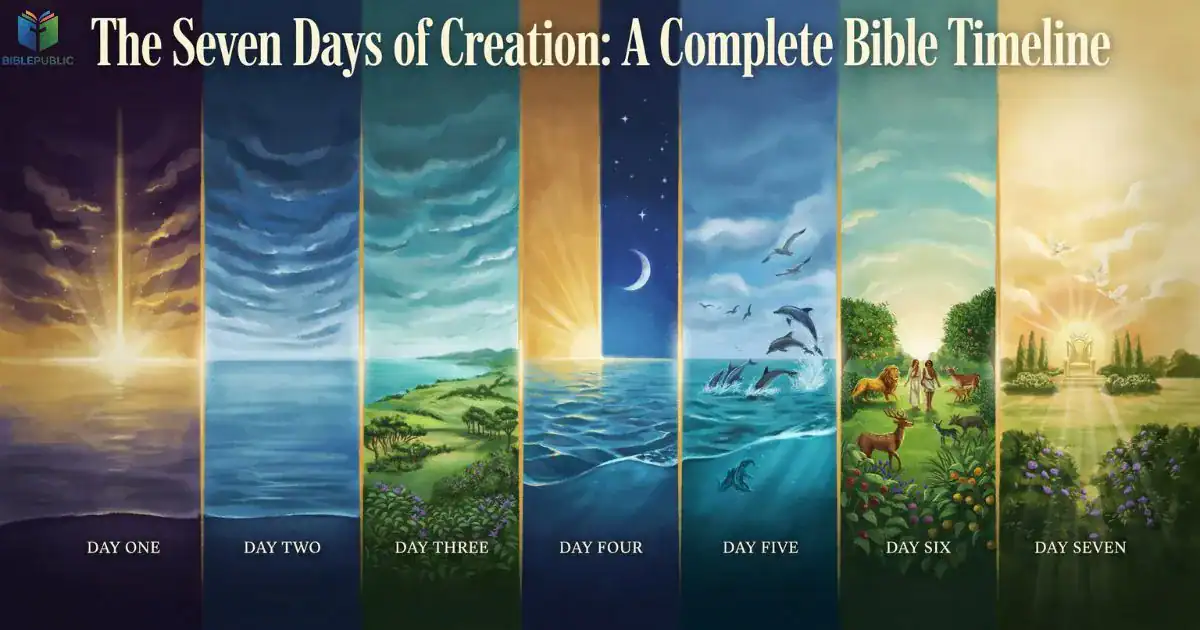
On the first day, God declared, “Let there be light,” and light appeared (Genesis 1:3–5). He separated the light from the darkness, calling the light “day” and the darkness “night.” There was evening and morning, marking the first day of creation.
The first day of The Seven Days of Creation highlights God’s authority to bring order through His spoken word. Before the sun and moon existed, God’s divine command established light, revealing His creative power over all creation.
Day 2: The Sky and the Waters
On the second day, God created the firmament, also called the expanse or sky, to separate the waters above from the waters below (Genesis 1:6–8). This important step in the creation week prepared the world for the life that would soon fill the earth.
The Hebrew word Raqia has been translated as “firmament” or “expanse” in different Bible versions. If you would like a deeper explanation of its meaning and biblical background, see our article: The Firmament in Genesis: Its Vital Biblical Meaning.
Day 3: Land, Seas, and Vegetation

On the third day, God gathered the waters together so that dry land appeared. He named the dry land “earth” and the gathered waters “seas.” Then He commanded the earth to produce plants, grass, and fruit trees, each bearing seed according to its kind (Genesis 1:9–13).
This day reveals God’s provision and order. The land became ready to support life, while vegetation provided food and continued reproducing according to God’s design. Every plant reflected His wisdom and care for creation.
Day 4: Sun, Moon, and Stars
On the fourth day, God created the greater light to govern the day, the lesser light to govern the night, and the stars to shine in the heavens (Genesis 1:14–19). These heavenly lights were appointed as signs for seasons, days, and years.
Rather than being objects of worship, the sun, moon, and stars were created to fulfill God’s purposes. Their faithful movement displays His wisdom, order, and sovereign rule over the universe.
Day 5: Sea Creatures and Birds
On the fifth day, God filled the seas with living creatures and the skies with birds of every kind (Genesis 1:20–23). He blessed them, saying they should be fruitful, multiply, and fill the waters and the earth.
This stage of creation reveals God’s delight in the diversity and abundance of life. From the smallest fish to the largest sea creatures and every bird in the sky, all living things exist by His creative command and blessing.
Day 6: Animals and Mankind
On the sixth day, God created the land animals, livestock, wild animals, and creatures that move along the ground (Genesis 1:24–25). Finally, He created mankind in His own image, both male and female, giving them dominion over the earth (Genesis 1:26–31).
Humanity stands apart because people alone bear the image of God. This gives every person unique value, dignity, and responsibility to care for creation while living in a relationship with their Creator.
Day 7: God Rests
After completing His creative work, God rested on the seventh day, blessed it, and made it holy (Genesis 2:1–3). His rest did not reflect weariness but celebrated the completion and perfection of His creation.
The seventh day became the biblical foundation of the Sabbath. By sanctifying this day, God established a lasting pattern of worship, trust, and rest that reminds believers to honor the Creator and reflect on His finished work.
Theological Significance of the Creation Week
After the seventh day, the creation narrative points readers beyond the events themselves to God’s character and purpose. Throughout The Seven Days of Creation, Scripture reveals a consistent pattern of divine order, blessing, and intentional design that shapes the rest of the biblical story.
The creation week teaches God’s sovereignty over all creation and establishes the biblical foundation for human dignity, stewardship, worship, and Sabbath rest. Above all, it points to the Creator’s glory and His purposeful plan for the world and humanity, which is further enriched by understanding the Hebrew meaning of Raqia.
Quick Summary: The Seven Days of Creation Timeline
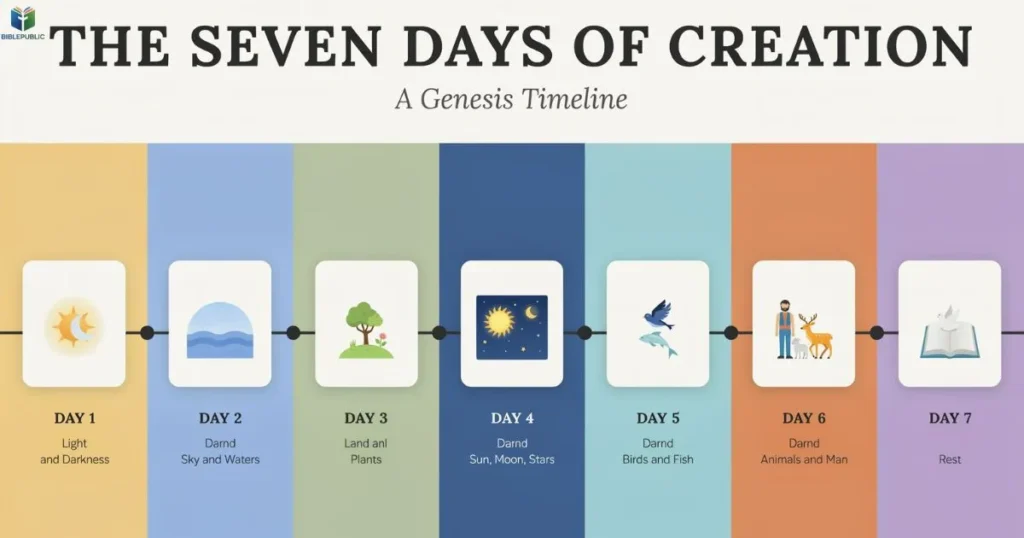
| Day | What God Created | Bible Reference |
| Day 1 | Light and darkness | Genesis 1:3–5 |
| Day 2 | Sky (firmament/expanse) separating the waters | Genesis 1:6–8 |
| Day 3 | Dry land, seas, and vegetation | Genesis 1:9–13 |
| Day 4 | Sun, moon, and stars | Genesis 1:14–19 |
| Day 5 | Sea creatures and birds | Genesis 1:20–23 |
| Day 6 | Land animals and mankind | Genesis 1:24–31 |
| Day 7 | God rested and blessed the Sabbath | Genesis 2:1–3 |
Conclusion
The Seven Days of Creation reveal God’s wisdom, power, and loving purpose from the very beginning. Each day of the creation week builds a clear picture of His perfect design and reminds us that every part of creation has meaning. This biblical account strengthens our understanding of Genesis and deepens our trust in the Creator.
Take time to read Genesis 1 and 2 alongside this timeline to see how each event fits into God’s plan. As you continue studying Scripture, let these truths encourage your faith and help you appreciate the beauty, order, and purpose found throughout God’s creation.
Frequently Asked Questions
What are The Seven Days of Creation in the Bible?
The Seven Days of Creation describe how God created the heavens, the earth, and all living things in six days before resting on the seventh. This biblical creation account is recorded in Genesis 1 and 2.
Why did God rest on the seventh day after creation?
God rested because His creative work was complete, not because He was tired. Genesis 2:1–3 explains that He blessed the seventh day and made it holy as a lasting pattern of worship and rest.
Do The Seven Days of Creation teach science or faith?
The Seven Days of Creation primarily teach who God is and why creation exists. The account reveals God’s power, wisdom, and purpose while forming the biblical foundation for understanding the Creator and His world.
Do all Christians interpret the creation days the same way?
No, faithful Christians hold different views about the length of the creation days. However, biblical scholars widely agree that Genesis clearly teaches God created everything with wisdom, purpose, and authority.
Why is the creation week important for Christians today?
The creation week helps believers understand God’s relationship with humanity and the world. It reminds us that every person has value, creation has purpose, and the Creator is worthy of worship and trust.

Chris Saadil is the founder of BiblePublic.com, where he shares biblical insights to help readers understand God’s Word and grow in faith. His mission is to make Scripture clear, practical, and encouraging through Bible verses, biblical teachings, prayer, and Christian living, helping believers build a deeper relationship with God every day.