The Prodigal Son for Kids is a powerful Bible story about a younger son who makes poor choices, regrets his actions, and returns home to his father. Instead of turning him away, his father welcomes him with love and forgiveness. This story helps children understand repentance, mercy, and the importance of admitting their mistakes.
Through this parable in Luke 15:11-32, children can discover why the father celebrates his son’s return and why the older brother struggles with the celebration. They will learn meaningful lessons about God’s love, forgiveness, compassion, and taking responsibility for their actions, with simple explanations and practical examples they can apply in everyday life.
The Prodigal Son for Kids: Bible Story Summary
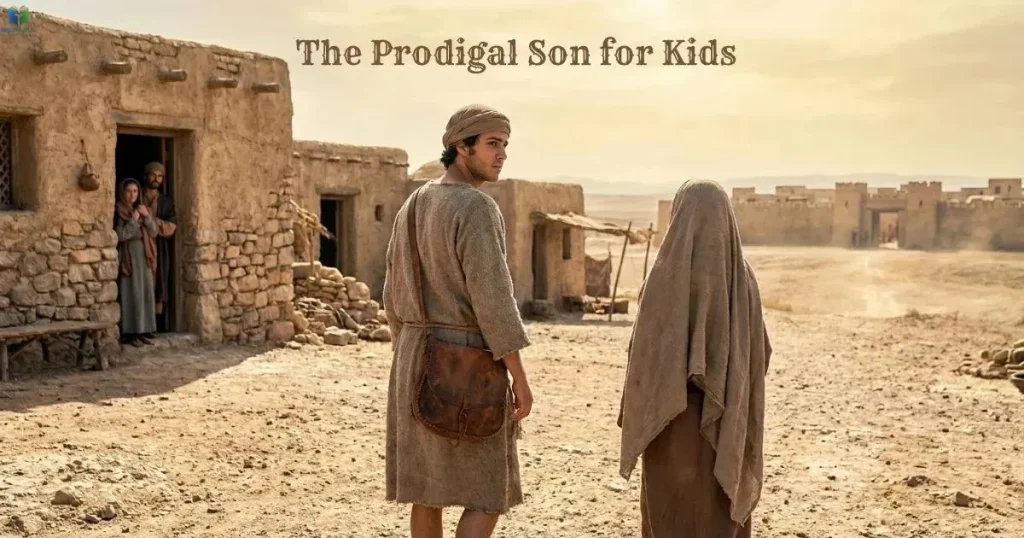
The Prodigal Son for Kids is a Bible story about a younger son who leaves home, makes poor choices, and eventually returns to his father. Instead of rejecting him, the father welcomes him with love and forgiveness. Through the experiences of both brothers, children can learn about repentance, taking responsibility, showing mercy, and celebrating when someone makes a positive change. The story also helps young readers understand why forgiveness and compassion matter in everyday life.
The Younger Son Asks for His Inheritance
Jesus told the parable of the Prodigal Son about a father and his two sons. One day, the younger son asked his father to give him the share of the family property that would belong to him.
In Luke 15:11-12, Jesus explains that the father divided his living between his two sons. The passage does not explain every reason behind the younger son’s request, so we should avoid assuming more than the text tells us. For children, this moment introduces an important question: What can happen when we make choices without carefully considering their consequences? The story invites readers to consider the younger son’s decisions as the events unfold.
The Son Leaves Home and Wastes His Money
After receiving his share, the younger son traveled to a distant country. There, he wasted his property by living recklessly. Jesus does not describe every choice he made, but the result is clear: the son used up everything he had. Soon afterward, a severe famine struck the country, and he began to experience hunger and need (Luke 15:13-14, KJV).
The son eventually found work feeding pigs. He became so hungry that he wished he could eat the food given to them, but no one gave him anything (Luke 15:15-16, KJV). For Jesus’ original Jewish audience, caring for pigs would have been especially degrading because pigs were considered unclean under Jewish law.
Children can learn that reckless choices may have serious consequences, even when those choices initially seem exciting. The son’s situation also prepares the way for his decision to return home.
The Son Realizes His Mistake
While caring for the pigs, the younger son came to himself. He remembered that his father’s hired servants had more than enough bread, while he was starving. He decided to return home, admit that he had sinned against heaven and his father, and ask to be treated as a hired servant rather than as a son (Luke 15:17-19, KJV).
This decision illustrates repentance: the son recognized his wrongdoing and chose to turn back. He did not simply regret being hungry; he acknowledged that he had sinned. Children can understand this as the difference between being sorry about getting into trouble and honestly admitting that they have done something wrong.
Repentance involves taking responsibility and turning toward what is right rather than making excuses or blaming others.
The Father Welcomes His Son Home
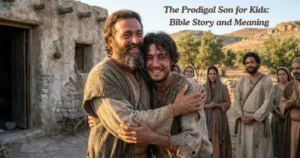
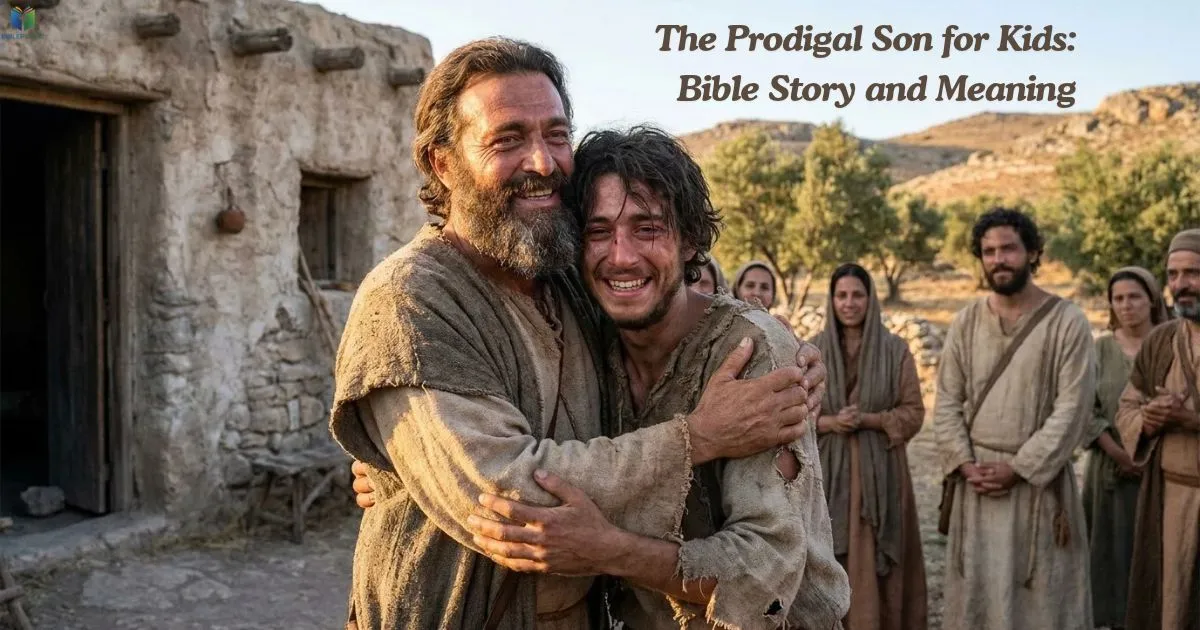
As the younger son approached home, his father saw him from a distance and was moved with compassion. He ran to his son, embraced him, and kissed him. The son confessed his sin, but the father responded by calling for a robe, a ring, sandals, and a feast. He wanted everyone to celebrate because his son, who had been lost, had returned (Luke 15:20-24, KJV).
The father welcomed his son as a member of the family rather than treating him as a hired servant. Jesus uses this joyful reunion to illustrate the compassion and joy associated with the lost being found.
Children can learn that admitting wrongdoing matters and that forgiveness can open the way to restored relationships. The parable does not say that every earthly consequence disappears when someone apologizes. Instead, it highlights the father’s extraordinary willingness to welcome his returning son and celebrate their reunion.
The Older Brother Becomes Upset
While the younger son was being welcomed home, the older brother was working in the field. When he heard music and dancing, he learned that his brother had returned and that their father had prepared a feast. Instead of joining the celebration, he became angry and refused to go inside. His father came out and urged him to join them (Luke 15:25-28, KJV).
The older brother complained that he had served his father for many years without receiving a celebration like this. He struggled to understand why his brother, who had wasted his inheritance, was being welcomed so warmly. The father reminded him that he was always with him and that everything the father had belonged to him. He also explained why celebrating the younger son’s return was appropriate: his brother had been lost and was now found (Luke 15:29-32, KJV).
Children can learn that feelings of unfairness and jealousy should be handled honestly, with compassion and humility. The Bible does not tell us whether the older brother eventually joins the celebration, leaving readers to consider his response.
Where Is the Prodigal Son Story in the Bible?
The Prodigal Son story appears in the New Testament in the Gospel of Luke. Knowing where Jesus told this parable helps children understand its original context and why its message about repentance, mercy, and welcoming the lost is important. The passage is part of a larger section in which Jesus responds to criticism of His willingness to welcome sinners.
Luke 15:11-32 Explained for Kids
The story of the Prodigal Son is found in Luke 15:11-32. Jesus tells this parable after religious leaders criticize Him for welcoming sinners and eating with them (Luke 15:1-2, KJV). The surrounding chapter also includes the parables of the lost sheep and the lost coin, which emphasize the joy associated with finding what was lost.
In the parable, a younger son leaves home, wastes his inheritance, and returns in repentance. His father welcomes him with compassion, while the older brother struggles with the celebration. These events help explain the story’s context: Jesus is addressing criticism of His welcome toward sinners and highlighting the importance of rejoicing when the lost are found.
Parents and teachers can read Luke 15:11-32 aloud from the King James Version and pause to discuss what each character says and does. Ask children how the father’s response differs from what the younger son expected and why the older brother reacts differently.
What Is the Meaning of the Prodigal Son?
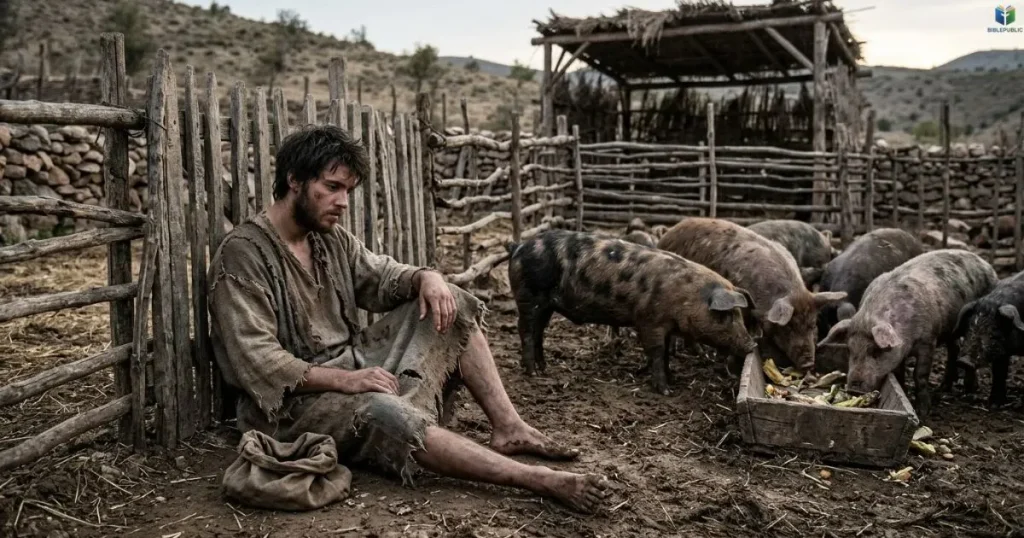
The parable teaches about repentance, mercy, forgiveness, and the joy of welcoming someone who was lost. Jesus presents two sons whose responses reveal different struggles: the younger son acknowledges his wrongdoing, while the older son struggles to accept his father’s generous welcome. The father’s response to both sons helps readers consider God’s mercy and how people should respond when someone turns back from wrongdoing.
The Younger Son’s Mistakes and Repentance
The younger son makes destructive choices when he takes his inheritance and wastes it. After experiencing hardship, he recognizes his wrongdoing and decides to return to his father. His confession in Luke 15:18-19 (KJV) shows that he understands his actions as sin, not merely as a mistake that caused him trouble.
His change of direction illustrates repentance. Repentance means recognizing sin and turning away from it toward what is right. For children, this may mean telling the truth after lying, admitting they have hurt someone, or taking responsibility instead of making excuses.
The son’s return does not mean his earlier choices were harmless. Rather, his decision shows the importance of acknowledging wrongdoing and seeking restoration instead of continuing along the same path. Children can learn that they do not have to hide their mistakes; they can be honest about what happened and take responsible steps toward better choices.
The Father’s Love, Mercy, and Forgiveness
The father responds to his returning son with compassion rather than rejection. He sees his son coming, runs to meet him, embraces him, and orders a celebration (Luke 15:20-24, KJV). Although the son has prepared to ask for a servant’s place, his father welcomes him home and celebrates his return.
In the context of Luke 15, the father’s welcome illustrates God’s concern for those who are lost and the joy associated with their return. This is a Christian interpretation of the parable’s message, grounded in the chapter’s context and Jesus’ response to those who criticized Him for welcoming sinners.
The parable offers a picture of gracious welcome and restored relationships; it should not be understood as a promise that people will never face consequences for their choices. Children can apply this lesson by learning to forgive sincerely, welcome someone who is trying to make things right, and remember that a person’s wrongdoing need not define their entire story.
The Older Brother’s Reaction
The older brother’s anger reveals another struggle in the parable. He has remained at home and worked for his father, but he cannot share in the joy over his brother’s return. He focuses on what he believes he deserves and compares his own behavior with his brother’s past mistakes (Luke 15:28-30, KJV).
Jesus includes the older brother in a story about mercy toward sinners. His reaction challenges readers to consider how resentment can prevent them from celebrating another person’s opportunity to change.
The father does not ignore the older son’s response. He goes out to speak with him, reminds him of their relationship, and explains why celebrating the younger son’s return is appropriate. The passage does not tell readers whether the older brother eventually joins the celebration.
Children can learn that jealousy and hurt feelings can be discussed honestly without allowing those feelings to become unkindness toward others.
How Does the Prodigal Son Show God’s Love and Forgiveness?
The father’s joyful welcome shows how love and mercy can restore a broken relationship. This lesson also connects with the Bible’s broader teaching about forgiveness. Children can explore Bible verses about forgiveness to learn more about forgiving others, receiving mercy, and showing compassion.
The Father’s Joy When His Son Returns
When the father sees his younger son approaching, he runs to meet him and welcomes him with affection. He orders a celebration because his son has returned. In Luke 15:24 (KJV), the father explains the reason for the joy:
“For this my son was dead, and is alive again; he was lost, and is found. And they began to be merry.”
These words express the dramatic change from separation to reunion. The father does not treat his son’s return as an inconvenience. Instead, he celebrates the fact that his lost son is home again.
The celebration reflects a central theme of Luke 15: the joy associated with the lost being found. It does not mean that the younger son’s choices were acceptable; the son himself confesses his sin. Instead, the father places great importance on his son’s return.
Children can learn that forgiveness and reconciliation are reasons for gratitude and celebration, not opportunities to shame someone who is sincerely trying to make things right.
Repentance, Forgiveness, and Restoration
The younger son acknowledges his wrongdoing and returns to his father, while the father welcomes him and restores him to the household (Luke 15:17-24, KJV). The son’s confession and the father’s compassion are both important to the reunion. Together, their actions illustrate repentance, forgiveness, and restored relationships.
For children, repentance can begin with honestly admitting what happened, asking for forgiveness, and choosing a better response next time. Forgiveness means giving up revenge and responding without a desire to hurt someone in return. Restoration means working toward repairing a damaged relationship when possible.
Forgiveness does not require pretending that harm never happened, ignoring safety concerns, or immediately trusting someone again. Parents and teachers can explain that making things right may include apologizing, correcting a mistake, replacing something damaged, or giving another person time to rebuild trust.
If a child is being hurt, threatened, or made to feel unsafe, the child should tell a trusted adult. Forgiveness should never be used to pressure a child to hide harm or remain in an unsafe situation.
What Can Kids Learn From the Prodigal Son?
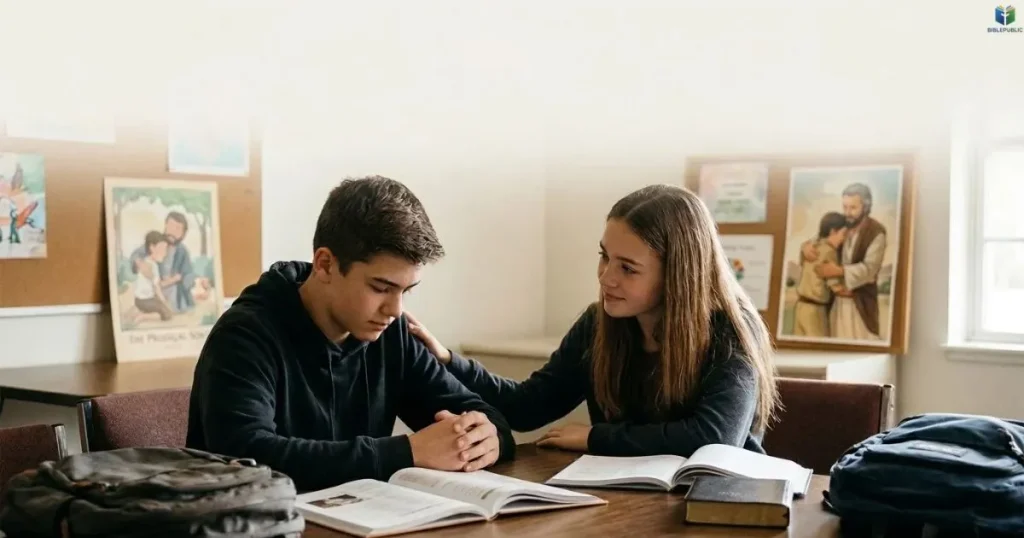
The story of the Prodigal Son teaches children important lessons about admitting mistakes, asking for forgiveness, and showing mercy to others. Like other parables of Jesus for kids, this story uses familiar family experiences to help children understand God’s love and learn how to live according to His teachings.
Admit Mistakes and Take Responsibility
The younger son does not blame his father or his brother when he decides to return home. He admits that he has sinned against heaven and his father (Luke 15:18-19, KJV). His response provides an example of taking responsibility instead of making excuses.
Children can practice this lesson by telling the truth about what happened, acknowledging the effect of their actions, and accepting reasonable consequences. For example, a child who breaks a sibling’s toy can admit what happened rather than blaming someone else.
Parents and teachers can ask, “What choice did you make, and what could you do differently next time?” The goal is not to make children feel worthless. It is to help them understand that mistakes should be faced honestly and that better choices are possible.
Ask for Forgiveness and Make Things Right
The younger son returns to his father prepared to confess his wrongdoing (Luke 15:18-21, KJV). His willingness to speak honestly shows children that seeking forgiveness begins with admitting what they have done. An apology is most meaningful when it is sincere and does not shift blame to the person who was hurt.
Children can learn to say, “I was wrong to do that. I’m sorry I hurt you. How can I help make it right?” Depending on the situation, making things right might mean returning a borrowed item, helping repair damage, or correcting a lie.
Forgiveness may not immediately restore trust, and the person who was hurt may need time. The parable encourages repentance and reconciliation, while everyday situations also require patience, responsibility, and respect for others.
Show Mercy Instead of Holding Grudges
The older brother becomes angry when his father welcomes the younger son home. He focuses on his brother’s wrongdoing rather than sharing his father’s joy (Luke 15:28-32, KJV). His reaction invites readers to consider whether resentment can prevent them from showing compassion.
Children may feel jealous when a classmate receives another chance or when a sibling is forgiven after doing something wrong. They can learn to express those feelings honestly without trying to shame or punish the other person.
Showing mercy does not mean saying that harmful behavior is acceptable. It means recognizing that people can acknowledge wrongdoing and change. Parents and teachers can ask, “How could you encourage someone who is trying to do better?” This helps children practice compassion instead of keeping a list of other people’s past mistakes.
Understand the Older Brother’s Feelings
The older brother feels angry about the celebration and points to his years of service to his father (Luke 15:29-32, KJV). His words suggest that he believes his loyalty has not been recognized in the way he expected. Although the passage does not explicitly state every reason for his feelings, his response gives children an opportunity to discuss frustration, jealousy, and perceived unfairness.
Ask children what the older brother might have wanted his father to understand. He may have wanted his efforts to be appreciated. The father responds by reminding him of their relationship and explaining why celebrating the younger son’s return is appropriate.
Children can learn that it is possible to acknowledge someone’s hurt while also celebrating another person’s growth. They can express difficult feelings honestly without allowing those feelings to turn into unkindness.
How Can Kids Apply the Prodigal Son’s Lessons in Everyday Life?
Children can put the lessons of the Prodigal Son into practice through small, honest choices at home, school, church, and with friends. The following examples show how repentance, forgiveness, and compassion can become part of everyday behavior.
- Tell the truth: If you make a mistake, explain what happened instead of blaming someone else.
- Take responsibility: Help repair damage or correct a problem you caused.
- Apologize sincerely: Explain what you did wrong and show that you understand how it affected someone.
- Choose forgiveness: When someone sincerely apologizes, consider responding with kindness while maintaining appropriate boundaries.
- Handle jealousy honestly: If another person receives praise or a second chance, talk about your feelings rather than trying to spoil their happiness.
- Welcome positive change: Encourage someone who is making better choices instead of defining them only by past mistakes.
- Ask for help: Talk to a trusted parent, teacher, or church leader when a conflict is difficult to resolve.
For example, if a child breaks a friend’s pencil, the child can admit what happened, apologize, and offer to replace it. If a sibling is forgiven for a mistake, a child can talk about feeling overlooked without trying to spoil the reconciliation. If a friend apologizes after an argument, the child can consider the apology while allowing time for trust to grow again.
Parents can reinforce these lessons by modeling sincere apologies, explaining fair consequences, and recognizing children when they tell the truth or try to repair harm. Sunday school teachers can invite children to role-play simple situations and discuss responsible, forgiving responses.
These actions do not make children perfect. They help them practice honesty, humility, mercy, and reconciliation in everyday relationships.
Prodigal Son Bible Verse for Kids

One meaningful verse from the parable is Luke 15:24 (KJV). It captures the father’s joy when his lost son returns and provides children with a short passage to remember as they learn about repentance, forgiveness, and restoration.
Luke 15:24 (KJV)
“For this my son was dead, and is alive again; he was lost, and is found. And they began to be merry.”
In this verse, the father explains why he is celebrating: his son, who had been away, has returned home. The words “was lost, and is found” summarize the joyful change at the center of the parable. They also connect with the other stories in Luke 15, where something lost is found and the discovery brings joy.
For children, this verse can be a reminder that repentance and reconciliation are worth celebrating. Parents and Sunday school teachers can ask:
- Why was the father happy?
- What does the phrase “he was lost, and is found” mean in this story?
- How can we respond when someone admits a mistake and tries to make things right?
These questions help children understand the verse in the context of Jesus’ story rather than treating it as a promise that every difficult situation will have an easy ending.
Simple memory activity: Ask children to remember the words “lost,” “found,” and “merry.” Have them draw the father welcoming his son and write Luke 15:24 beneath the picture. Invite them to explain how the verse connects with the story.
Prodigal Son Activities and Questions for Kids
Interactive activities and discussion questions can help children remember the events of the parable and think about its message. Parents and Sunday school teachers can use the following ideas to encourage biblical understanding, thoughtful discussion, and age-appropriate application without pressuring children to share personal experiences.
Prodigal Son Comprehension Questions
After reading Luke 15:11-32, invite children to answer these questions in their own words.
- What did the younger son ask his father to give him?
- Where did the younger son go after receiving his inheritance?
- What did the younger son do with his money?
- What happened in the country after he had spent his money?
- What job did the younger son find when he was in need?
- What did he wish he could eat when he became hungry?
- What did the younger son remember about his father’s home?
- What did he decide to do after realizing his mistake?
- What did the younger son plan to say to his father?
- How did his father respond when he saw him returning?
- What did the father ask the servants to bring for his son?
- Why did the father organize a celebration?
- How did the older brother react when he heard about the celebration?
- Why was the older brother upset?
- What did the father say to the older brother?
Answer Guide for Parents and Teachers
- He asked his father for his share of the inheritance.
- He traveled to a distant country.
- He wasted his property by living recklessly.
- A severe famine struck the country, and he began to experience need.
- He found work feeding pigs.
- He wished he could eat the food given to the pigs, but no one gave him anything.
- He remembered that his father’s hired servants had more than enough bread.
- He decided to return home and confess his wrongdoing.
- He planned to confess that he had sinned against heaven and his father and ask to be treated as a hired servant.
- His father felt compassion, ran to him, embraced him, and kissed him.
- The father called for the best robe, a ring, and sandals.
- He celebrated because his lost son had returned home.
- The older brother became angry and refused to go inside.
- He believed it was unfair that his younger brother received a celebration after wasting his inheritance, while he had served his father for many years.
- His father reminded him that he was always with him and that everything the father had belonged to him. He also explained that celebrating was right because his brother had been lost and was now found.
Discussion Questions About Forgiveness
These questions help children connect the parable to their feelings, relationships, and choices. There may be more than one thoughtful answer, so give children time to explain their ideas.
- Why do you think the younger son decided to return home?
- What can we learn from the father’s response to his returning son?
- Why might it be difficult to admit that we have done something wrong?
- What is the difference between being sorry about getting into trouble and being truly sorry for hurting someone?
- How can we show that we are sincerely sorry after making a mistake?
- Why do you think the older brother felt angry about the celebration?
- How can we respond when we feel jealous or left out?
- What is the difference between forgiving someone and pretending that nothing happened?
- Why might it take time for trust to return after someone has hurt us?
- How can we encourage someone who is trying to make better choices?
- When should a child ask a trusted adult for help with a problem?
- What is one lesson from this story that you can practice this week?
Teaching tip: Avoid pressuring children to share private or painful experiences in front of a group. They can answer using an imaginary situation or a general example. Remind them that asking a trusted adult for help is appropriate whenever they feel unsafe or someone continues to hurt them.
Prodigal Son Coloring and Craft Activities
Creative activities help children recall the story and express what they have learned. Choose an activity suited to the children’s ages, available materials, and time.
1. Draw the Father Welcoming His Son
Give each child a sheet of paper and crayons or colored pencils. Ask them to draw the moment when the father welcomes his returning son.
After drawing, children can complete the sentence:
“The father was happy because ______.”
This activity reinforces the father’s compassion and the joy of the son’s return.
2. Make a “Lost and Found” Heart
Provide paper, child-safe scissors, and crayons. Help children cut out a large heart and write the words “Love,” “Mercy,” or “Forgiveness” on it. They can decorate the heart with simple drawings related to the parable.
Ask each child to explain how one of the words connects to the story. Younger children may need an adult to prepare the heart shapes in advance.
3. Put the Story in Order
Prepare five cards with simple illustrations or sentences:
- The younger son asks for his inheritance.
- He leaves home and wastes his money.
- He realizes his mistake and decides to return.
- His father welcomes him home.
- The older brother becomes upset about the celebration.
Invite children to arrange the cards in the correct order and retell the story using the pictures as prompts. For older children, add a sixth card showing the father speaking with the older brother.
4. Practice a Sincere Apology
Present a simple, fictional situation, such as accidentally breaking a friend’s pencil or taking a toy without asking. Ask children to suggest an apology that explains what happened, why it was wrong, and how to make things right.
For example, a child might say:
“I’m sorry I took your toy without asking. I should have asked first. I’ll return it and ask next time.”
Remind children that saying sorry is important, but changing the behavior and repairing harm are important too.
5. Complete a Bible Story Reflection
Ask children to write or draw their answers to these three prompts:
- One thing I learned about the younger son is ______.
- One thing I learned about the father is ______.
- One kind or responsible choice I can make this week is ______.
Parents can display the finished work at home, while Sunday school teachers can use it as a closing reflection. The goal is to help children remember the story’s message and choose one practical way to live it out.
Conclusion
The Prodigal Son for Kids teaches children about repentance, forgiveness, and God’s love and mercy. Through the younger son’s return and his father’s joyful welcome, children learn that admitting mistakes and choosing what is right matter. This Bible story also shows how compassion and humility can help restore relationships and bring families closer together.
Parents and teachers can read Luke 15:11-32 together and ask children what they learn from the younger son, the father, and the older brother. Encourage children to tell the truth, apologize sincerely, and take responsibility for their actions. These simple steps help them practice forgiveness, make better choices, and apply the Bible story’s lessons in everyday life.
Explore More Bible Stories and Lessons for Kids
The story of the Prodigal Son helps children understand God’s mercy, forgiveness, and the importance of making wise choices. Exploring other Bible stories can deepen their understanding of Jesus’ teachings and show how faith, kindness, repentance, and obedience apply to everyday life. These related resources offer parents and teachers more ways to encourage meaningful Bible discussions.
The Good Samaritan for Kids: Bible Story and Meaning
The Parable of the Sower for Kids: Meaning of the Four Soils
Frequently Asked Questions
What is the story of the Prodigal Son about?
The Prodigal Son is a Bible story about a younger son who wastes his inheritance but returns home. His father welcomes him with compassion, forgiveness, and joy.
Where is the Prodigal Son story found in the Bible?
The Prodigal Son story appears in Luke 15:11-32 (KJV). Jesus tells this parable to illustrate repentance, God’s mercy, and the joy of welcoming someone who turns back from wrongdoing.
What is the main lesson of the Prodigal Son for kids?
The main lesson is that we should admit our mistakes, turn away from wrongdoing, and seek forgiveness. Children can also learn to show compassion instead of judging others.
Why did the father forgive the Prodigal Son?
The father forgave his son and celebrated his return because he loved him deeply. His response illustrates mercy, restoration, and the joy of welcoming someone who has returned home.
Does the Prodigal Son story mean God allows people to sin?
No, the parable does not teach that wrongdoing is acceptable. The younger son recognizes his mistakes and returns home, illustrating repentance and the importance of changing direction.
What can children learn from the older brother in the Prodigal Son story?
The older brother’s reaction teaches children to recognize jealousy and resentment. His response also encourages them to practice humility, show compassion, and celebrate when others receive forgiveness.

Chris Saadil is the founder of BiblePublic.com, where he shares biblical insights to help readers understand God’s Word and grow in faith. His mission is to make Scripture clear, practical, and encouraging through Bible verses, biblical teachings, prayer, and Christian living, helping believers build a deeper relationship with God every day.