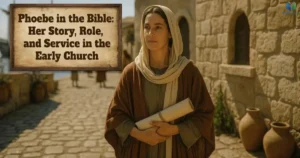
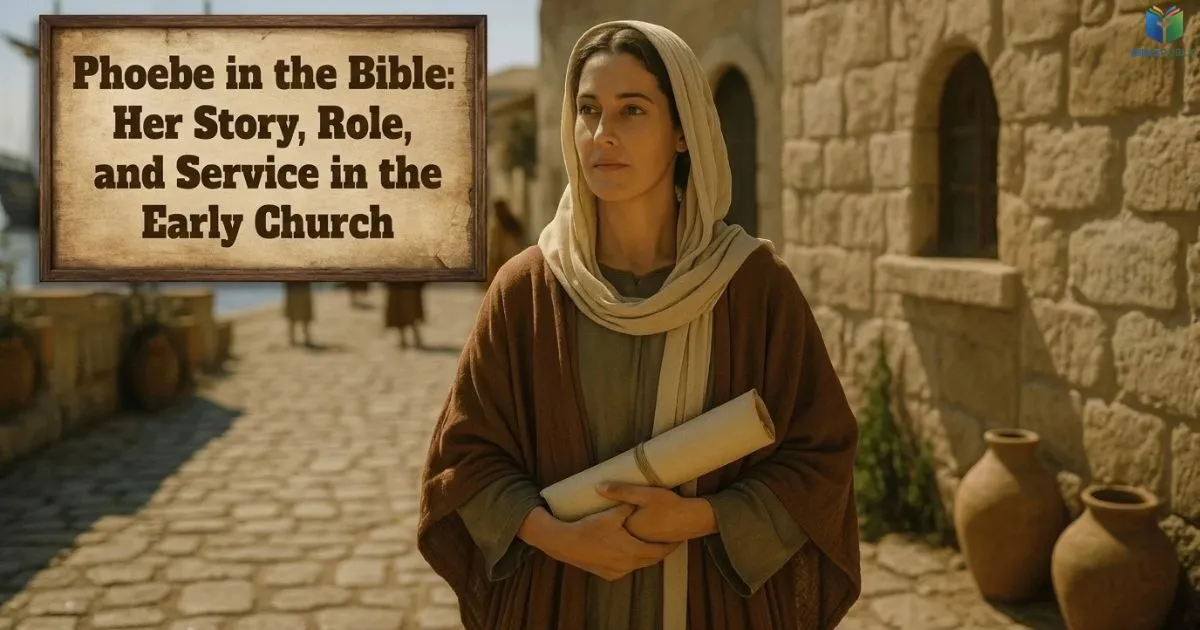
Phoebe in the Bible is a woman whose service earned recognition from the apostle Paul. In Romans 16:1–2, Paul describes her as a servant of the church at Cenchreae and a helper of many people. Though her story is brief, it offers a meaningful look at how Christians supported one another in the early church.
In this article, you will discover what Scripture says about Phoebe, her role in the Christian community, and why Paul commended her to the believers in Rome. You will also explore the meaning of her biblical titles and learn how her example can inspire faithful service, generosity, and care for others.
Who Was Phoebe in the Bible?

Phoebe in the Bible was a Christian woman whom the apostle Paul commended to the believers in Rome. In Romans 16:1–2, Paul identifies her as a servant of the church at Cenchreae and describes her as someone who had helped many people, including himself.
Although Scripture provides few personal details about Phoebe, Paul’s words show that he valued her service. Her brief appearance in Romans offers insight into the people who supported early Christian communities and the importance of recognizing their contributions.
Where Is Phoebe Introduced in Scripture?
Phoebe is introduced in Romans 16:1–2, near the end of Paul’s letter to the Romans. Paul recommends her to the believers in Rome, asking them to receive her in the Lord and assist her with whatever she needs. This passage is the primary biblical source for understanding her role and reputation.
What Do We Know About Phoebe’s Background?
The Bible identifies Phoebe with the church at Cenchreae, a port near Corinth in ancient Greece. Romans 16:1–2 does not reveal her age, family history, or marital status. It also does not explain how she became a Christian. Instead, the passage focuses on her service and the assistance she had provided to others.
What Does the Bible Say About Phoebe in Romans 16:1–2?
Romans 16:1–2 provides the clearest biblical account of Phoebe. Paul introduces her to the Roman Christians, identifies her with the church at Cenchreae, and asks the believers to welcome her and provide any assistance she may need.
Paul also describes Phoebe as someone who had helped many people, including himself. His words emphasize the importance of hospitality and mutual support among Christians. They show that the early church depended on believers who served others and maintained relationships across different communities.
Why Did Paul Commend Phoebe to the Roman Christians?
Paul commended Phoebe so that the believers in Rome would recognize her and welcome her appropriately. Romans 16:1–2 identifies her connection with the church at Cenchreae and acknowledges her assistance to many people. His recommendation demonstrates that he wanted the Roman Christians to receive her with respect and support her needs.
What Did Paul Ask the Church to Do for Her?
In Romans 16:2, Paul asks the Roman Christians to receive Phoebe in the Lord and help her with whatever she might need. He connects this request with her record of helping many people, including himself. Although he does not specify what assistance she required, his instructions clearly encourage practical support and Christian hospitality.
What Was Phoebe’s Role as a Servant of the Church at Cenchreae?
Paul describes Phoebe as a diakonos of the church at Cenchreae in Romans 16:1. Many translations render this word as “servant,” while others use “deacon.” The description connects Phoebe with the service of a particular Christian congregation.
The verse does not list her duties or fully explain her formal position. Readers should therefore distinguish the wording of Scripture from interpretations about her exact office. What the passage clearly establishes is that Paul recognized Phoebe’s connection with the church and considered her worthy of a personal commendation.
Where Was Cenchreae, and Why Is It Mentioned?
Cenchreae was a port near Corinth in ancient Greece. Paul’s reference to the church there in Romans 16:1 connects Phoebe with a specific local Christian community. This geographical detail helps readers understand that early Christian congregations existed in different places and maintained relationships beyond their immediate communities.
What Does the Word “Servant” Mean in Romans 16:1?
The Greek word diakonos can mean “servant” or “minister” and is translated as “deacon” in some Bible versions. Paul uses it to describe Phoebe in relation to the church at Cenchreae. Whether the term identifies her with a formal church office or describes her ministry more generally remains a matter of interpretation. The translation alone does not settle the question.
Why Did Paul Describe Phoebe as a Benefactor of Many?

In Romans 16:2, Paul describes Phoebe as someone who had helped many people, including himself. This statement suggests that she had provided meaningful support to others in the Christian community and that Paul personally valued her contribution.
The passage does not explain exactly how she helped them. Her support may have taken practical or other forms, but Scripture does not specify the details. Paul’s description emphasizes her contribution rather than providing a list of her activities.
What Does “Benefactor” Mean in Romans 16:2?
The Greek word prostatis in Romans 16:2 is translated in different ways, including “helper,” “benefactor,” and “patron.” It describes someone who supports or assists others. Paul’s wording indicates that Phoebe had helped many people, including himself, but the passage does not specify whether her assistance involved financial resources, hospitality, or other forms of support.
What Does Paul’s Description Reveal About Phoebe’s Support for Others?
Paul’s description reveals that Phoebe had a reputation for helping others. By including himself among those she had assisted, he acknowledges her personal contribution. Although Scripture does not identify everyone she helped or explain each act of service, Romans 16:2 shows that Paul valued her support and wanted the Roman Christians to recognize it.
Did Phoebe Deliver Paul’s Letter to the Romans?
Some biblical scholars believe Phoebe may have carried Paul’s letter to the Romans to its intended readers. This possibility is often discussed because Paul introduces her to the Roman Christians and provides a personal recommendation for her. If she delivered the letter, she may have helped communicate Paul’s message to the church in Rome.
However, Romans 16:1–2 does not explicitly state that Phoebe carried the letter. This proposal remains a scholarly possibility rather than a confirmed biblical fact. An accurate account should distinguish this historical interpretation from what Scripture directly records about Phoebe’s service.
Why Do Some Scholars Believe Phoebe Carried the Letter?
Some scholars consider Phoebe a possible carrier of Romans because Paul introduces her to the letter’s recipients and asks them to welcome and assist her. In the ancient world, trusted individuals sometimes transported letters between communities. This context makes the proposal plausible, but the biblical passage does not directly confirm that Phoebe delivered Paul’s letter.
What Does Romans 16 Tell Us, and What Remains Uncertain?
Romans 16:1–2 establishes that Phoebe was associated with the church at Cenchreae, that Paul commended her to the Roman Christians, and that she had helped many people. The passage does not state why she traveled to Rome, whether she carried the letter, or what specific assistance she needed. These details should not be presented as established facts.
What Does Phoebe’s Story Reveal About Women in the Early Church?
Phoebe’s appearance in Romans 16 shows that Paul publicly recognized a woman’s service within an early Christian community. He identifies her with the church at Cenchreae and acknowledges the help she had provided to many people. Her inclusion offers a specific example of a woman whose contribution mattered to the wider church.
The passage does not explain every responsibility Phoebe held or establish the roles of all women in early Christian communities. Nevertheless, Paul’s commendation shows that he considered her service worthy of recognition and encouraged the Roman believers to welcome and assist her. Priscilla’s partnership in ministry offers another biblical example to explore when considering how women contributed to the work of the early church.
How Did Women Contribute to Early Christian Communities?
The New Testament describes women participating in and supporting early Christian communities in different ways. Phoebe is one example because Paul identifies her with the church at Cenchreae and acknowledges her help to many people in Romans 16:1–2. Other biblical passages describe women in different circumstances, so their individual contributions should be understood within their own scriptural contexts.
What Was Phoebe’s Significance in the Early Church?
Phoebe’s significance comes from Paul’s recognition of her as a servant of the church at Cenchreae and a helper of many. His recommendation brought her contribution to the attention of the Roman Christians. Although Scripture provides little information about her personal life, her mention in Romans preserves an example of service and cooperation among early believers.
What Can Christians Learn From Phoebe’s Life and Service?

Phoebe’s example encourages Christians to serve others, support fellow believers, and recognize the contributions people make to their communities. In Romans 16:1–2, Paul highlights her service and asks the Roman Christians to welcome and assist her.
Her story reminds readers that practical support is an important part of Christian community life. Although Scripture does not describe every action Phoebe took, Paul’s words provide a basis for reflecting on faithful service, generosity, and care for others.
Serving Others With Faithfulness
Phoebe’s connection with the church at Cenchreae provides an example of service within a Christian community. Paul does not list her duties, but he identifies her as a servant of the church in Romans 16:1. Christians can apply this principle by serving their congregations faithfully and looking for practical ways to care for others.
Supporting the Church Through Generosity
In Romans 16:2, Paul recognizes Phoebe as someone who had helped many people, including himself. Although the passage does not specify the form of her assistance, it shows that her support was valued. Christians can follow this example by offering their time, skills, resources, or practical help according to their abilities and the needs of others.
Encouraging and Helping Fellow Believers
Paul’s request that the Roman Christians welcome and assist Phoebe illustrates the importance of mutual care. His words encourage believers to recognize those who serve and respond to their needs with practical support. Christians can apply this lesson by welcoming fellow believers, helping when appropriate, and treating others with kindness and respect.
Conclusion
Phoebe in the Bible reminds us that faithful service can make a lasting difference in the Christian community. Paul recognized her as a servant of the church at Cenchreae and a helper of many people (Romans 16:1–2). Her story shows the value of generosity, practical support, and caring for fellow believers.
You can follow Phoebe’s example by looking for simple ways to serve your church and help people in need. Offer your time, share your gifts, and encourage others through kindness. As you study Romans 16:1–2, reflect on how your actions can strengthen your faith community and show Christ’s love to others.
Related Resources for Understanding Phoebe’s Biblical Role
Phoebe’s story in Romans 16:1–2 highlights the importance of faithful service, generosity, and supporting fellow believers in the early church. Exploring additional biblical examples can deepen your understanding of how women served God, demonstrated courage, and contributed to Christian communities. These resources offer further insight into the faith and service reflected throughout Scripture.
Women in the Bible: Faith, Courage, and Life Lessons
Frequently Asked Question
Who Was Phoebe in the Bible, and Why Is She Important?
Phoebe was a Christian woman whom Paul commended in Romans 16:1–2. He recognized her service at the church in Cenchreae and acknowledged the help she had given to many people.
Was Phoebe a Deacon in the Early Church?
Romans 16:1 describes Phoebe using the Greek word diakonos, translated as “servant” or “deacon.” Whether it refers to a formal church office remains a matter of scholarly and theological interpretation.
What Was Phoebe’s Role in the Church at Cenchreae?
Phoebe served the church at Cenchreae, a port near Corinth. Paul also described her as a helper or benefactor of many people, including himself, in Romans 16:1–2.
Did Phoebe Deliver Paul’s Letter to the Romans?
Some scholars believe Phoebe may have carried Paul’s letter to Rome. However, Romans 16:1–2 does not explicitly confirm this, so it should be treated as a possibility rather than an established fact.
Was Phoebe Married or Did She Have Children?
The Bible does not say whether Phoebe was married or had children. Romans 16:1–2 focuses on her service to the church and the support she provided to others.
What Can Christians Learn From Phoebe’s Life and Service?
Christians can learn from Phoebe’s example of service, generosity, and helping others. Romans 16:1–2 highlights the importance of supporting fellow believers and caring for the needs of the Christian community.

Chris Saadil is the founder of BiblePublic.com, where he shares biblical insights to help readers understand God’s Word and grow in faith. His mission is to make Scripture clear, practical, and encouraging through Bible verses, biblical teachings, prayer, and Christian living, helping believers build a deeper relationship with God every day.