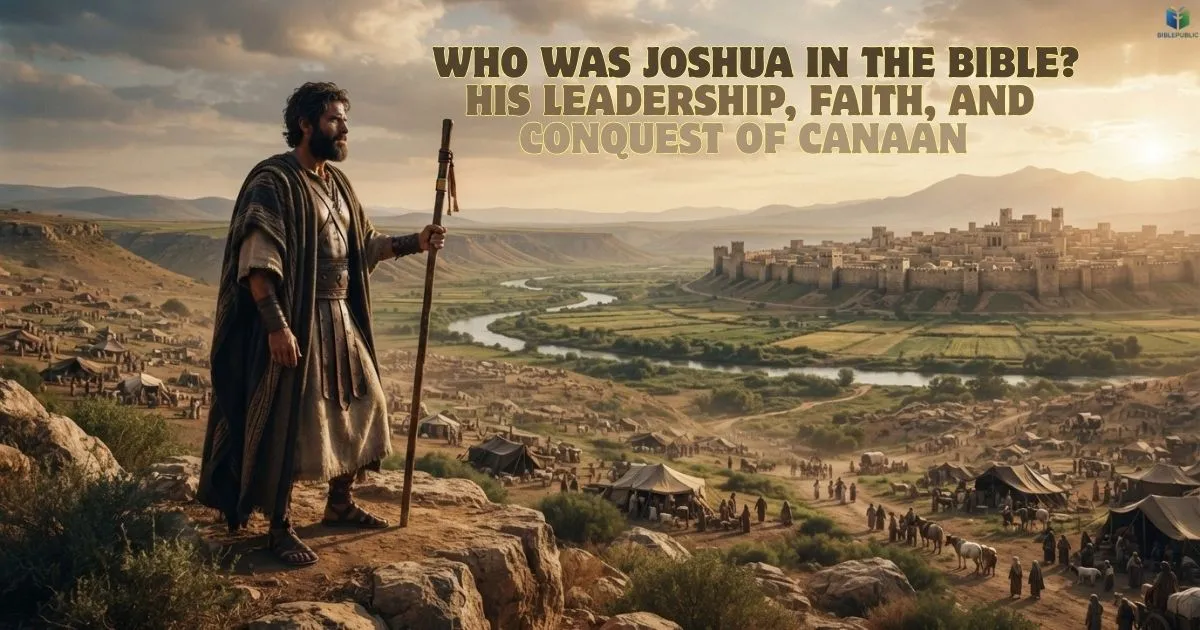
Who Was Joshua in the Bible? Joshua was Moses’ assistant and the leader God chose to guide the Israelites into the Promised Land. His story is one of faith, courage, and obedience. From trusting God when others were afraid to leading Israel through major battles, Joshua showed the importance of following God during difficult times.
In this article, you will learn about Joshua’s early life, his relationship with Moses, his leadership, and the conquest of Canaan. You will also discover how he divided the Promised Land among the tribes of Israel and what his life teaches Christians today about trusting God, showing courage, and remaining faithful to His Word.
Who Was Joshua in the Bible?
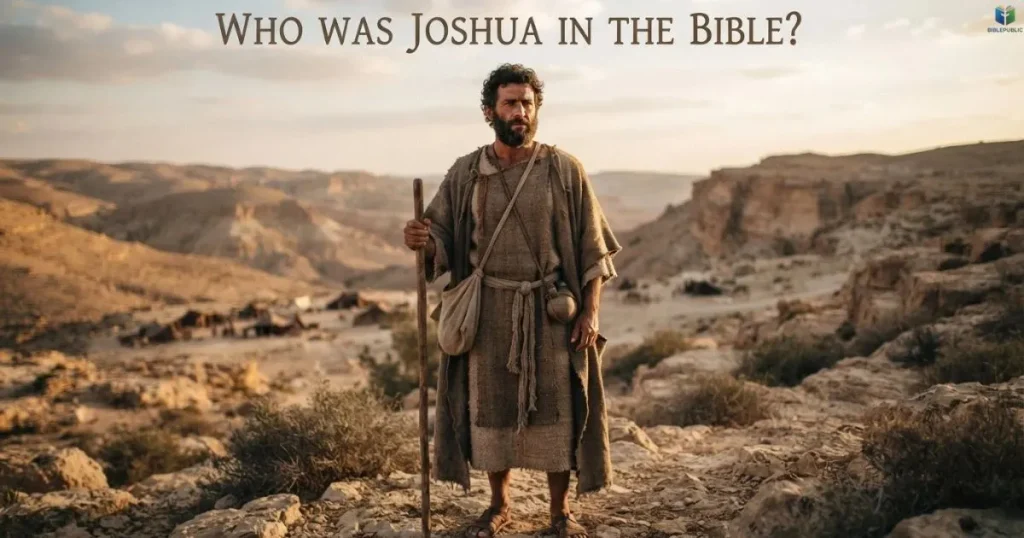
Joshua was the son of Nun from the tribe of Ephraim and the assistant of Moses whom God appointed to lead the Israelites into the Promised Land. Originally named Hoshea, he was called Jehoshua by Moses (Numbers 13:8, 16). His story is recorded mainly in the Book of Joshua, which describes his leadership, faith, and role in Israel’s conquest of Canaan.
After Moses died, Joshua led the Israelites across the Jordan River and guided them through major military campaigns in Canaan. He also helped oversee the distribution of the land among the tribes of Israel. His life highlights the importance of trusting God, obeying His instructions, and accepting responsibility during times of change.
Joshua’s Early Life and Relationship with Moses
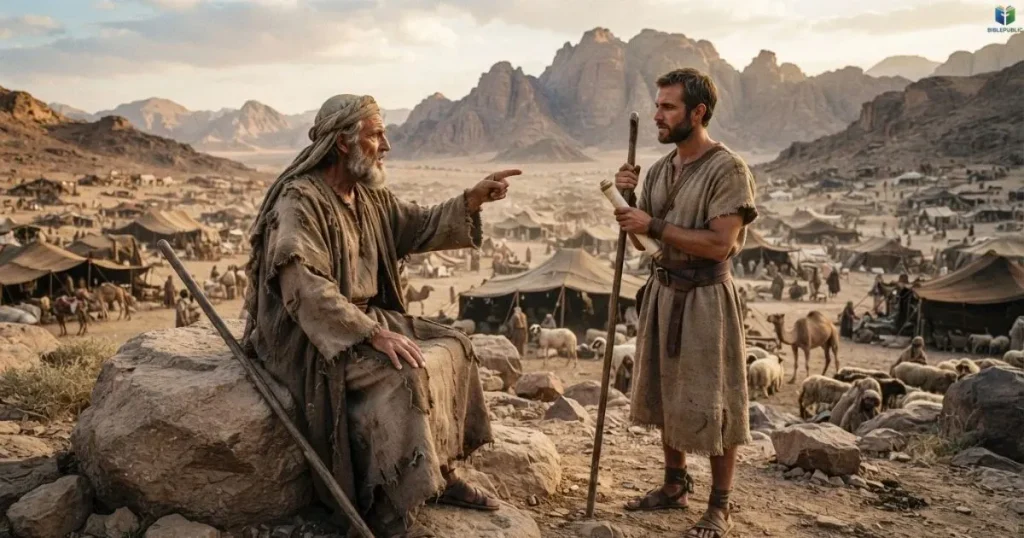
Joshua became a leader during Israel’s wilderness journey after leaving Egypt. Before succeeding Moses, he served as his assistant and gained experience through important events in the nation’s history. His close relationship with Moses helped prepare him for the responsibility of guiding the Israelites toward the land God had promised their ancestors.
Joshua’s faith became especially clear when Moses sent twelve spies to explore Canaan. While ten spies focused on the dangers and discouraged the people, Joshua and Caleb urged Israel to trust the LORD and enter the land. Their response showed confidence in God’s promise despite the challenges ahead (Numbers 13-14).
Joshua as Moses’ Assistant
Joshua served as Moses’ assistant during key events in Israel’s wilderness journey. He went with Moses toward Mount Sinai (Exodus 24:13), and Exodus 33:11 describes him as a young man who did not depart from the tabernacle. Joshua also led Israel’s forces against the Amalekites under Moses’ direction (Exodus 17:8-13). These experiences provided valuable preparation for his later responsibilities as Israel’s leader.
Joshua and Caleb’s Faithful Report
When twelve spies explored Canaan, ten gave a report that frightened the Israelites. Joshua and Caleb urged the people not to rebel against the LORD, reminding them that God was with them (Numbers 14:6-9). Because the Israelites refused to trust God and enter the land, that generation was sentenced to wander in the wilderness. Joshua and Caleb were the two adult spies from that generation permitted to enter Canaan.
How Joshua Became the Successor of Moses
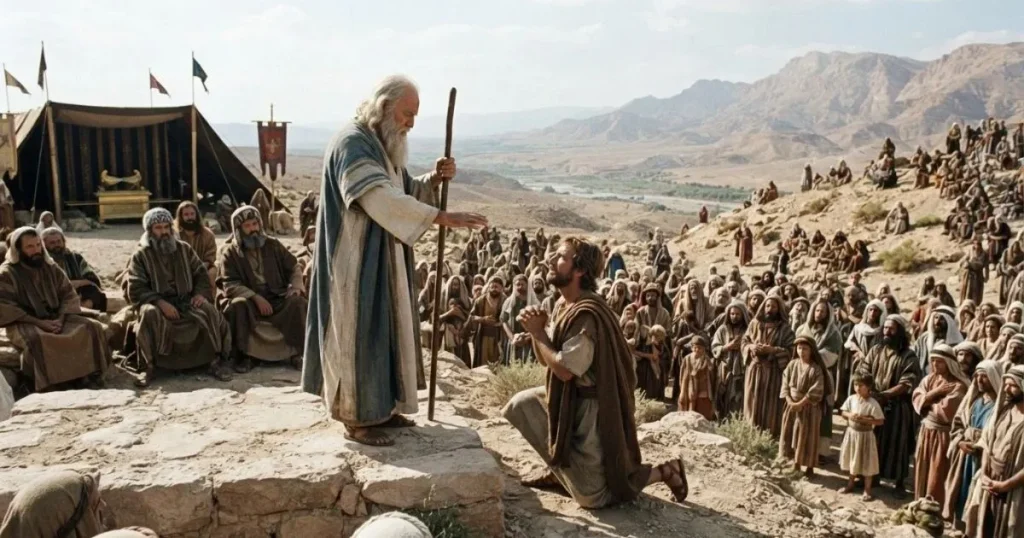
Joshua became Moses’ successor because God chose him to lead Israel after Moses’ death. Moses had led the Israelites out of Egypt and through the wilderness, but God had told him that he would not lead them into the Promised Land. As Israel prepared to enter Canaan, God directed Moses to appoint Joshua as the next leader (Numbers 27:18-23).
After Moses died, God confirmed Joshua’s responsibility and commanded him to be strong and courageous. Joshua led Israel into a new stage of its history as the people entered and settled in the land promised to their ancestors. His role required military leadership, careful judgment, and obedience to God’s instructions.
Joshua’s Commissioning and Responsibilities as Israel’s Leader
God instructed Moses to commission Joshua before Elazar the priest and the congregation of Israel. Moses laid his hands on Joshua, publicly appointing him to lead the people (Numbers 27:18–23; Deuteronomy 31:7-8). After Moses died, Joshua led Israel across the Jordan, directed its campaigns in Canaan, and oversaw the division of the land. God also commanded him to meditate on the Book of the Law and obey it, as explained in Joshua 1:7-9.
Joshua’s Faith and Trust in God
Joshua demonstrated faith by trusting that God would fulfill His promises to Israel. When most of the spies feared the inhabitants of Canaan, Joshua stood with Caleb and urged the people to believe that the LORD could bring them into the land. His response showed a willingness to trust God even when others were overwhelmed by the challenges ahead.
God repeatedly commanded Joshua to be strong and courageous, assuring him of His presence (Joshua 1:6-9). Joshua’s faith was expressed through his willingness to follow God’s instructions, not simply through confidence in a desired outcome. The defeat at Ai also shows that his leadership involved addressing disobedience and seeking God’s direction when Israel faced setbacks (Joshua 7-8).
Joshua’s example reminds Christians to seek God’s guidance and remain faithful when facing difficult challenges. For further biblical encouragement on relying on God during difficult times, explore Bible verses about trusting God to fight your battles.
Joshua and the Conquest of Canaan
Joshua led the Israelites into Canaan after Moses’ death, carrying forward the biblical account of God’s promise to give Abraham’s descendants a land of their own. The Book of Joshua describes Israel’s crossing of the Jordan, the capture of cities, campaigns against Canaanite kings, and the distribution of land among the tribes. These events are presented within the biblical account of God’s covenant promises and judgment.
The conquest included major victories as well as setbacks. Israel captured Jericho, suffered an initial defeat at Ai because of Achan’s disobedience, and later fought against southern and northern groups of Canaanite kings. Although Joshua’s campaigns secured important victories, the Bible also states that some land remained to be possessed (Joshua 13:1). This distinction is important for understanding the full account of Israel’s settlement.
The Crossing of the Jordan River
Before Israel entered Canaan, God instructed the priests carrying the ark of the covenant to step into the Jordan River. The waters stopped flowing, allowing the Israelites to cross on dry ground (Joshua 3:14-17). Joshua then instructed the people to take twelve stones from the river as a memorial so future generations would remember what God had done. The stones served as a reminder of Israel’s crossing and God’s provision (Joshua 4:1-24).
The Battle of Jericho
Jericho was the first major city Israel attacked after crossing the Jordan. God instructed Joshua to have the Israelites march around the city once a day for six days, with priests carrying trumpets before the ark. On the seventh day, they marched around the city seven times, and the priests sounded their trumpets as the people shouted. The city wall fell, and Israel captured Jericho according to God’s instructions (Joshua 6:1-21). The account emphasizes Joshua’s obedience to God’s specific commands.
The Battle of Ai and Achan’s Sin
After Jericho, Israel suffered a defeat at Ai because Achan had taken items that God had commanded Israel to devote to destruction. God revealed the cause of the defeat, and Joshua addressed the matter according to His instructions (Joshua 7). After Achan’s sin was exposed and judgment was carried out, God directed Joshua to attack Ai again. Israel then captured the city (Joshua 8). This account highlights the seriousness of disobedience within Israel’s covenant relationship with God.
Joshua’s Campaigns Against Other Canaanite Kings
Joshua led further campaigns against Canaanite kings and their armies. Joshua 10 describes the southern campaign, including the battle against the Amorite kings who attacked Gibeon and the account of the sun standing still during the battle. Joshua 11 records the northern campaign against a coalition of kings. These victories expanded Israel’s control, but the biblical account also acknowledges that some areas remained unconquered (Joshua 13:1).
How Joshua Divided the Promised Land Among the Tribes of Israel
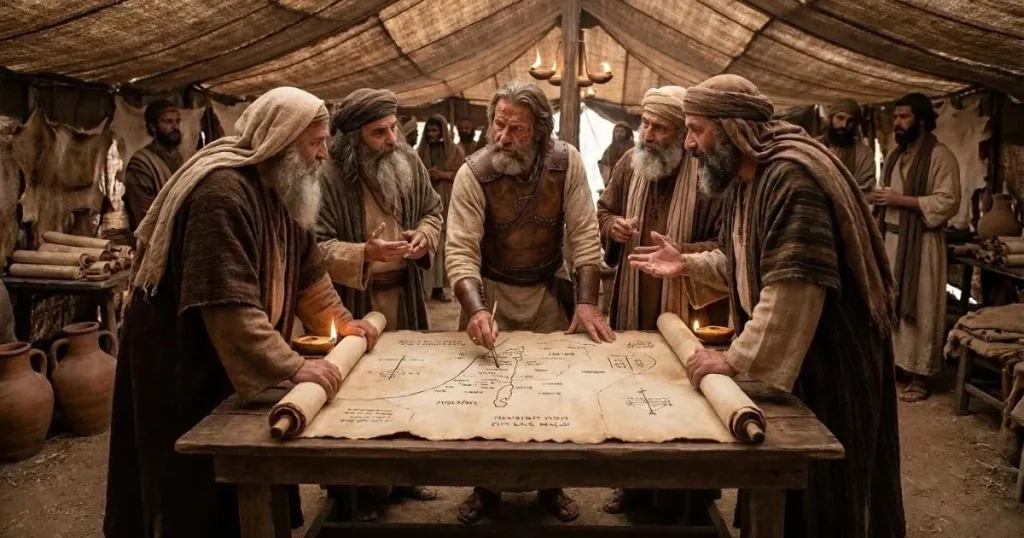
After the major campaigns, Joshua oversaw the division of Canaan among the tribes of Israel. The allotments were made with Joshua, Eleazar the priest, and the tribal leaders involved, following the instructions given through Moses (Joshua 14:1-5). Caleb received Hebron as his inheritance because he had wholly followed the LORD, while the other tribes received their assigned territories.
The distribution established the tribes in their respective regions and formed a key part of Israel’s settlement in the Promised Land. However, receiving an inheritance did not mean every area had been fully occupied. Joshua 13:1 states that much land remained to be possessed. The division connected Israel’s military campaigns with the long-term settlement of the tribes in their assigned territories.
Joshua’s Final Message, Covenant, and Death
Near the end of his life, Joshua gathered Israel’s leaders and the people to remind them of God’s works and call them to remain faithful. He warned against serving other gods and urged the Israelites to obey the LORD. His final messages looked back on Israel’s history while emphasizing the people’s responsibility to remain faithful to their covenant with God.
At Shechem, Joshua challenged the Israelites to choose whom they would serve and renewed the covenant with them (Joshua 24). He reminded them that God had brought them out of Egypt and given them the land. Joshua died at the age of 110 and was buried in his inheritance in the hill country of Ephraim (Joshua 24:29-30). His final message emphasized the importance of continued faithfulness to the LORD.
Joshua’s Farewell to the Israelites
Joshua gathered Israel’s leaders and reminded them that the LORD had fought for His people and fulfilled His promises. He warned them not to turn toward the gods of surrounding nations and urged them to love and obey the LORD (Joshua 23:1-11). Later, at Shechem, he reviewed God’s dealings with Israel and called the people to serve Him sincerely. He also warned them about the consequences of turning away from God (Joshua 24:1-25).
“As for Me and My House, We Will Serve the LORD”
Joshua’s well-known declaration appears in Joshua 24:15, where he challenges Israel to choose whom they will serve. He concludes, “but as for me and my house, we will serve the LORD” (KJV). This statement expresses Joshua’s commitment to the God of Israel. In context, he calls the people to reject other gods and serve the LORD faithfully as part of the covenant renewal at Shechem.
Joshua’s Death and Legacy
Joshua died at the age of 110 and was buried in Timnath-serah, in the hill country of Ephraim, the land he had received as his inheritance (Joshua 24:29-30). The Bible records that Israel served the LORD during Joshua’s lifetime and during the lifetime of the elders who had witnessed God’s works for Israel (Joshua 24:31). Joshua’s legacy includes his faithful leadership, courage, and role in bringing Israel into the Promised Land. His story also highlights the importance of continued faithfulness across generations.
What Can Christians Learn from Joshua’s Life?
Joshua’s life teaches Christians about courage, obedience, and trust in God. When the Israelites were afraid to enter Canaan, Joshua stood with Caleb and encouraged the people to believe God’s promise. As Israel’s leader, he followed God’s instructions during major events and accepted the responsibility of guiding the nation. His example shows that faith involves trusting God and responding to His direction rather than allowing fear to control every decision.
Joshua’s story also emphasizes the seriousness of disobedience and the importance of remaining faithful to God. The account of Auchan shows how his actions affected the Israelite community, while Joshua’s farewell warns against turning to other gods. His declaration, “but as for me and my house, we will serve the LORD” (Joshua 24:15, KJV), remains a reminder to make serving God a deliberate commitment.
Conclusion
Who Was Joshua in the Bible? He was a faithful leader chosen by God to guide the Israelites into the Promised Land. His life shows how faith, courage, and obedience shaped his decisions during difficult times. From succeeding Moses to leading Israel through Canaan, Joshua’s story reminds readers to trust God and follow His instructions even when the path ahead seems challenging.
Christians can learn from Joshua by seeking God’s guidance, standing firm when facing fear, and obeying His Word. Take time to read Joshua 1:7-9 and reflect on how its message applies to your daily choices. Consider how you can show courage, remain faithful to God, and encourage your family to serve the LORD with commitment.
Related Biblical Leaders and Lessons from Their Lives
Joshua’s life demonstrates the importance of faith, courage, and obedience to God. Exploring other biblical figures can broaden your understanding of how leadership, spiritual commitment, and personal choices shaped their experiences. These additional resources offer useful perspectives on biblical character and the lessons Christians can draw from the lives of people who served God in different circumstances.
Who Was Solomon in the Bible? His Wisdom, Wealth, and Downfall
Who Was Daniel in the Bible? His Faith, Visions, and Life in Babylon
Frequently Asked Questions
Who Was Joshua in the Bible, and why was he important?
Joshua was Moses’ assistant and the leader God chose to guide Israel into the Promised Land. His life demonstrates faith, courage, obedience, and trust in God during difficult times.
How did Joshua become the leader of Israel after Moses died?
God appointed Joshua to succeed Moses and lead Israel. Moses publicly encouraged him in Deuteronomy 31:7-8, while Numbers 27:18-23 records Joshua’s formal commissioning before the people.
Why did Joshua and Caleb trust God when the other spies were afraid?
Joshua and Caleb believed God could help Israel enter Canaan despite its challenges. In Numbers 14:6-9, they urged the people not to rebel against God or fear the inhabitants.
How did God help Joshua and the Israelites conquer Jericho?
God instructed Israel to march around Jericho for seven days. On the seventh day, the walls fell after the people followed His commands, as recorded in Joshua 6:1-20.
Did Joshua conquer all the Promised Land during his lifetime?
No, the conquest was not fully complete during Joshua’s lifetime. Joshua 13:1 states that much land remained to be possessed, showing that Israel still faced challenges after its military campaigns.
What can Christians learn from Joshua’s faith and leadership today?
Christians can learn from Joshua’s courage, obedience, and dependence on God. Joshua 1:9 encouraged Joshua to remain strong and courageous because God was with him as he led Israel.

Chris Saadil is the founder of BiblePublic.com, where he shares biblical insights to help readers understand God’s Word and grow in faith. His mission is to make Scripture clear, practical, and encouraging through Bible verses, biblical teachings, prayer, and Christian living, helping believers build a deeper relationship with God every day.