Who Was Noah in the Bible? Noah was a faithful man whom God chose to preserve his family and animal life during the great flood. His story in Genesis shows how he trusted God in a world filled with wickedness. Noah’s life remains an important example of faith, obedience, and God’s grace.
In this article, you will learn about Noah’s family, why God chose him, and how he built the ark. You will also discover what happened during the flood, the meaning of God’s covenant, and practical lessons Christians can apply to their lives today.
Who Was Noah in the Bible?
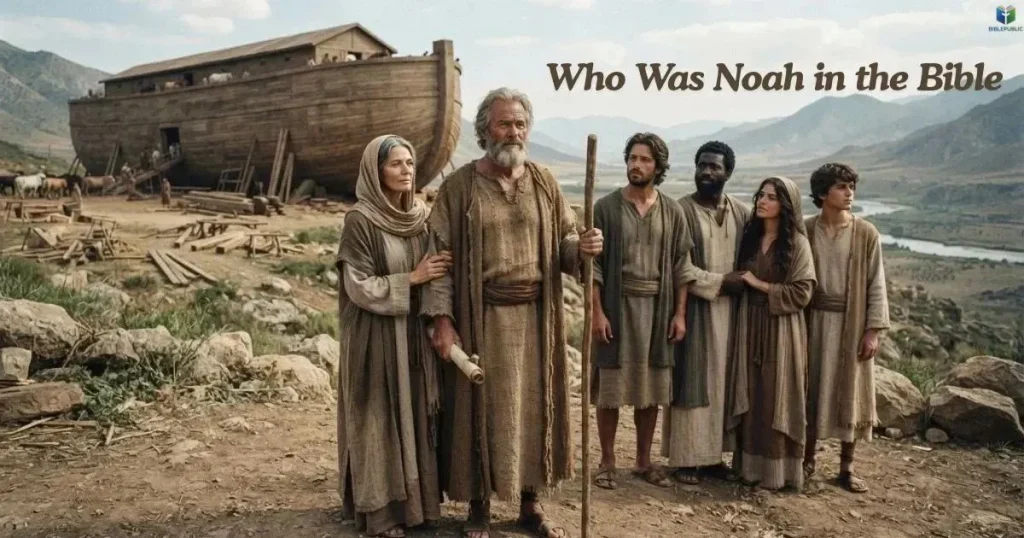
Who Was Noah in the Bible? Noah was a man whom God chose to preserve human and animal life during the great flood described in Genesis. He was the son of Lamech and the grandson of Methuselah, according to Genesis 5:28-32. Scripture describes Noah as a just man who walked with God in a corrupt generation. Understanding Noah’s name meaning and biblical significance provides additional context for his place in the biblical narrative.
Noah had three sons: Shem, Ham, and Japheth. God instructed him to build an ark to preserve his household and representatives of the animal world through the coming flood. His story, recorded mainly in Genesis 5-9, highlights God’s judgment, grace, and covenant, as well as Noah’s faith and obedience.
Who Were Noah’s Family Members?
According to Genesis 5:32, Noah had three sons: Shem, Ham, and Japheth. His wife is mentioned in the flood account, although the Bible does not give her name. His sons’ wives also entered the ark. Together, Noah, his wife, their three sons, and their wives made up the eight people preserved through the flood (Genesis 7:7; 1 Peter 3:20).
Why Is Noah Important in the Bible?
Noah is important because God preserved him and his family through the flood, allowing human life to continue afterward. His story demonstrates the seriousness of sin, God’s judgment, and His provision for preserving life. Hebrews 11:7 also presents Noah as an example of faith because he believed God’s warning and prepared the ark. His life connects the biblical themes of faith, obedience, grace, and covenant.
Why Did God Choose Noah?
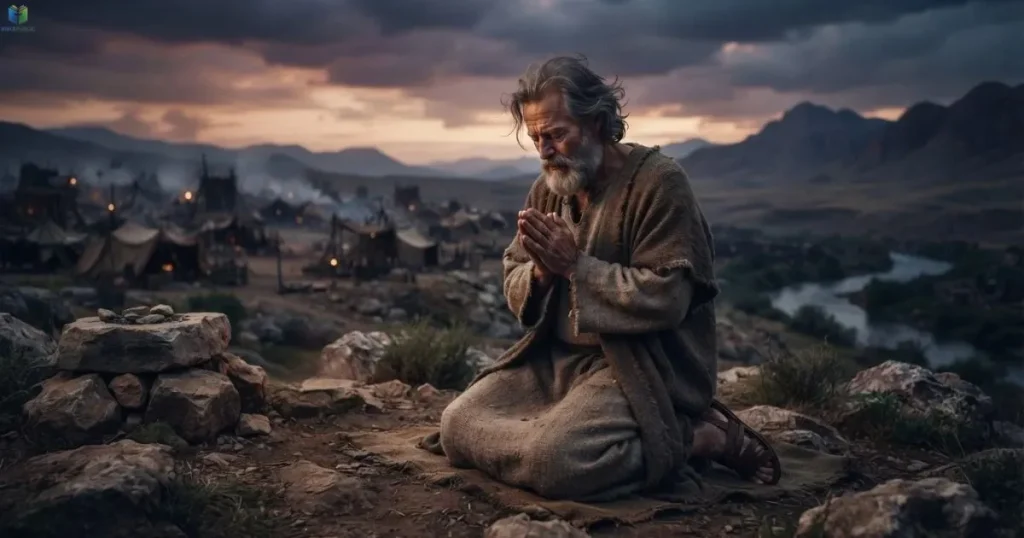
Genesis 6 describes a world filled with wickedness and violence. Genesis 6:5 says human wickedness had become great, while verses 11-12 describe the earth as corrupt. God declared that He would bring judgment through a flood, but Noah found grace in His sight. God instructed Noah to build an ark to preserve his household and living creatures.
Genesis 6:9 describes Noah as a just man who walked with God in his generation. This distinguishes him from the corruption around him, but it does not establish that he was sinless. The account emphasizes Noah’s character alongside God’s favor and his faithful response to the instructions he received.
What Does the Bible Say About Noah’s Righteousness?
Genesis 6:9 describes Noah as “a just man and perfect in his generations, and Noah walked with God” (KJV). These words distinguish him from the corrupt society around him. The phrase “perfect in his generations” is commonly understood as referring to integrity or blamelessness, rather than absolute sinlessness. The passage presents Noah as a man who maintained his relationship with God.
What Does It Mean That Noah Found Grace in God’s Eyes?
Genesis 6:8 states, “But Noah found grace in the eyes of the LORD” (KJV). This means Noah received God’s favor while the world around him faced judgment. The verse introduces the account of his preservation through the flood. The following verse describes Noah’s character, placing God’s grace alongside the biblical account of his righteousness and relationship with Him.
Noah’s Faith and Obedience to God
Noah demonstrated faith by trusting God’s warning about the coming flood and following His command to build an ark. Genesis 6:13-22 records God’s instructions and explains that Noah did as He commanded. His response showed trust in God’s word before the flood arrived.
Noah’s obedience involved preparing the ark and following God’s directions for preserving his family and the animals. His story illustrates how faith can lead to action, even when the outcome has not yet been seen. Hebrews 11:7 later identifies Noah as an example of someone who responded to God’s warning through faith.
How Did Noah Show His Faith in God?
Noah showed his faith by building the ark according to God’s instructions. Genesis 6:22 states, “Thus did Noah; according to all that God commanded him, so did he” (KJV). He followed God’s directions and prepared for the coming flood. His actions demonstrated that he took God’s warning seriously and trusted His word.
Why Is Noah’s Faith Remembered in Hebrews 11:7?
Hebrews 11:7 remembers Noah because he believed God’s warning about events not yet seen and prepared an ark to save his household. His faith led him to act with reverence toward God. The passage also says Noah became an heir of the righteousness that is by faith, emphasizing the importance of trusting God rather than relying solely on human effort. These details appear in Hebrews 11:7.
How Did Noah Build the Ark?
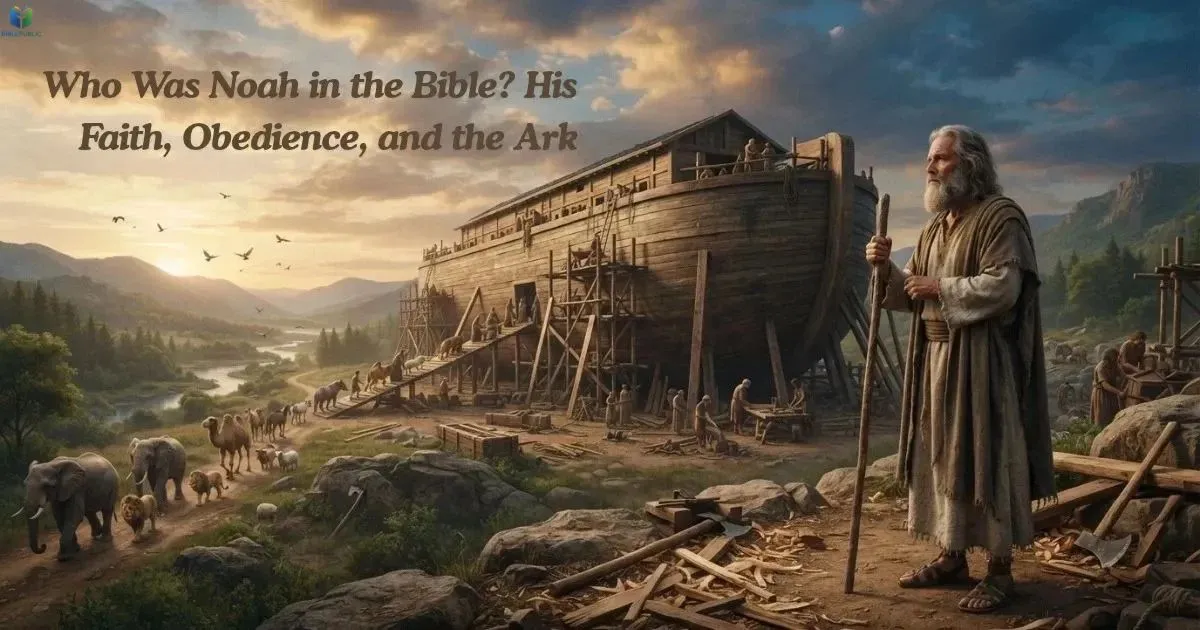
God instructed Noah to build an ark because He planned to bring a flood upon the earth. Genesis 6:14-16 describes the construction instructions, including gopher wood, pitch, rooms, and specific dimensions. The ark was intended to preserve Noah’s family and representatives of the animal world through the coming judgment.
God also gave instructions concerning the ark’s opening, door, and levels. Genesis 6:22 records Noah’s obedience to these commands. Although Scripture provides important construction details, it does not explain every practical aspect of how Noah and his family completed the vessel.
What Were the Dimensions of Noah’s Ark?
Genesis 6:15 gives the ark’s dimensions as 300 cubits long, 50 cubits wide, and 30 cubits high (KJV). Its precise modern measurements depend on the length assigned to a cubit, an ancient unit of measurement. Genesis 6:16 also describes an opening near the top, a door in the side, and three levels, providing a basic picture of the ark’s size and arrangement.
Why Did God Command Noah to Build the Ark?
God commanded Noah to build the ark because He planned to bring a flood as judgment on the earth while preserving Noah, his family, and living creatures. Genesis 6:17-20 explains this purpose and describes God’s instructions for bringing living creatures into the vessel. The ark served as a means of preservation during the flood, allowing life to continue afterward.
What Happened During Noah’s Flood?
Genesis 7-8 describes the flood that covered the earth in the biblical account. Noah, his family, and the animals entered the ark, and God shut them in. The waters rose greatly, covering the mountains described in the narrative, while living creatures outside the ark perished. Noah and those with him remained inside as the floodwaters prevailed.
The rain eventually stopped, but the waters took longer to recede and the earth to dry. Genesis distinguishes forty days of rain from the 150 days during which the waters prevailed. The ark later rested on the mountains of Ararat, and Noah sent out birds to assess the conditions. After the ground became dry, God instructed Noah and his family to leave the ark.
How Long Did It Rain During Noah’s Flood?
Genesis 7:12 states that rain fell upon the earth for forty days and forty nights (KJV). However, the flood lasted longer than the period of rainfall. Genesis 7:24 says the waters prevailed upon the earth for 150 days, while Genesis 8 describes the later process of recession and drying. These are distinct stages in the flood narrative, not interchangeable measurements of its duration.
What Happened After the Floodwaters Began to Recede?
Genesis 8:1-5 says God remembered Noah and the living creatures in the ark and caused the waters to decrease. God sent a wind over the earth, and the sources of the floodwaters were stopped. The waters gradually receded, and the ark rested upon the mountains of Ararat in the seventh month. Later, the tops of the mountains became visible as the waters continued to withdraw.
How Did Noah Know the Earth Was Dry?
Noah sent out a raven and then a dove to learn whether the waters had receded. The dove initially returned because it found no resting place, but on a later flight it returned with an olive leaf. When Noah sent it out again, it did not return. Genesis 8:13-14 then records that the ground had become dry. Noah waited for God’s instruction before leaving the ark (Genesis 8:15-16).
God’s Covenant with Noah After the Flood
After leaving the ark, Noah built an altar to the Lord and offered burnt offerings from clean animals and birds. Genesis 8:20-22 records God’s response, including His declaration concerning the ground and the continuing order of the seasons. This account is followed by God’s covenant with Noah in Genesis 9.
God established His covenant with Noah, his descendants, and every living creature that had come out of the ark. He promised that a flood would never again destroy all flesh in the same way. The rainbow became the sign of this covenant, reminding generations of God’s promise to preserve life on the earth.
What Was God’s Covenant with Noah?
In Genesis 9:8-17, God made a covenant with Noah, his descendants, and every living creature. He promised never again to destroy all living creatures through a flood of that kind. This covenant emphasizes God’s commitment to preserve life on the earth. It does not mean that the world would never experience another flood or any other natural disaster.
What Does the Rainbow Signify in God’s Covenant?
The rainbow is the sign of God’s covenant with Noah, his descendants, and every living creature. Genesis 9:12-17 explains that God set His bow in the cloud as a reminder of His promise never again to destroy all flesh through a flood. In the biblical account, the rainbow points to God’s covenant faithfulness and His commitment to preserve life on the earth.
What Happened to Noah After the Flood?
After leaving the ark, Noah built an altar to the Lord and worshipped Him. He later became a husbandman and planted a vineyard, as recorded in Genesis 9:20. His life after the flood includes both God’s covenant promise and an account of human weakness, showing that Noah’s story did not end when the waters receded.
Genesis 9:28-29 states that Noah lived 350 years after the flood and that his total lifespan was 950 years. The closing account also describes a troubling incident involving Noah and his sons, Ham, Shem, and Japheth. These events provide a fuller picture of Noah’s life without presenting him as sinless.
What Happened to Noah and His Family in the Vineyard Account?
Genesis 9:20-27 recounts that Noah planted a vineyard, drank wine, and became uncovered inside his tent. Ham, the father of Canaan, saw his father’s nakedness and told his brothers, Shem and Japheth, who covered Noah without looking at him. When Noah awoke, he spoke concerning Canaan, Shem, and Japheth. The text does not fully explain every detail of Ham’s offense, so further interpretations should be presented cautiously.
What Can Christians Learn from Noah’s Life?
Noah’s life teaches Christians about faith, obedience, and the seriousness of responding to God’s word. He lived in a generation described as corrupt, yet he trusted God’s warning and followed His instructions. The flood account also shows the connection between divine judgment and preservation, as Noah and his household were kept safe through the ark.
Noah’s story highlights God’s grace as well as human weakness. Although Scripture describes him as righteous, his later life includes a difficult family episode. His example encourages Christians to trust God and take His word seriously while recognizing their need for His mercy. The account directs attention to God’s judgment, provision, and faithfulness.
What Does Noah’s Story Teach About Faith and Obedience?
Noah’s story teaches that faith involves responding to God’s word through action. Hebrews 11:7 highlights his trust in God’s warning and his decision to prepare the ark before the flood came. His example encourages Christians to take Scripture seriously and obey what God has revealed, even when they cannot yet see the outcome of their faithful response.
What Can Christians Learn About God’s Grace from Noah?
Genesis 6:8 says Noah found grace in the eyes of the Lord, showing that God’s favor was central to his preservation. Although Noah is described as righteous, the Bible does not present him as sinless. Christians can learn from this account that God’s grace matters in a world marked by sin and judgment. Noah’s story encourages trust in God’s mercy rather than confidence in human perfection.
Conclusion
Who Was Noah in the Bible? Noah was a man who trusted God and obeyed His commands in a world filled with wickedness. His story in Genesis reveals the seriousness of sin, the importance of faith, and the power of God’s grace. Through Noah’s life, Christians can understand how trust in God shapes faithful obedience.
Noah’s story also encourages Christians to trust God’s Word and follow His guidance in daily life. Read Genesis 6-9 to explore his faith, the building of the ark, the great flood, and God’s covenant marked by the rainbow. Reflect on how you can practice obedience, depend on God’s grace, and remain faithful during difficult times.
Related Bible Stories About Faith and Obedience
Noah’s story reveals how faith, obedience, and trust in God shaped his life during a time of great wickedness. Exploring other biblical accounts can help readers understand these themes more deeply and see how God worked through different people and circumstances. These related resources offer further insight into biblical faith, godly leadership, and God’s promises.
Who Was Daniel in the Bible? His Faith, Visions, and Life in Babylon
Who Was Joshua in the Bible? His Leadership, Faith, and Conquest of Canaan
Biblical Meaning of Abraham: Faith, Covenant, and Promise
Frequently Asked Questions
Who Was Noah in the Bible, and Why Is He Important?
Noah was a righteous man whom God chose to preserve his family and representatives of animal life during the great flood. His story highlights faith, obedience, grace, and God’s covenant.
Why Did God Choose Noah to Build the Ark?
God chose Noah in a world filled with wickedness and violence. Genesis 6:8-9 describes Noah finding grace in God’s eyes and walking with Him amid the corruption around him.
How Did Noah Show His Faith and Obedience to God?
Noah showed faith by following God’s instructions to build the ark and prepare for the flood. Genesis 6:22 (KJV) states that he did all God commanded him.
How Long Did Noah Stay in the Ark During the Flood?
Noah’s time in the ark lasted approximately a year according to the timeline in Genesis 7-8. The rain fell for forty days and nights, but the waters took much longer to recede and the ground to dry.
Did Noah Ever Sin After God Saved Him From the Flood?
Genesis 9:20-21 records that Noah planted a vineyard, drank wine, and became uncovered in his tent. Although Genesis describes Noah as righteous, the account does not present him as sinless.
What Does Noah’s Story Teach Christians About Faith Today?
Noah’s story encourages Christians to trust God, obey His Word, and depend on His grace. Hebrews 11:7 (KJV) highlights how Noah responded in faith to God’s warning and prepared the ark to preserve his household.

Chris Saadil is the founder of BiblePublic.com, where he shares biblical insights to help readers understand God’s Word and grow in faith. His mission is to make Scripture clear, practical, and encouraging through Bible verses, biblical teachings, prayer, and Christian living, helping believers build a deeper relationship with God every day.