
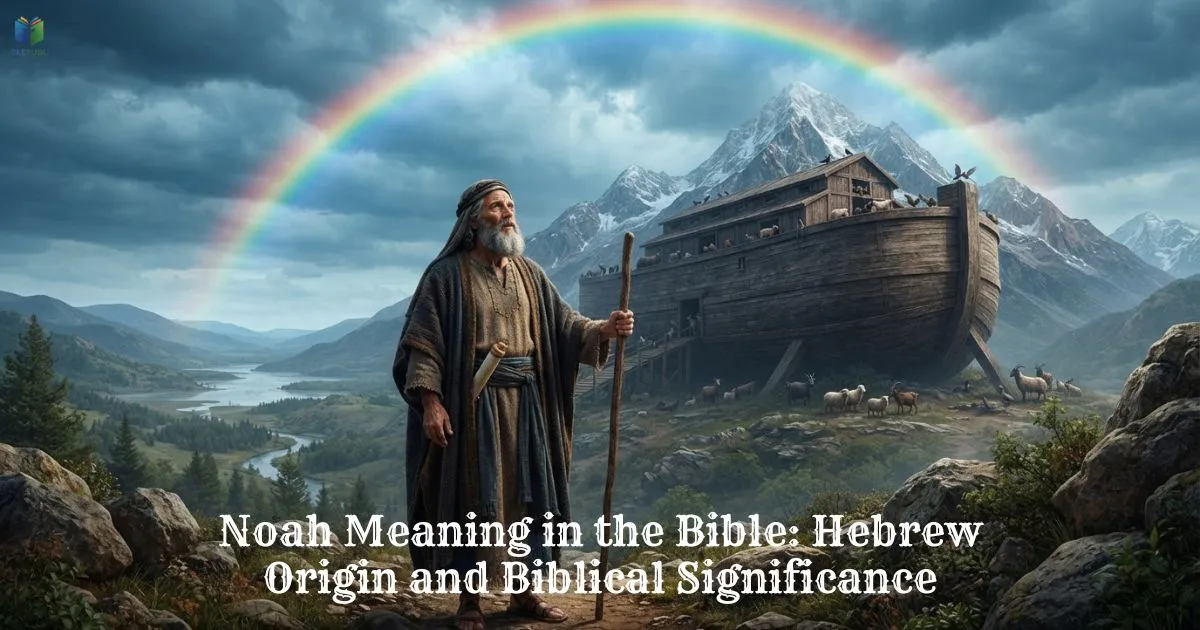
Noah’s name in the Bible is traditionally associated with rest, making its meaning an important part of his story. In Genesis, Noah is the man God chose to preserve human and animal life through the great flood. Learning about his name helps readers understand its Hebrew origin and its connection to comfort.
In this guide, you will discover what Noah means in Hebrew, how Genesis 5:29 connects his name with comfort, and why he matters in the Bible. You will also learn about Noah’s faith, obedience, and role in God’s plan. These insights offer a clearer understanding of this well-known biblical name.
Noah Meaning in the Bible: Hebrew Name and Meaning
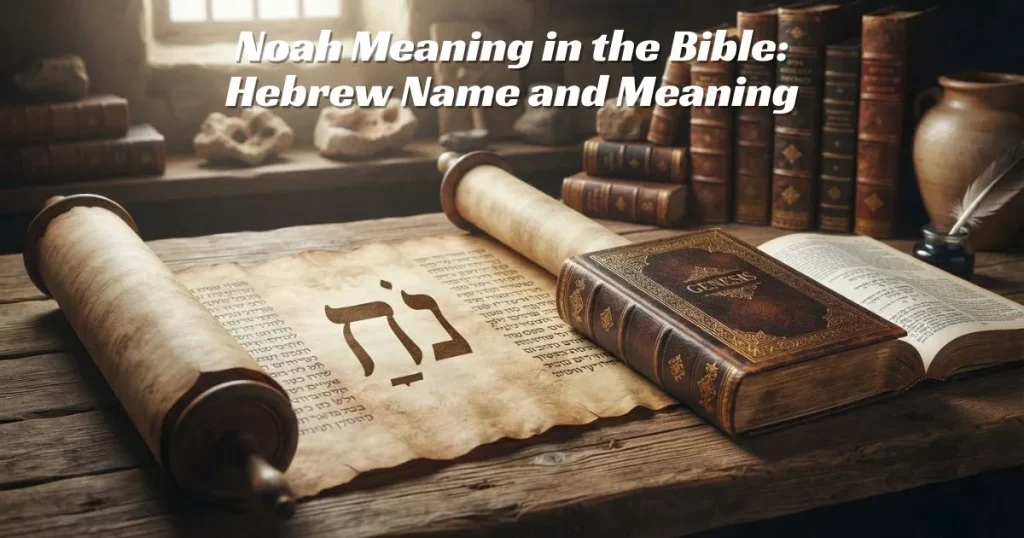
The name Noah has a significant place in Genesis, where the Bible describes his birth, character, and role in the Flood account. Its traditional meaning, “rest” or “repose,” is connected to the circumstances surrounding his birth and his father’s words in Genesis 5:29. The passage also associates Noah with the hope of relief from the hardship of working the ground.
Examining Noah’s Hebrew name, its pronunciation, and the wording of Genesis 5:29 helps distinguish the name’s traditional meaning from the related idea of comfort expressed in the biblical text.
What Does the Name Noah Mean?
The name Noah is traditionally understood to mean “rest” or “repose.” It comes from the Hebrew name Noach, which is associated with the idea of resting. This meaning provides a starting point for understanding the name’s biblical significance, although a biblical name should also be considered within its scriptural context.
Genesis 5:28-29 explains the hope Noah’s father, Lamech, expressed when naming him. The King James Version records Lamech’s words in Genesis 5:29:
“And he called his name Noah, saying, This same shall comfort us concerning our work and toil of our hands, because of the ground which the LORD hath cursed.”
Lamech’s statement reflects the hardship of human labor following the judgment described in Genesis 3:17-19. After Adam’s disobedience, working the ground would involve toil and difficulty. Lamech expressed hope that Noah’s life would bring comfort or relief from this burden.
The verse connects Noah’s name with comfort through Hebrew wordplay. The name is traditionally associated with rest, while the Hebrew verb translated “comfort” in Genesis 5:29 comes from a different root. Therefore, it is more accurate to say that the verse connects Noah’s name with the hope of comfort than to claim that the name literally means “comfort.”
This distinction matters when studying the Noah Meaning in the Bible. The name’s traditional meaning is “rest” or “repose,” while Genesis 5:29 adds a related biblical association with relief from hardship. Together, the name and its context introduce themes of hope and rest that readers can consider throughout Noah’s story.
Noah’s Name in Hebrew and How to Pronounce It
In Hebrew, Noah is written נֹחַ and commonly transliterated as Noach or Noah. The Hebrew spelling preserves the name’s original form, while Noah is the familiar English spelling used in most English-language Bibles, including the King James Version.
In English, the name is usually pronounced NOH-uh, with two syllables. The Hebrew form is commonly approximated as NOH-akh, with the final consonant representing a sound that has no exact equivalent in standard English pronunciation.
Genesis introduces Noah in the genealogy recorded in chapter 5, identifying him as the son of Lamech. His name then becomes central to the account of the Flood, when God instructs him to build an ark and preserve his family and representatives of the animal world.
Pronunciation alone does not establish a name’s biblical meaning. Noah’s traditional meaning of “rest” or “repose” and its association with comfort in Genesis 5:29 should be understood through both the Hebrew language and the surrounding Scripture.
Why Genesis 5:29 Connects Noah’s Name With Comfort
Genesis 5:29 is important because it records the explanation Lamech gives when naming his son. Rather than simply recording Noah’s birth, the verse connects his name with the difficulties of human life. Lamech refers to work, the toil of human hands, and the ground that the LORD had cursed.
This language recalls Genesis 3:17-19, where God explains the consequences of Adam’s disobedience. Human work would involve hardship, and the ground would produce thorns and thistles. Lamech’s words express the hope that Noah would bring some form of relief from this difficult condition.
The relationship between Noah’s name and the word translated “comfort” is a Hebrew wordplay, not a statement that both words share the same linguistic root. Noah’s name is traditionally associated with rest, while the verb in Lamech’s statement comes from a different Hebrew root associated with comfort. Genesis 5:29 records Lamech’s words about Noah bringing comfort. Recognizing this distinction allows readers to appreciate the passage’s literary connection without confusing the name’s meaning with the wording of the verse.
Noah’s later role in Genesis gives his name additional narrative significance. God preserves Noah and his family through the Flood, and the biblical account moves from judgment toward the continuation of human life. However, Genesis 5:29 does not explicitly say that Noah would permanently remove the curse on the ground. Its immediate emphasis is Lamech’s hope for comfort from human hardship.
The passage therefore connects Noah’s name with themes of rest, hope, and relief. These associations help explain why the name remains meaningful to readers studying biblical names and their significance.
Who Was Noah in the Bible?
Noah was a central figure in Genesis, living during a period when the Bible describes widespread human wickedness. God chose to preserve Noah and his family through the Great Flood, instructing him to build an ark and bring representatives of the animal world into it. The account presents Noah as a man who responded to God’s instructions in faith.
Noah’s importance extends beyond surviving the Flood. His family line connects him to the generations before him, while the events after the Flood establish the setting for God’s covenant and the continuation of humanity. Readers exploring biblical names can also learn about Levi Meaning in the Bible and its Hebrew origin and biblical significance.
Noah’s Family and Place in Genesis
Noah was the son of Lamech and a descendant of Adam through the family line recorded in Genesis 5. His three sons were Shem, Ham, and Japheth. Genesis identifies Noah’s wife as his wife but does not provide her name. His sons’ wives are also included among the family members preserved through the Flood.
Genesis 5:28-32 places Noah within the generations before the Flood. Lamech named him Noah and expressed hope for comfort from the hardship of human labor. The chapter then records Noah’s three sons, who become important to the events that follow.
As human wickedness increases in Genesis 6, Noah is distinguished from the people around him. God announces that a Flood will come and instructs Noah to construct an ark. Genesis 6:18 records God’s promise to establish His covenant with Noah and explains that Noah, his wife, his sons, and his sons’ wives would enter the ark. Genesis 7:7 describes Noah and his family entering the ark as the Flood approaches.
After the Flood, Noah’s sons become the ancestors of the families and nations described in Genesis 10. Noah therefore stands at a significant turning point in the biblical narrative: he belongs to the generations descended from Adam, and his family becomes the starting point for the account of humanity after the Flood.
His family relationships also help readers understand the scope of God’s preservation. The ark was not presented as a means of saving Noah alone. His wife, his sons, his sons’ wives, and the animals brought aboard were all part of the preservation described in Genesis.
Why the Bible Describes Noah as Righteous
Genesis describes Noah as righteous in contrast to the wickedness surrounding him. Genesis 6:9 states in the King James Version:
“Noah was a just man and perfect in his generations, and Noah walked with God.”
In this verse, “just” refers to Noah’s righteous character, while “perfect in his generations” is traditionally understood to mean blameless or upright among the people of his time. The statement that Noah walked with God describes a life characterized by a relationship with and commitment to God.
This description appears in a passage that portrays the world as deeply corrupt. Genesis 6:5 says that the wickedness of humanity was great in the earth, and Genesis 6:11 describes the earth as corrupt and filled with violence. Noah’s characterization as righteous sets him apart within this setting.
The Bible does not present Noah’s righteousness as proof that he was incapable of sin. Instead, Genesis emphasizes his distinct character and his faithful response to God in a generation marked by wickedness. Genesis 6:8 also states that Noah found grace in the eyes of the LORD, placing divine favor alongside the account of his character.
This combination is important to understanding Noah’s biblical significance. His story does not teach that people earn God’s favor through flawless behavior. Rather, the narrative presents Noah as a man who walked with God and obeyed His instructions while emphasizing God’s decision to preserve him and establish a covenant with him.
For Christian readers, Noah’s righteousness provides an example of faithfulness in difficult circumstances. His story invites readers to consider how a relationship with God can shape conduct and decisions even when the surrounding culture follows a different path.
Noah’s Faith and Obedience to God
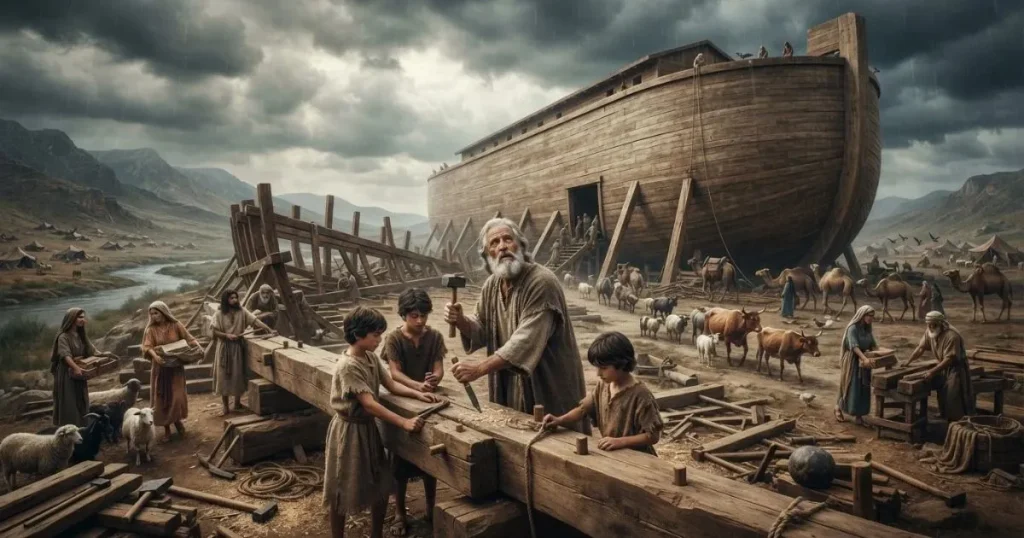
Noah’s faith becomes especially clear when God tells him to build an ark in preparation for a Flood. Genesis records God’s detailed instructions and Noah’s response: he does what God commands. His obedience involves sustained action as he prepares for the coming judgment.
The New Testament later uses Noah as an example of faith that responds to God’s warning. Together, the Genesis account and Hebrews 11:7 show the connection between faith, obedience, and trust in Noah’s life. His example illustrates that biblical faith involves more than agreeing with an idea; it includes responding to God’s word. Readers studying the biblical significance of names may also explore Elijah Meaning in the Bible to learn about another figure in Scripture.
Noah Builds the Ark According to God’s Instructions
Genesis 6 records God’s instructions for building the ark. God tells Noah that a Flood will come and gives him specific directions concerning the vessel’s dimensions, construction, and arrangement. He also explains that Noah, his family, and representatives of the animal world will be preserved through the coming disaster.
Genesis 6:22 summarizes Noah’s response:
“Thus did Noah; according to all that God commanded him, so did he.”
This verse emphasizes the connection between God’s instructions and Noah’s actions. Noah does not simply hear the warning and continue as before. He follows the directions God gives him, preparing the ark according to the command he has received.
Genesis 7:5 reinforces this point:
“And Noah did according unto all that the LORD commanded him.”
The repetition highlights obedience as a central part of Noah’s story. Building the ark required sustained effort, and the account presents Noah as following God’s directions in preparation for an event that would affect all life outside the ark.
Genesis does not describe every reaction Noah may have encountered while building the ark. Therefore, claims about specific public ridicule or exact construction timelines should not be presented as facts established by the biblical text. What Genesis clearly establishes is that God gave Noah instructions and that Noah carried them out.
Noah’s obedience is significant because he acted on God’s warning before the Flood arrived. His actions prepared his family and the animals for preservation, presenting obedience as a practical expression of trust in God’s word.
What Hebrews 11:7 Says About Noah’s Faith
Hebrews 11:7 offers a New Testament explanation of Noah’s role as an example of faith. The King James Version states:
“By faith Noah, being warned of God of things not seen as yet, moved with fear, prepared an ark to the saving of his house; by which he condemned the world, and became heir of the righteousness which is by faith.”
The verse connects Noah’s faith with God’s warning about an event that had not yet occurred. Noah responded by preparing the ark, and his action helped preserve his household. Hebrews places Noah within its broader discussion of people who trusted God’s word and acted in response to it.
The phrase “things not seen as yet” emphasizes that Noah acted on God’s warning before the Flood arrived. His preparation demonstrates confidence in what God had revealed rather than dependence solely on what he could already see. Noah’s faith involved taking God’s word seriously enough to act upon it.
Hebrews also says that Noah “became heir of the righteousness which is by faith.” This statement places his example within the biblical teaching that faith is central to a person’s relationship with God. It should not be interpreted to mean that building an ark was a way to purchase salvation through human effort. Rather, the verse describes Noah’s obedient action as an expression of faith.
For Christians, Hebrews 11:7 offers a perspective on the meaning of Noah’s life. Faith can require a response before the outcome is visible, and obedience can involve sustained action rather than a single declaration. Noah’s example encourages readers to trust God’s word and respond faithfully to His instructions.
Noah and the Great Flood in Genesis
The Great Flood is the central event in Noah’s biblical story. Genesis describes a world filled with wickedness and violence, God’s decision to bring judgment, and His instructions for preserving Noah, his family, and representatives of the animal world. The narrative then records the Flood, the waters’ recession, and Noah’s emergence from the ark.
The Flood account presents both judgment on human wickedness and the preservation of life through God’s provision. Noah’s role connects these themes, as the narrative moves from the destruction described in Genesis to the renewal and covenant that follow.
Why God Sent the Flood
Genesis explains that God sent the Flood in response to the widespread wickedness and corruption of humanity. Genesis 6:5 describes the extent of human evil, while Genesis 6:11-13 portrays the earth as corrupt and filled with violence. The narrative presents the Flood as God’s judgment on this condition.
Genesis 6:6 expresses God’s grief over human wickedness, and Genesis 6:7 records His declaration that He would destroy people and living creatures on the earth. These verses form part of the Bible’s account of the seriousness of human sin and the consequences of persistent corruption.
However, the narrative also distinguishes Noah from the surrounding generation. Genesis 6:8 says that Noah found grace in the eyes of the LORD, and Genesis 6:9 describes him as just and as one who walked with God. God then gives Noah instructions for preparing the ark, providing a means of preservation through the coming Flood.
Within Genesis, the Flood is explicitly connected to the corruption and violence that had spread throughout the earth. At the same time, the narrative emphasizes that God’s judgment is accompanied by His decision to preserve Noah and the life entrusted to the ark.
This context is essential to understanding Noah’s significance. His story brings together the Bible’s treatment of sin, judgment, grace, and preservation. The Flood marks a decisive moment in Genesis, but it does not end God’s relationship with humanity. The covenant after the Flood becomes the next major development in the account.
Noah, the Ark, and the Preservation of Life
God instructed Noah to build the ark as a means of preservation during the Flood. Genesis 6:14-21 provides directions for its construction and explains that Noah was to bring his family and living creatures into it. God also instructed Noah to gather food for those who would be preserved.
Genesis 7 describes the entry into the ark and the arrival of the Flood. Genesis 7:7 records Noah entering with his wife, his sons, and his sons’ wives. The following verses describe the animals entering as God had commanded. The narrative emphasizes that the ark provided shelter for those included in God’s instructions.
Genesis 7:17-24 describes the waters rising and covering the earth. Genesis 7:23 summarizes the destruction outside the ark and the preservation of Noah and those with him. The account presents Noah’s survival not as the result of his ability to control the Flood but as the outcome of following God’s instructions and receiving the means of preservation God provided.
The ark also illustrates the relationship between faith and obedience in Noah’s story. God revealed what was coming, Noah prepared the ark, and his household entered it before the Flood. The sequence connects divine warning with Noah’s faithful response.
Genesis directly describes the ark as the vessel through which Noah, his family, and the selected animals were preserved. Christians may draw broader lessons about trust and God’s provision from the account, but those applications should remain distinct from the narrative’s explicit details.
What Happened After the Flood?
After the Flood, Genesis describes the waters gradually receding until the earth became suitable for Noah and his family to leave the ark. Genesis 8 records Noah’s actions as he waited for the waters to subside, including sending out birds to learn whether the ground had become dry. Eventually, God instructed Noah to leave the ark with his family and the animals.
Once he left the ark, Noah built an altar and offered burnt offerings to the LORD. Genesis 8:20-21 records this act of worship and God’s response. The passage presents Noah’s offering as an expression of worship after the preservation of his household through the Flood.
Genesis 8:21 records God’s acknowledgment that the imagination of man’s heart is evil from his youth. The verse does not suggest that the Flood had made humanity sinless. Instead, it shows that human sinfulness remained even after the judgment. In the same passage, God declares that He will not again smite every living thing in the same manner. The verse should be understood within this specific statement rather than as a claim that humanity’s tendency toward sin had disappeared.
Genesis also records a difficult episode in Noah’s life after the Flood. According to Genesis 9:20-27, Noah planted a vineyard, drank wine, and became drunk. The passage then describes an incident involving Noah and his sons Ham, Shem, and Japheth, followed by Noah’s words concerning Canaan and his sons’ futures. This account complicates any portrayal of Noah as a flawless person. Genesis describes him as righteous in his generation, but it does not present every action in his later life as an example to follow. The passage also requires care in interpretation: readers should not use it to make claims about entire ethnic groups that go beyond what the text says.
God blesses Noah and his sons in Genesis 9:1 and gives instructions concerning the continuation of life. Genesis 9 also records God’s covenant, including the promise that a flood would no longer destroy all flesh in the manner described in the account. The rainbow is given as the sign of this covenant.
Noah’s life after the Flood is important to the wider biblical story. His role does not end when the waters recede. The events that follow introduce God’s covenant with Noah, the continuation of humanity through his family, and the significance of the rainbow as a reminder of God’s promise.
God’s Covenant With Noah and the Rainbow
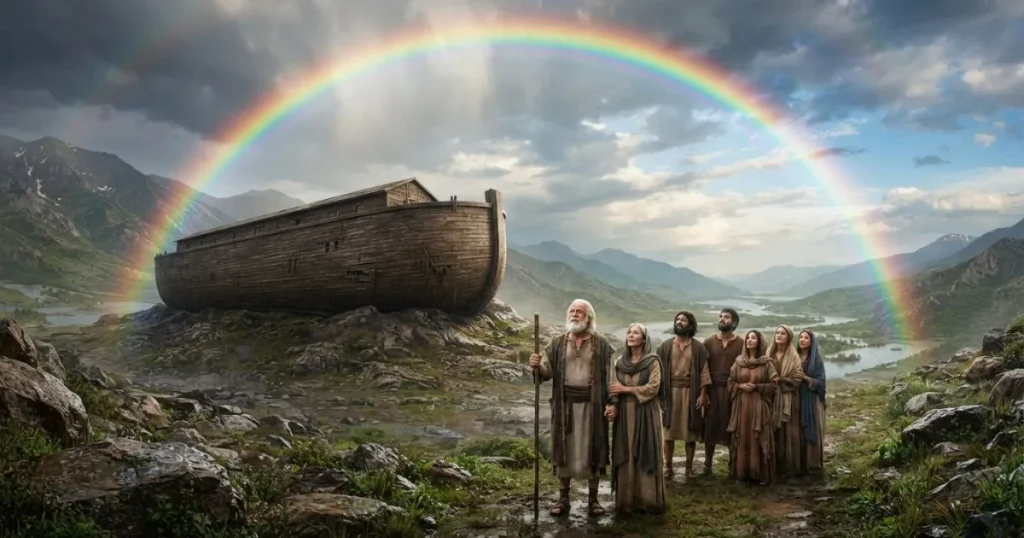
The covenant with Noah is one of the major developments in Genesis after the Flood. God speaks to Noah and his sons, promises that the waters will not again become a flood to destroy all flesh, and identifies the rainbow as the sign of His covenant. The promise extends beyond Noah’s immediate family to the earth and the living creatures described in the account.
This covenant gives the story a lasting significance. Although the Flood narrative includes divine judgment, Genesis 9 emphasizes God’s commitment to the continuation of life. Understanding the covenant and the rainbow helps explain how Noah’s story moves from preservation during judgment to a promise concerning the future of the earth.
What Was God’s Covenant With Noah?
God’s covenant with Noah is recorded in Genesis 9:8-17. After the Flood, God addresses Noah, his sons, their descendants, and the living creatures that came out of the ark. He promises that a flood will not again destroy all flesh and identifies the covenant as one that applies to future generations.
Genesis 9:11 states in the King James Version:
“And I will establish my covenant with you; neither shall all flesh be cut off any more by the waters of a flood; neither shall there any more be a flood to destroy the earth.”
The promise follows the destruction described in Genesis 6–8. Noah and his family have survived the Flood, and God declares that the waters will not again destroy all flesh in this manner. The covenant establishes a lasting promise concerning the preservation of life on the earth.
Genesis 9:9-10 describes the covenant as extending to Noah’s descendants and the living creatures. This detail shows that the promise is broader than a private agreement with Noah alone. The covenant concerns the future of humanity and the animal world after the Flood.
The covenant should also be distinguished from the later covenants recorded elsewhere in Scripture. Genesis 9 specifically focuses on God’s promise concerning another destructive flood and the sign He provides. It does not say that humanity will never experience suffering, judgment, or natural disasters of any kind. The promise concerns the destruction of all flesh by a flood as described in the passage.
For readers studying Noah’s biblical significance, this covenant highlights God’s faithfulness to His word. The account moves from judgment to preservation and then to a promise that reaches beyond Noah’s lifetime. It is one of the reasons Noah remains an important figure in the biblical narrative.
What Does the Rainbow Signify in the Bible?
In Genesis 9:12-17, God identifies the rainbow as the sign of His covenant with Noah, his descendants, and every living creature. The rainbow serves as a visible sign of God’s promise that the waters would never again become a flood to destroy all flesh.
Genesis 9:13 states:
“I do set my bow in the cloud, and it shall be for a token of a covenant between me and the earth.”
The word “bow” in this passage refers to the rainbow in the cloud. God explains its significance in the verses that follow, connecting it with His covenant and His promise concerning the earth. Genesis 9:16 says that when the bow is seen in the cloud, God will remember His everlasting covenant between Himself and every living creature.
The text therefore gives the rainbow a specific biblical meaning: it is the sign of God’s covenant after the Flood. In Christian teaching, the rainbow is often associated with God’s faithfulness, mercy, and the hope that follows judgment. These are theological reflections on the passage, provided they are distinguished from the precise wording of the covenant itself.
The rainbow does not mean that humanity will never experience hardship or that God has promised to prevent every form of suffering. Genesis 9 specifically connects the sign with God’s promise that a flood will not again destroy all flesh. Keeping this context clear helps readers avoid extending the passage beyond its stated meaning.
The rainbow is one of the most recognizable elements of Noah’s story because it connects a visible feature of the natural world with a specific promise in Scripture. It reminds readers of the covenant described in Genesis and reinforces the story’s movement from judgment toward the preservation of life.
Noah’s Biblical Significance for Christians Today
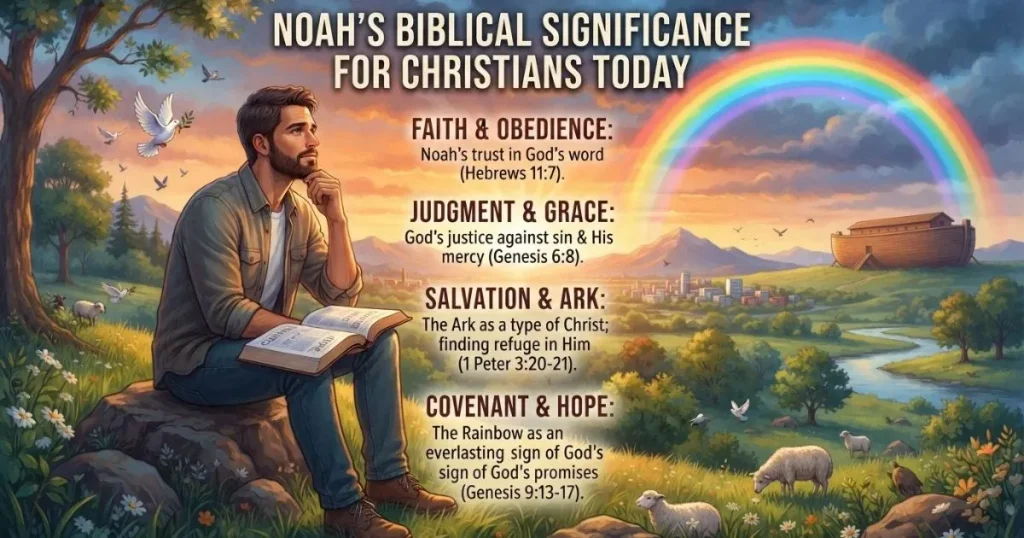
Noah’s story continues to matter to Christians because Scripture uses his life to explore faith, obedience, righteousness, judgment, and God’s preservation. Genesis presents Noah as a man who walked with God in a corrupt generation, followed divine instructions, and survived the Flood with his family. The New Testament later refers to Noah when discussing faith and the coming judgment.
These themes offer meaningful points for Christian reflection, but their application should remain grounded in the biblical text. Noah’s life is part of the Bible’s broader account of humanity’s sin, God’s response to wickedness, and His continued purposes for the world.
Lessons About Faith, Obedience, and Perseverance
One central lesson from Noah’s story is the relationship between faith and obedience. Genesis repeatedly emphasizes that Noah did what God commanded him. Hebrews 11:7 explains that he acted by faith when he prepared the ark in response to God’s warning about things not yet seen. Together, these passages present Noah as an example of trusting God’s word and responding to it through action.
Noah’s story also highlights perseverance. Preparing the ark required carrying out God’s instructions before the Flood arrived. Although Genesis does not describe every practical challenge Noah encountered, it clearly records his sustained obedience. His example can encourage Christians to remain faithful in their responsibilities even when the outcome is not yet visible.
Another lesson concerns righteousness in a corrupt environment. Genesis describes the world of Noah’s time as filled with wickedness and violence, yet it also says that Noah walked with God. This contrast illustrates the biblical importance of living according to God’s direction rather than allowing surrounding behavior to determine one’s own conduct.
At the same time, Noah’s story should not be used to suggest that Christians can earn God’s favor through perfect behavior or that faithful people will always be protected from every earthly difficulty. The account describes God’s particular instructions and covenant in Noah’s circumstances. Its broader lessons should be applied thoughtfully, distinguishing the original events from present-day Christian reflection.
The meaning of Noah’s name, traditionally associated with rest, adds another dimension to these lessons. Genesis 5:29 connects the name with Lamech’s hope for comfort from human toil, while Noah’s life demonstrates faithfulness amid a difficult period in the biblical story. For Christians, these themes invite reflection on trust in God, faithful action, and hope rooted in His promises.
Noah as an Example in the New Testament
The New Testament refers to Noah in more than one context, especially when discussing faith and divine judgment. Hebrews 11:7 presents him as an example of faith because he responded to God’s warning by preparing the ark. This passage places Noah among the people whose lives demonstrate trust in what God has revealed.
Second Peter 2:5 also describes Noah as “a preacher of righteousness” in the King James Version. The verse refers to God’s judgment on the ungodly world and His preservation of Noah and seven others. This description adds another dimension to Noah’s biblical significance: the New Testament remembers him not only for believing God’s warning but also in connection with righteousness amid a corrupt generation. The verse does not, however, provide a detailed account of what Noah preached or describe particular sermons, so those details should not be presented as facts established by Scripture.
Jesus also refers to the days of Noah in Matthew 24:37-39. In the King James Version, Matthew 24:37 begins:
“But as the days of Noe were, so shall also the coming of the Son of man be.”
The spelling “Noe” is the form used in the King James Version of the New Testament, while “Noah” is the familiar spelling used in Genesis. Jesus compares the days before the Flood with the time preceding the coming of the Son of man. He describes people continuing their ordinary activities until the Flood came and took them away. The point concerns the unexpectedness of judgment and the need to be prepared.
Noah is also mentioned in 1 Peter 3:20, which refers to the long-suffering of God in the days of Noah while the ark was being prepared and notes that a few people were saved through water. This passage places the Flood within a broader discussion of suffering, salvation, and the meaning of baptism. Its interpretation involves the surrounding verses, so Noah’s story should not be reduced to a single symbolic explanation without considering the full context.
These New Testament references show that Noah’s significance extends beyond the Book of Genesis. He is remembered as a man who responded to God’s warning in faith, while the Flood serves as a serious example in discussions of judgment and readiness. The New Testament uses his story to develop its teachings, and those references should be read in their immediate contexts.
Ultimately, the biblical significance of Noah includes the traditional meaning of his name, his faith and obedience, his preservation through the Flood, and God’s covenant after the waters receded. The name is commonly understood to mean “rest” or “repose,” while Genesis 5:29 connects it through Hebrew wordplay with the hope of comfort. His life and the later biblical references together make Noah an important figure for understanding faith, judgment, preservation, and God’s promises in Scripture.
Conclusion
The Noah Meaning in the Bible centers on a name associated with rest and a story marked by faith, obedience, and hope. Through Noah’s life, readers can see the importance of trusting God during difficult times. His story in Genesis reminds us that God’s promises offer hope and that faithful obedience matters even in uncertain seasons.
As you reflect on Noah’s story, read Genesis 6–9 and consider what his faith teaches you about trusting God. Think about one area of your life where you can practice greater patience or obedience. Let Noah’s example encourage you to follow God faithfully, even when the path ahead feels uncertain or difficult.
Explore More Biblical Names and Their Meanings
Noah’s name offers insight into Hebrew origins, biblical history, and the themes of rest and comfort found in Genesis. Exploring other names in Scripture can deepen your understanding of biblical naming traditions and their spiritual significance. These related resources offer further context for discovering how biblical names connect with faith, personal identity, and God’s Word.
Biblical Baby Name Meanings That Inspire Faith and Blessings
Christian Baby Names for Boys and Girls with Meanings
Ezra Meaning in the Bible: Hebrew Origin and Biblical Significance
Frequently Asked Questions
What does the name Noah mean in the Bible?
The name Noah is traditionally associated with rest. In Genesis 5:29, his father Lamech connects Noah’s name with comfort and relief from painful labor.
What is the Hebrew origin of the biblical name Noah?
Noah comes from the Hebrew name Noach, which is associated with rest. Genesis 5:29 also uses wordplay connecting his name with comfort, although the Hebrew words have different roots.
What does Genesis 5:29 reveal about Noah’s name?
Genesis 5:29 records Lamech naming his son Noah and expressing hope that he would bring comfort from the painful toil of working cursed ground.
Why does Noah play an important role in the Bible?
Noah obeyed God and built an ark before the great flood. Genesis 6–9 describes his faith, the preservation of life, and God’s covenant after the flood.
Does Noah’s name literally mean comfort in the Bible?
Not exactly. Noah’s name is associated with rest, while Genesis 5:29 connects it with comfort through Hebrew wordplay. The words sound alike but come from different roots.
What spiritual lessons can Christians learn from Noah’s faith?
Christians can learn about faith, obedience, and trusting God during uncertain times. Hebrews 11:7 highlights Noah’s faith and reverence when he prepared the ark in response to God’s warning.

Chris Saadil is the founder of BiblePublic.com, where he shares biblical insights to help readers understand God’s Word and grow in faith. His mission is to make Scripture clear, practical, and encouraging through Bible verses, biblical teachings, prayer, and Christian living, helping believers build a deeper relationship with God every day.






1 thought on “Noah Meaning in the Bible: Hebrew Origin and Biblical Significance”