The firmament in Genesis is one of the Bible’s most fascinating creation themes. Many readers wonder what it really means and why God created it. Understanding this part of the Genesis creation account helps us see God’s wisdom, His creative order, and the purpose behind the heavens He made.
Whether you are studying the Bible for the first time or exploring biblical cosmology more deeply, this guide will help you understand the meaning of the firmament in its original context. You will discover its Hebrew background, key Bible passages, historical interpretations, the creation narrative, and timeless spiritual truths that strengthen faith and deepen your understanding of Scripture.
What Is the Firmament? A Biblical Definition
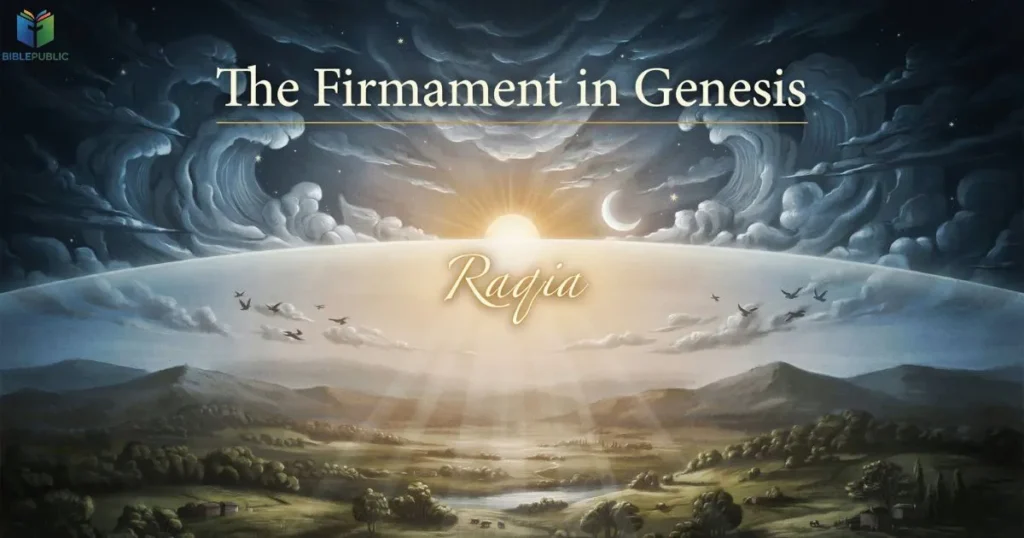
The firmament in Genesis refers to the expanse God created on the second day of creation to separate the waters above from the waters below (Genesis 1:6–8). The Hebrew word raqia describes something spread out or extended. While Christians and biblical scholars have understood this imagery in different ways, the passage consistently emphasizes God’s sovereign authority in establishing order within creation.
Understanding this heavenly expanse helps readers appreciate both the historical context of Genesis and its enduring theological message. Rather than focusing solely on the physical structure of the heavens, the creation account reveals the Creator God’s wisdom, purpose, and power as He prepared the world for life during the creation week.
The Hebrew Word “Raqia” and Its Meaning
The Hebrew word Raqia comes from the verb Raqa, meaning “to spread out” or “to hammer out.” Many biblical scholars explain that it reflects how the ancient Israelites described the visible heavens. Studying the meaning of Raqia in Hebrew helps readers better understand why Genesis uses this term to describe the expanse God created.
Regardless of interpretation, the term consistently highlights God’s creative authority, wisdom, and purposeful design.
The Firmament in Ancient Hebrew Cosmology
In the ancient Hebrew worldview, the firmament in Genesis formed part of God’s ordered creation, separating the waters above from the earth below. This biblical cosmology emphasized God’s sovereign authority over heaven and earth. Understanding this historical context helps readers interpret the Genesis creation account according to its original audience.
Ancient Near Eastern Background
Understanding the ancient Near Eastern background helps explain the firmament in Genesis within its original historical setting. Unlike surrounding creation stories, Genesis reveals one sovereign Creator God who alone rules over heaven and earth. This historical context highlights the theological message at the heart of the biblical creation narrative.
The Firmament in the Genesis Creation Account
The firmament in Genesis plays a central role in the biblical creation account. On the second day of creation, God established the heavenly expanse to separate the waters above from the waters below. This divine act brought order to creation and prepared the earth for the life that would soon follow.
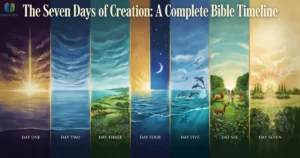
God named the firmament “Heaven,” giving it both purpose and identity within His created order. This event also fits within the complete seven days of creation timeline, revealing a carefully planned sequence in which every creative act reflects God’s wisdom, authority, and perfect design for heaven, earth, and all living creatures.
Table: The Six Days of Creation and the Firmament’s Role
| Day | Divine Action | Firmament Connection |
| Day 1 | Light created | Foundation for visible realm |
| Day 2 | Firmament formed | Waters divided; Heaven named |
| Day 3 | Land and vegetation | Below the firmament |
| Day 4 | Sun, moon, stars placed | Positioned in the firmament |
| Day 5 | Sea creatures and birds | Birds fly in firmament’s expanse |
| Day 6 | Land animals and humanity | Observers of the firmament above |
Day Two of Creation: Dividing the Waters
On the second day of creation, God commanded the waters to separate, establishing the firmament in Genesis as the expanse between heaven and earth. This divine command brought order from chaos and prepared creation for the living world that would follow through God’s sovereign power.
“And God said, Let there be a firmament in the midst of the waters, and let it divide the waters from the waters.”
— Genesis 1:6 (KJV)
The Firmament’s Role in God’s Creative Design
The firmament in Genesis demonstrates God’s intentional design within the creation narrative. It established the heavenly expanse, prepared the environment for life, and reflected God’s wisdom in ordering creation. Every stage of the creation week reveals the Creator’s authority, purpose, and perfect plan for the universe.
What the Firmament Teaches Christians Today?
For Christians today, the firmament in Genesis reminds us that God’s creation reflects His wisdom, faithfulness, and perfect order. Just as He established boundaries within creation, He continues to guide His people with purpose and stability, encouraging believers to trust the Creator in every season of life.
The Firmament Between Heaven and Earth
The firmament in Genesis connects heaven, earth, and the created order within the biblical worldview. God established the heavens above and the earth below according to His divine purpose, revealing His sovereign authority over all creation and strengthening our understanding of the Genesis creation account.
Biblical References to the Firmament
The firmament in Genesis appears throughout Scripture, extending beyond the creation account into the Psalms, the Prophets, and other Old Testament writings. These passages consistently reveal God’s authority over heaven and earth while reinforcing the biblical theme of His sovereign rule over creation.
Furthermore, Scripture continues developing this theme throughout the Old Testament, revealing how the firmament consistently points to God’s creative power, sovereign rule, and glorious presence.
Each biblical reference adds greater depth to our understanding of the firmament, connecting the Genesis creation account with worship, prophecy, and God’s glory. Together, these passages present a unified biblical perspective that points readers to the Creator’s wisdom, power, and eternal purpose.
Table: Key Biblical References to the Firmament
| Scripture Reference | Context | Key Description |
| Genesis 1:6-8 | Creation narrative | God creates the expanse to divide the waters |
| Genesis 1:14-17 | Day Four creation | Sun, moon, and stars placed in the firmament |
| Genesis 1:20 | Day Five creation | Birds fly across the face of the firmament |
| Psalm 19:1 | Worship declaration | “Heavens declare glory; firmament shows handiwork” |
| Psalm 150:1 | Praise anthem | “Praise Him in His mighty firmament” |
| Ezekiel 1:22-26 | Prophetic vision | Expanse above cherubim, crystal-like appearance |
| Ezekiel 10:1 | Temple vision | Throne above the expanse over cherubim |
| Daniel 12:3 | Eschatological prophecy | Wise shine like brightness of the firmament |
Firmament Verses in Genesis
The Genesis creation account introduces the firmament in Genesis as part of God’s creative work during the second day of creation. These passages explain how God separated the waters, named the expanse Heaven, and established the created order that prepared the world for life.
Key Genesis References:
- Genesis 1:6-8 introduces the firmament concept during the second day of creation
- Genesis 1:14-19 positions celestial bodies within this expanse for marking time and seasons
- Genesis 1:20 describes birds flying across the firmament’s face, emphasizing its atmospheric dimension
Firmament Verses in Psalms
The Psalms present the firmament as a testimony to God’s glory rather than simply describing the heavens. Through poetic worship, these passages encourage believers to recognize the Creator’s majesty, celebrate His handiwork, and respond with praise for His magnificent creation.
“The heavens declare the glory of God; and the firmament sheweth his handywork.” (Psalm 19:1, KJV)
Key Psalm References:
- Psalm 19:1 declares “The heavens declare the glory of God; the firmament shows His handiwork”
- Psalm 150:1 summons worshipers to “Praise God in His sanctuary; praise Him in His mighty firmament”
Firmament in the Prophetic Books
Beyond Genesis and the Psalms, the firmament appears in prophetic books such as Ezekiel and Daniel, where it symbolizes God’s glory, heavenly authority, and eternal kingdom. These passages expand the biblical understanding of the heavenly expanse while reinforcing God’s sovereign rule over creation and history.
Key Prophetic References:
- Ezekiel 1 and 10 describe a crystal-like expanse above heavenly beings as throne platform
- Daniel 12:3 promises the righteous will “shine like the brightness of the firmament”
Firmament Verses in 2 Esdras (Apocrypha)
The book of 2 Esdras reflects how some Jewish writers during the Second Temple period understood the firmament within apocalyptic literature. Although it is not part of the Protestant canon, it provides historical insight into the development of Jewish thought about biblical cosmology.
Key Apocryphal References:
- 2 Esdras references the expanse within apocalyptic visions and eschatological discussions
- These texts demonstrate continuity with canonical writings while expanding theological interpretation
Historical and Theological Interpretations of the Firmament
Throughout church history, Christians have carefully studied the firmament in Genesis to better understand the biblical creation account. While interpretations have varied across different periods, the central truth remains unchanged: God is the sovereign Creator who brought order and purpose to His creation.
Many evangelical scholars recognize that Genesis describes creation using language familiar to its original audience while communicating timeless theological truths about God’s creative power. Understanding the Hebrew language and historical context enables readers to interpret Scripture more faithfully without diminishing its biblical authority.
Ancient Jewish Understanding
Ancient Jewish readers generally understood the firmament as part of God’s created order, reflecting His authority over heaven and earth. Their interpretation emphasized God’s power to establish boundaries within creation while revealing His wisdom and sovereign rule over the universe.
Early Church Fathers’ Perspectives
Early Church Fathers such as Basil the Great and Augustine affirmed the authority of Scripture while seeking to understand the firmament in Genesis within the knowledge available in their time. Their writings continue to influence Christian theology and biblical interpretation today.
Medieval Christian Interpretation
Medieval Christian scholars often explained the firmament through the cosmological understanding of their era while maintaining belief in God as the Creator. Although scientific models have changed, the theological message of Genesis has remained consistent throughout Christian history.
Modern Biblical and Scholarly Views
Many evangelical scholars explain that the Hebrew word raqia reflects the language and worldview of the original audience rather than modern scientific terminology. This approach seeks to interpret the Genesis creation account faithfully while affirming God’s sovereignty, biblical authority, and the enduring truth of Scripture.
The Spiritual Significance of the Firmament

IBeyond its role in the Genesis creation account, the firmament in Genesis reveals important spiritual truths about God’s wisdom, sovereignty, and purposeful design. It reminds believers that creation reflects the Creator’s glory and points every generation toward His power and faithfulness.
Understanding the firmament encourages Christians to see the heavens as more than part of the physical world. Throughout Scripture, creation consistently directs our attention to God’s majesty, inviting believers to worship the Creator with greater confidence, gratitude, and trust.
The Firmament as a Testament to God’s Sovereignty
The firmament in Genesis demonstrates God’s complete authority over creation. By bringing order from chaos through His spoken Word, God revealed His sovereign power and established a world that reflects His wisdom, purpose, and perfect design.
Lessons on Divine Order and Structure
The firmament teaches that God’s creation is marked by order, purpose, and intentional boundaries. Just as He established structure within creation, believers can trust His wisdom to provide guidance, stability, and direction throughout every season of life.
Symbolic Meaning in Christian Theology
In Christian theology, the firmament also symbolizes the greatness of God’s creation and humanity’s dependence upon Him. While interpretations may differ, the central message remains clear: the heavens continually declare God’s glory and point believers toward the Creator.
Common Questions About the Firmament
Questions about the firmament in Genesis often arise because readers want to understand how biblical cosmology, historical context, and modern science relate to the creation account. Studying Scripture within its original setting helps believers interpret Genesis more faithfully while appreciating its enduring theological message.
Although Christians may hold different views about the nature of the firmament, they agree on the Bible’s central truth that God alone is the Creator of heaven and earth. This shared belief forms the foundation of the Christian faith, encouraging believers to trust God’s Word while growing in biblical understanding.
Does the Firmament Support a Flat Earth View?
The firmament in Genesis does not require belief in a flat earth. Ancient Hebrew cosmology often used phenomenological language to describe the world as it appeared to human observers. Rather than presenting a scientific model, the creation account emphasizes God’s sovereignty, creative power, and purposeful design.
Can Science and the Bible Be Reconciled?
Understanding the firmament in Genesis requires recognizing the different purposes of science and Scripture. Science explains the natural world through observation, while the Bible reveals God’s creative work and theological truth. Together, they address different questions without diminishing the authority of Scripture.
Why Is the Firmament Important for Christians Today?
The firmament in Genesis reminds Christians that God created the heavens with wisdom, purpose, and perfect order. Studying this part of the Genesis creation account strengthens biblical understanding, deepens faith, and encourages believers to worship the Creator with greater confidence and trust.
Conclusion
The firmament in Genesis reveals far more than the structure of the heavens. It points to God’s wisdom, sovereign authority, and purposeful design throughout creation. By understanding its historical context and biblical meaning, we gain a deeper appreciation for the Genesis creation account, the Creator’s plan, and the timeless truths that continue to strengthen Christian faith and biblical understanding.
As you continue studying Scripture, take time to reflect on how God’s creation reveals His glory, faithfulness, and sovereignty each day. Read the related Bible passages, compare their context, and allow them to deepen your understanding of biblical cosmology, God’s creative work, and His unchanging truth while strengthening your faith and daily walk with Christ.
Frequently Asked Questions
What does the firmament in Genesis actually mean?
The firmament in Genesis refers to the expanse God created to separate the waters above from the waters below. It reveals God’s wisdom, purposeful design, and authority over creation in the biblical creation account.
Is the firmament a solid dome according to the Bible?
The Bible describes the firmament using language familiar to its original audience. Many evangelical biblical scholars agree this reflects the ancient Hebrew worldview while communicating timeless truths about God’s creative power and sovereignty.
Does Genesis teach a flat earth because of the firmament?
No. The firmament in Genesis does not require belief in a flat earth. The creation account focuses on revealing God as the Creator rather than explaining the universe through modern scientific language.
Which Bible verse explains the firmament most clearly?
Genesis 1:6 is the clearest Bible verse introducing the firmament. God says, “Let there be a firmament in the midst of the waters.” This passage explains its role in God’s orderly work of creation.
Why is understanding the firmament important for Christians today?
Understanding the firmament helps believers appreciate God’s wisdom, authority, and creative order. It also strengthens biblical understanding by placing the creation account within its historical, theological, and biblical cosmology context.

Chris Saadil is the founder of BiblePublic.com, where he shares biblical insights to help readers understand God’s Word and grow in faith. His mission is to make Scripture clear, practical, and encouraging through Bible verses, biblical teachings, prayer, and Christian living, helping believers build a deeper relationship with God every day.